Minerals Hub / Policy & Geopolitics / Zircon and the Critical Raw Materials Act
Policy & Geopolitics · Zircon · 7 min read
Zircon and the Critical Raw Materials Act
The EU's 2030 extraction and processing benchmarks attach to a narrow strategic list — and zircon is not on it. Europe's import reliance is real anyway, and the chains the Act does target start upstream.
Reviewed by Peter Uppal
The short version
The EU's Critical Raw Materials Act — Regulation (EU) 2024/1252, adopted 11 April 2024 — sets four benchmarks for 2030: at least 10% of annual consumption from domestic extraction, at least 40% from domestic processing, at least 25% from recycling, and no more than 65% of any strategic raw material from a single third country. Those benchmarks attach to the Act's strategic raw materials, listed in Annex I — a narrower list than the 34 critical raw materials in Annex II. Zircon and zirconium are not on the strategic list, and the benchmarks do not apply to them.
Europe's dependence is a separate matter, and it is a real one: about 83% import reliance on zircon at the ore/concentrate stage (Zr content; SCRREEN, 2016–2020 basis), with only minor domestic production. What connects a European prospect like Orión to the Act is not zircon's listing but its position in the chain — Osmond reports minerals at Orión that feed two materials the Act does list, titanium metal and rare earths for magnets.
What the Act actually requires
The EU's Critical Raw Materials Act — Regulation (EU) 2024/1252, adopted 11 April 2024 and in force since 23 May 2024 — is the bloc's attempt to turn anxiety about mineral dependence into numbers. By 2030 it wants at least 10% of the bloc's annual consumption from domestic extraction, at least 40% from domestic processing, at least 25% from recycling, and no more than 65% of any strategic raw material sourced from a single third country. It also promises faster permitting — a 27-month limit for designated Strategic Projects (source-of-truth v7.0, citing the Regulation as adopted).
The Act keeps two lists, and the distinction between them decides where those numbers bite. Annex II names the 34 critical raw materials: the wider set the EU monitors. Annex I names the strategic raw materials: a narrower set, and it is to these — and only these — that the four benchmarks attach. Zircon and zirconium are not on the strategic list, so the benchmarks do not apply to them, and this article does not apply them. Hafnium is a listed critical raw material, which is a different thing from strategic and does not bring the benchmarks with it.
The figures are still worth reading as a diagnosis. You only legislate a 10% domestic-extraction floor if you are starting well below it. The Act is, in effect, the EU admitting how import-dependent it has become and setting a floor under how dependent it is willing to remain — for the materials it has decided to legislate about.
Where zircon sits
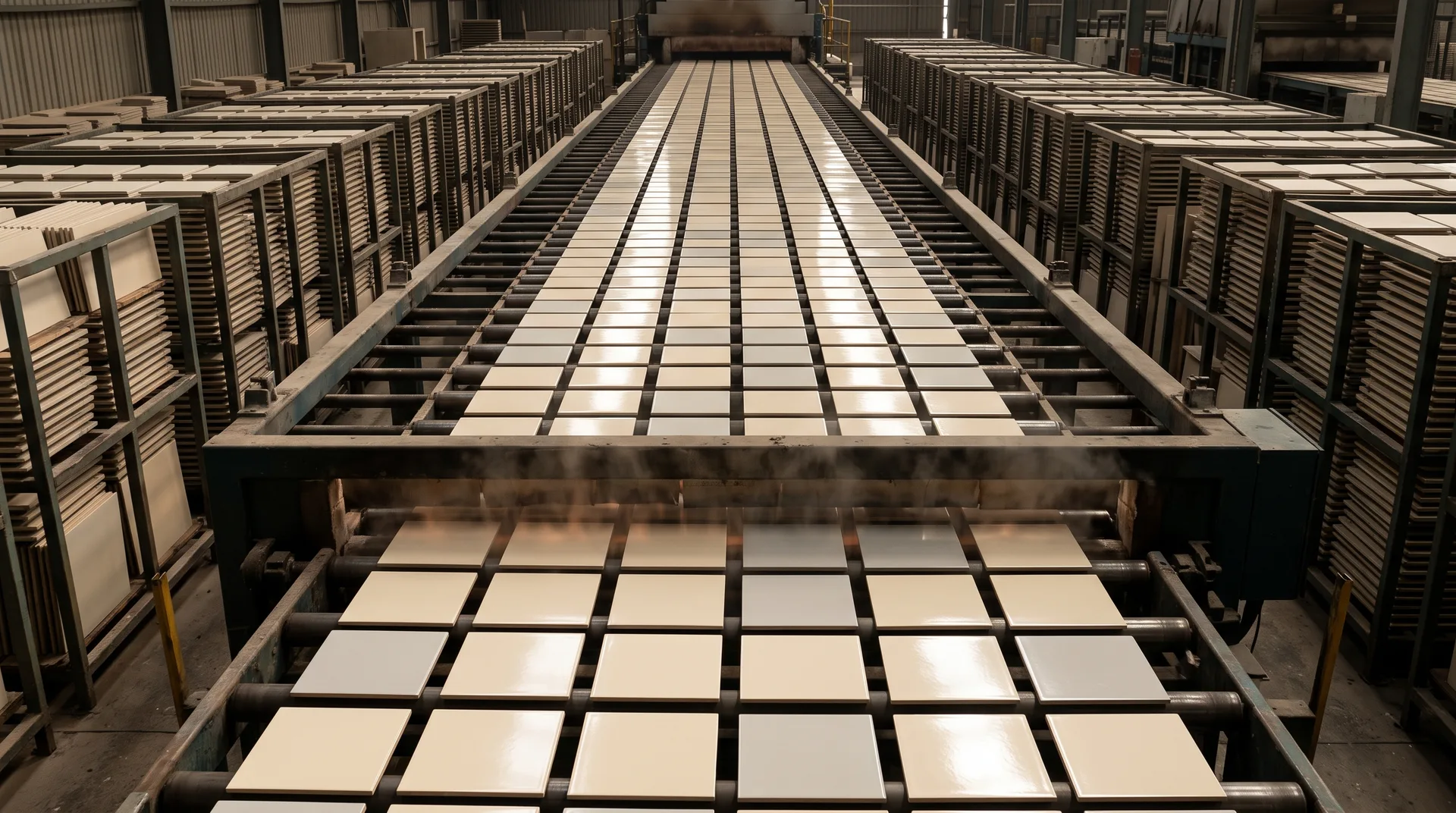
Zircon is the mineral that makes the underlying dependence concrete, whether or not the Act names it. As general background (not an Osmond figure), zircon — zirconium silicate, ZrSiO₄ — is the primary commercial source of zirconium, and its biggest end market globally is ceramics, where finely milled zircon is a premium opacifier; foundry sands and refractories follow, with zirconium metal a smaller, high-value stream feeding the chemical and nuclear industries (USGS 2025; Zircon Industry Association).
Europe uses a great deal of it and digs very little. On SCRREEN's figures (2016–2020 basis), EU consumption of zircon at the ore/concentrate stage — measured as Zr content — is about 147,666 t/yr, with only minor domestic production and an import reliance of about 83% (SCRREEN2 Zirconium factsheet). Further down the chain, at the metal stage, and on the same SCRREEN basis (2016–2020), the picture shifts: EU zirconium-metal consumption is about 1,652 t/yr (Zr content) with import reliance nearer 26.7%, and France alone accounts for roughly 20.2% of world zirconium-metal output — a genuine European strength at that specific stage.
One stage has to be left blank, honestly. For ZrO₂ / zirconia — chemically processed zirconium, a major use of zircon — no EU data exists in the SCRREEN source. That is a gap in the record, not a zero, and this article does not invent a number to fill it.
Two lists, two sets of obligations. Zircon sits outside the one the 2030 benchmarks attach to — while minerals reported alongside it at Orión feed chains that sit inside it.
Where Orión sits relative to the Act — carefully
The Act's pull runs toward projects that could raise the EU's domestic share of the materials it lists, and here the discipline of this hub applies: only Osmond's published numbers, and no claim the company hasn't made.
Mineral percentages here are mass-balance estimates — calculated from oxide assays rather than directly measured — and that basis applies to every mineral percentage in this article. Osmond reports zircon in Orión's Zone 1 bulk channel samples at 8.77–9.79%, with the corresponding ZrO₂ at 5.07–5.57% (osm_grade). Preliminary metallurgy produced a combined zircon concentrate grading 50.2% ZrO₂ at about 70% recovery, with a stated target of ≥66% ZrO₂, the premium grade, in the next round of testwork (osm_zircon). Hafnium is reported in the same zircon-bearing samples — its presence within zircon is settled mineralogy, while any commercial reading of Osmond's grades is our analysis, not Osmond's wording; the hub treats hafnium separately.
Zircon itself is not a material the benchmarks name. The connection to the Act runs through the rest of the assemblage: Osmond also reports rutile and ilmenite, and monazite, at Orión, and those are the ore-stage feedstocks for titanium metal and for magnet rare earths respectively — two materials that are on the strategic list. The hub's titanium and monazite pages carry those figures; they are not repeated here. An ore-stage prospect inside the EU sitting upstream of two strategic chains is a narrower proposition than a strategic listing would have been, and it is the one the Act actually supports.
What this does not establish is as important as what it does. These are exploration and preliminary-testwork results, not a resource, and certainly not qualified European feedstock; whether Orión ever contributes to any European chain depends on a resource estimate, a mine, and a processing chain that don't yet exist. The statement that holds is a clear one: the CRMA has created a policy pull for a specific, narrow list of strategic raw materials; Orión is an ore-stage prospect inside the EU carrying minerals that feed two of them; and Europe is 83% import-reliant on zircon at the ore stage (SCRREEN, 2016–2020), a real dependence sourced separately from the Act. The Act explains why European ore-stage supply matters to the chains it targets — it doesn't, by itself, make Orión that supply.
Orión data card — Zircon (with EU context)
| Status | Assayed / quantified |
| Bulk channel samples | Zircon 8.77–9.79% (mass-balance); ZrO₂ 5.07–5.57% (osm_grade) |
| Preliminary concentrate | 50.2% ZrO₂ at ~70% recovery; target ≥66% ZrO₂ (osm_zircon) |
| EU dependence (SCRREEN, 2016–2020 basis) | Zircon ore/conc (Zr content): consumption ~147,666 t/yr; ~83% import-reliant; minor EU production |
| ZrO₂ stage | No EU data exists in source — not inferred |
| CRMA 2030 benchmarks (strategic raw materials, Annex I) | ≥10% extraction · ≥40% processing · ≥25% recycling · ≤65% single third country |
| Zircon under the Act | Not a strategic raw material (Annex I); the 2030 benchmarks do not attach to zircon or zirconium |
| Orión's position relative to the Act | Ore-stage source of minerals feeding strategic-listed downstream materials — titanium metal (rutile/ilmenite) and magnet rare earths (monazite) |
→ See the full Zircon dossier in the mineral hub.
Exploration results and mineralogical estimates only. Orión has no JORC-compliant Mineral Resource or Reserve; maiden MRE and Scoping Study pending, targeted Q3 CY26.
Sources
- Osmond figures: [osm_grade — 19 Feb 2026], [osm_zircon — 3 Mar 2026] (ASX:OSM releases)
- EU figures: SCRREEN2 Zirconium factsheet (Dec 2023) and EU Critical Raw Materials Act — Regulation (EU) 2024/1252, adopted 11 Apr 2024, in force 23 May 2024 — via Osmond source-of-truth v7.0 — zircon ore/conc consumption 147,666 t/yr (Zr content), 83% import reliance (2016–2020 basis); 2030 benchmarks attaching to strategic raw materials (Annex I)
- USGS Mineral Commodity Summaries 2025 — Zirconium and Hafnium
- Zircon Industry Association — applications
Related reading
- From 50.2% to premium: the zircon target (Science · Zircon)
- Europe makes the world's hafnium. It just can't dig it. (Supply & the EU · Hafnium)
- Reading the Orión seams: what the heavy-mineral layers tell us (The Deposit · Zircon)
Sources
- PRIMARYosm_grade — ASX:OSM release, 19 Feb 2026 (bulk-sample zircon and ZrO₂ grades; HfO₂ ppm).
- PRIMARYosm_zircon — ASX:OSM release, 3 Mar 2026 (zircon concentrate 50.2% ZrO₂ at ~70% recovery, target ≥66%).
- SECONDARYSCRREEN2 Zirconium factsheet (update, Dec 2023), via Osmond source-of-truth v7.0 — EU zircon (ore/concentrate, ZrSiO₄, Zr content) consumption 147,666 t/yr; minor EU production; 83% import reliance. Zr metal (Zr content) EU consumption 1,652 t/yr; France = 20.2% of world; 26.7% import reliance. ZrO₂/zirconia stage: NO EU data exists in SCRREEN. VINTAGE: 2016–2020 averages.
- PRIMARYEU Critical Raw Materials Act — Regulation (EU) 2024/1252, adopted 11 Apr 2024, in force 23 May 2024 — via Osmond source-of-truth v7.0 — 2030 benchmarks attaching to STRATEGIC raw materials (Annex I): ≥10% extraction, ≥40% processing, ≥25% recycling, ≤65% of any strategic raw material from a single third country; 27-month permitting for Strategic Projects. Annex I includes titanium metal and rare earths for magnets. Zircon and zirconium are not on the strategic list. Annex II lists the 34 critical raw materials; hafnium is a listed critical raw material.
- PRIMARYUSGS Mineral Commodity Summaries 2025 — Zirconium and Hafnium (zircon end uses: ceramics, foundry, refractories, opacifier; zirconium metal for chemical and nuclear industries): https://pubs.usgs.gov/periodicals/mcs2025/mcs2025-zirconium-hafnium.pdf
- SECONDARYZircon Industry Association — zircon applications (ceramics ~half the market; opacifier; foundry; refractories): https://www.zircon-association.org/applications.html