Minerals Hub / Markets & Economics / The titanium scrap that cannot go back where it came from
Markets & Economics · · 5 min read
The titanium scrap that cannot go back where it came from
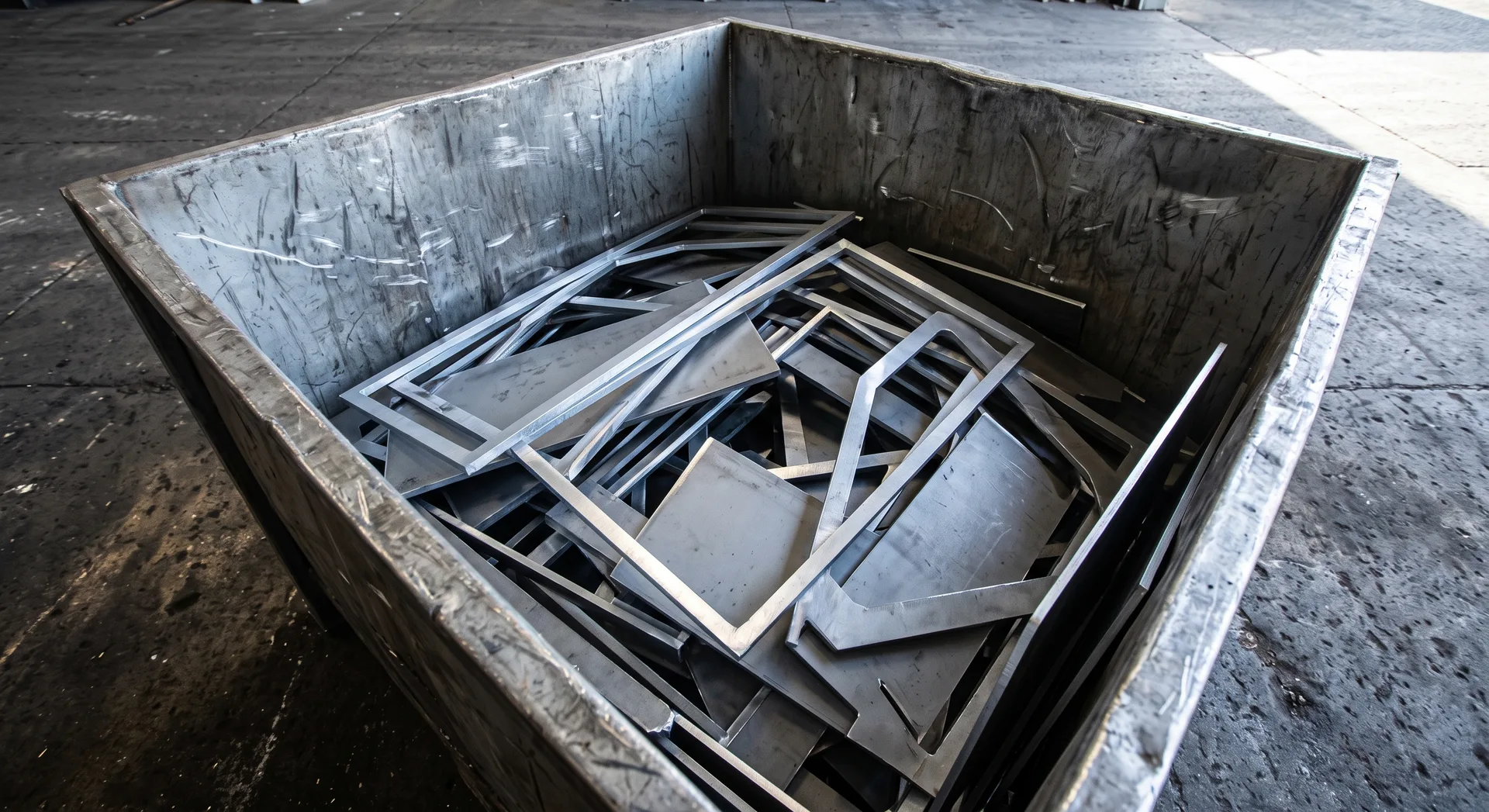
Aerospace machining turns most of a titanium forging into swarf, so secondary supply exists in volume — but specification, not volume, decides which market it can be sold into.
Pending review
The short version
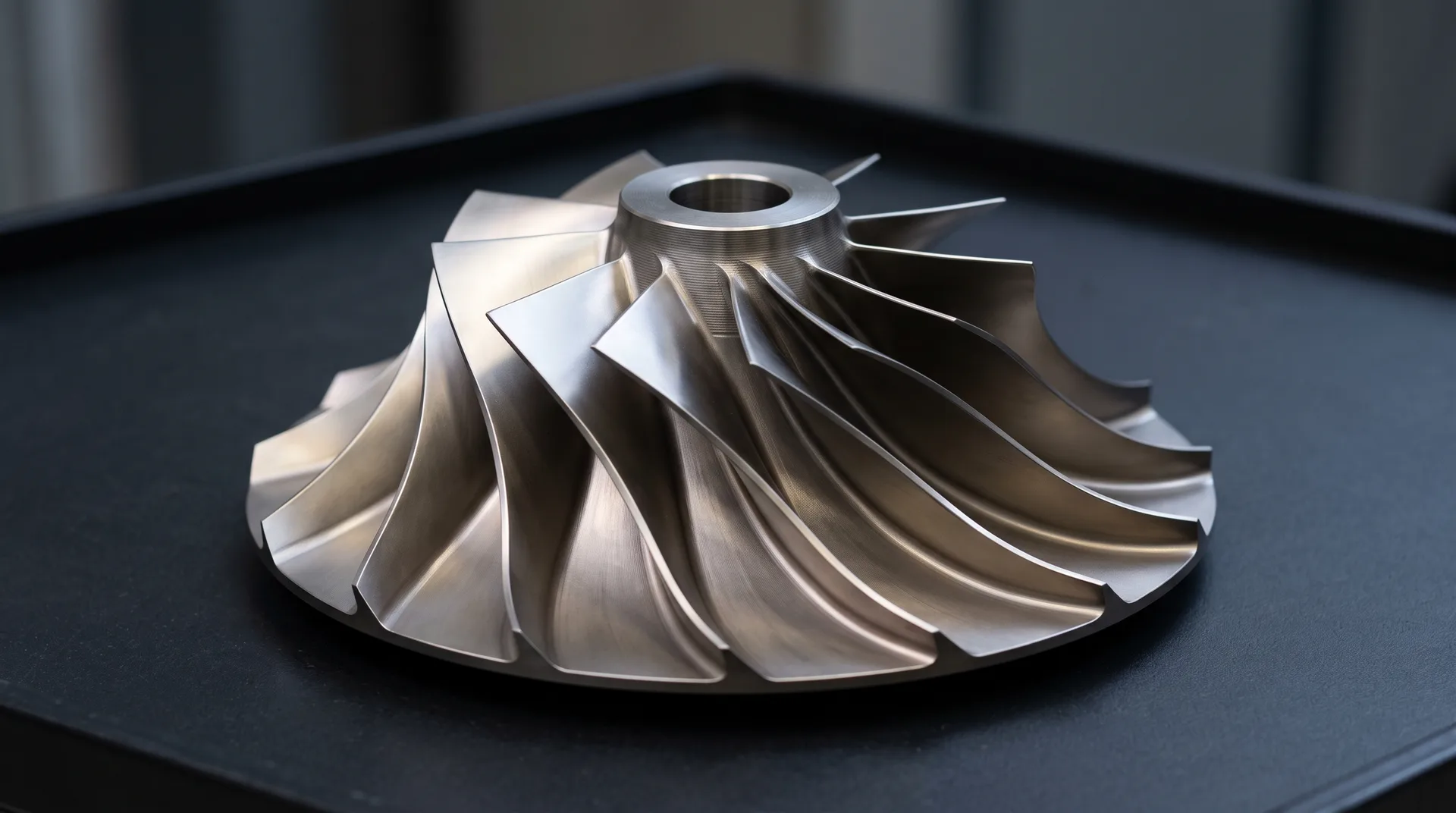
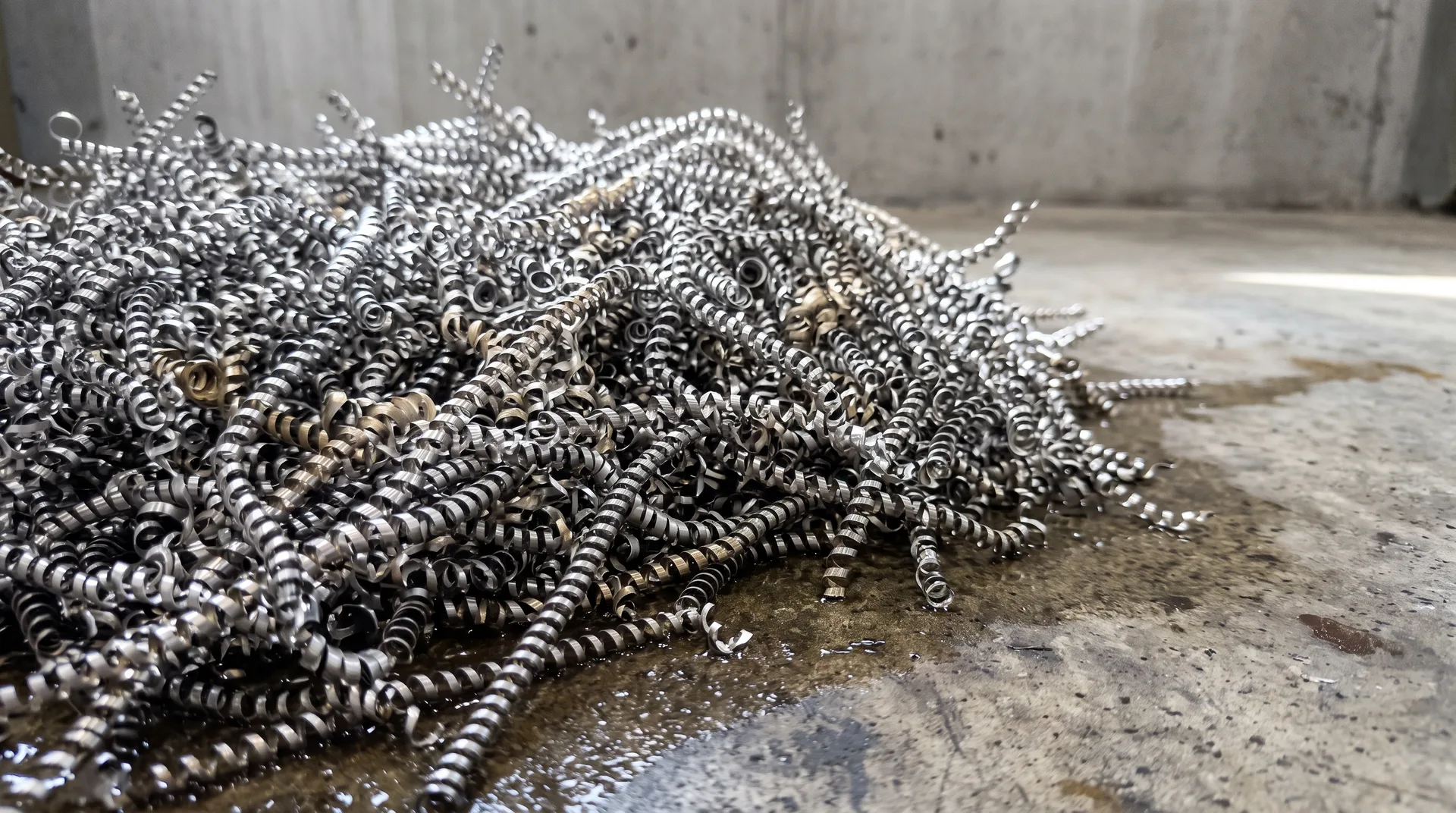
Making an aerospace titanium part mostly consists of removing titanium. The scrap that results is real, clean, alloyed metal in large quantities — and where it can go next is decided by specification rather than by how much of it there is. Some returns to the titanium industry; some leaves for the steel industry as ferrotitanium and never comes back. Those are two different markets, and treating them as one secondary supply is the commonest error in reading this material. Why aerospace titanium scrap ends up in steel covers the recovery mechanism — how much is lost in machining, why the aerospace door is narrow, and what the trade's vocabulary means. This article takes that as given and asks the question that follows it: what the resulting stream is worth as supply.
The volume is not in doubt
The peer-reviewed figure for how much of a forging survives to become a part is unflattering and consistent. One study of aerospace machining waste gives a typical buy-to-fly ratio for such components as "approximately 9:1", and notes examples where up to 95% "of an expensive titanium alloy forging is machined away and disposed of". A national-laboratory report puts the same thing as a mass loss, and states it twice, in two places and on two bases — once as an upper bound, once as a typical case. That accounting, with the buy-to-fly range from three further sources, belongs to Why aerospace titanium scrap ends up in steel.
Both figures above carry their hedges — typical, approximately, up to — and both describe the same physical situation. The secondary stream in titanium is not a trickle from end-of-life products decades hence. Most of it is generated the same week the part is made.
What decides where it can go
The constraint is not collection. It is what a melter is permitted to put in the furnace.
FAA guidance for premium quality titanium rotating engine components sets out that charge materials "should be composed of only approved raw materials, such as sponge, master alloys, elemental additions, titanium oxide, and recycled material (where permitted)" — and the parenthesis is where this article lives. Its recycled-material section then limits by form. In general, "only turnings should be permitted to be directly recycled in multiple VAR processed premium quality titanium alloy". Bulk weldables "should be prohibited for use in multiple VAR processed material, except when previously melted (consolidated) by an approved CHM process". Finer material — grinding products, dust and sludge — is prohibited outright, and the failure mode the whole scheme is built against, the high density inclusion whose presence in a single indication condemns a heat, is set out in Why aerospace titanium scrap ends up in steel.
Note the register: this is advisory guidance, written in should, and the operative specifications for any given engine belong to its manufacturer. But the shape of the restriction is clear, and it is not a percentage. It is a rule about physical form, cleanliness and inspectability.
The question a melter asks about scrap is never how much there is. It is what shape it came in, and what got into it on the way.
Chemistry does the rest
The second constraint is what melting can and cannot fix. As PNNL states it, the melting process "removes most volatile impurities but cannot separate out the nonvolatile metal impurities". Oxygen in particular travels with the metal, and the working response is dilution: current recycling approaches "require that Ti scrap be diluted with ~50% fresh Ti sponge to manage oxygen content" — a laboratory's account of practice rather than a written limit, and hedged with its own approximation.
How little it takes to fall outside a specification is worth seeing concretely. In the study cited above, the swarf was "out of specification against the 0.08% carbon, 0.20% oxygen, and 0.05% nitrogen stated in ASTM B381-13" because it exceeded "the oxygen level requirement by 0.01%" — one hundredth of a percentage point, on one element, in one particular sample.
So the stream splits, and the split is the market story
USGS's last published breakdown of where American titanium scrap actually went shows the two destinations side by side: about 45,000 tons of titanium scrap metal was consumed in 2020 — "35,000 tons by the titanium industry, 8,000 tons by the steel industry, less than 500 tons by the superalloy industry, and the remainder in other industries", the figure carrying USGS's own about and less than.
The steel destination is not a lesser form of the same market; it is a different market. USGS's yearbook records that ferrotitanium "usually is produced by induction melting of titanium scrap with iron or steel but may be produced through the aluminothermic reduction of ilmenite", and that in the steel industry titanium "was used for deoxidation, grain-size control, and control and stabilization of carbon and nitrogen content" — consumed as a chemical additive, in tonnages a mill decides on its own grounds. It also notes that a significant quantity of titanium "in the form of ferrotitanium, scrap, and sponge was consumed in the steel and nonferrous alloy industries" — a sentence that attaches no figure of its own to that quantity.
Read as supply, that produces a specific conclusion, and it is ours rather than any source's: secondary titanium displaces primary sponge only in the segments whose specifications will accept it, and in every other segment it is not competing supply at all — it has left for an unrelated market where its titanium content is a reagent. A market analysis that adds the two together and calls the result recycled titanium supply has counted material that can never come back.
One further caution belongs with those figures. The current editions do not publish the split at all: the titanium-industry figure is withheld and the steel, superalloy and other-industry figures are not available (usgs_ti26), a sentence quoted in full in Why aerospace titanium scrap ends up in steel. The most useful number in this subject is one nobody currently publishes — which is why the 2020 breakdown above is carrying so much of the weight here.
Related
- Why aerospace titanium scrap ends up in steel (Sustainability · Recycling) — the recovery mechanism this article takes as given: machining loss, the HDI rule and the trade's vocabulary
- Recycling Technology — the processes that determine what a stream can become
- Supply & Demand — the primary balance this stream competes inside
- Processing Capacity — the melting and qualification steps that gate re-entry
- Titanium/Rutile — the primary production this stream returns to, or does not
Sources
- PRIMARYWeston, N.S., and Jackson, M., 'FAST-forge of Titanium Alloy Swarf: A Solid-State Closed-Loop Recycling Approach for Aerospace Machining Waste', Metals (MDPI) 10(2):296, 2020. Typical buy-to-fly ratio of approximately 9:1; up to 95% of a titanium alloy forging machined away; and the statement that the swarf studied was out of specification against ASTM B381-13 by exceeding the oxygen requirement by 0.01%.
- PRIMARYPacific Northwest National Laboratory, PNNL-36607, 'Recycling of Titanium Scrap by Shear Assisted Processing and Extrusion (ShAPE)', September 2024. The report states its ~90 wt.% machining-loss figure twice and on two bases ('may result in up to ~90 wt.% material loss as swarf during machining' and 'commonly, machining loss is high with ~90 wt.% of the material being converted to scrap'); that figure is NOT quoted in this article, which defers to 59-why-aerospace-titanium-scrap-ends-up-in-steel for it. Used here for the statement that current recycling approaches require Ti scrap to be diluted with ~50% fresh Ti sponge to manage oxygen content; and the statement that melting removes most volatile impurities but cannot separate nonvolatile metal impurities. A national-laboratory characterisation of industry practice, not a specification.
- PRIMARYFAA Advisory Circular AC 33.15-1A, 'Manufacturing Process of Premium Quality Titanium Alloy Rotating Engine Components'. Section 8.1.1 on approved charge materials; section 8.1.1.7 on recycled material, including the limitation of direct recycling to turnings in multiple VAR processed premium quality alloy, the prohibition on bulk weldables except when previously melted by an approved CHM process, and the prohibition on recycling grinding products, dust and sludge. Advisory guidance, written throughout in 'should' language.
- PRIMARYU.S. Geological Survey, Mineral Commodity Summaries 2021 (January 2021) — Titanium and Titanium Dioxide, 'Recycling' paragraph: 'About 45,000 tons of titanium scrap metal was consumed in 2020—35,000 tons by the titanium industry, 8,000 tons by the steel industry, less than 500 tons by the superalloy industry, and the remainder in other industries.'
- PRIMARYU.S. Geological Survey, Mineral Commodity Summaries 2026 — Titanium and Titanium Dioxide, 'Recycling' paragraph: 'Owing to limited responses from voluntary surveys, consumption data for titanium scrap metal for the titanium metal industry were withheld. Consumption data for titanium scrap for the steel, superalloy, and other industries were not available.'
- PRIMARYGambogi, Joseph, U.S. Geological Survey, 2022 Minerals Yearbook — Titanium [Advance Release], August 2025. How ferrotitanium is usually produced; the statement that a significant quantity of titanium in the form of ferrotitanium, scrap and sponge was consumed in the steel and nonferrous alloy industries; and titanium's uses in the steel industry.
- ANALYSISANALYSIS — the framing of secondary titanium as competing with primary supply in one segment and leaving the market entirely in another is this publication's reading of the sources above. Note what is NOT claimed: no source consulted states a percentage limit on revert content in an aerospace specification; the FAA guidance restricts recycled material by form and inspection regime rather than by proportion; and no current split of US scrap consumption between industries is published.Non-public document · no public URL