Minerals Hub / Companies & Organisations / Who certifies the number a claim rests on
Companies & Organisations · · 4 min read
Who certifies the number a claim rests on
A commercial laboratory sells a figure that other people's disclosures depend on, and an entire international structure exists to make that figure mean the same thing everywhere.
Pending review
The short version
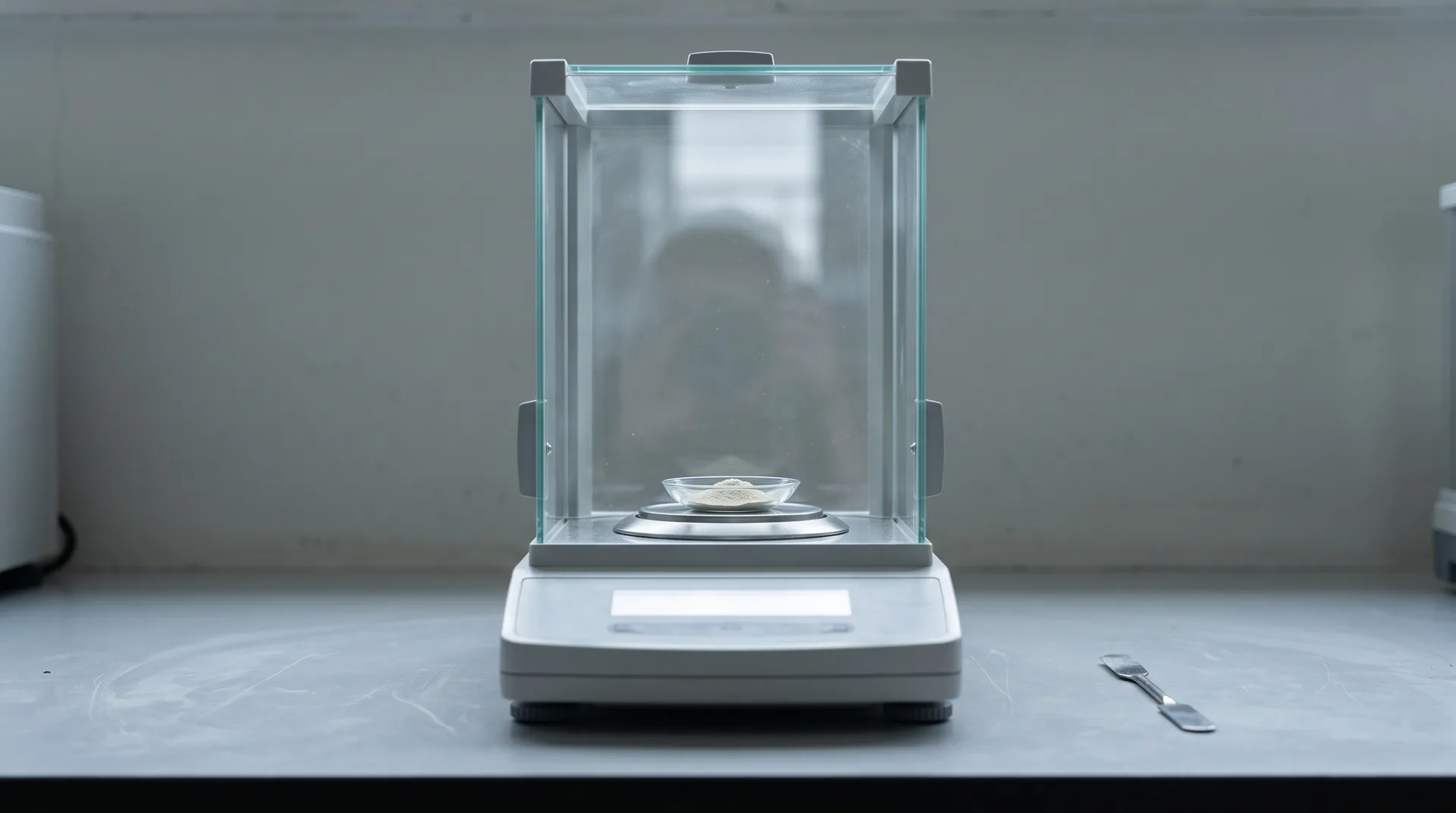
Among the firms selling know-how to this industry, the commercial laboratory is the one whose output travels furthest: an assay result becomes a public disclosure, and other people act on it. The structure holding that up is a standard, ISO/IEC 17025:2017, 'General requirements for the competence of testing and calibration laboratories', whose stated scope is the general requirements for the competence, impartiality and consistent operation of laboratories. Accreditation against it is not a quality badge. It is the mechanism by which a number obtained in one country is accepted in another.
Competence is a thing somebody assesses
The word doing the work is competence, and in this system it has a technical meaning. UK government guidance defines accreditation as ensuring that those who carry out activities such as testing, calibration, certification and inspection 'are competent to do so'.
That is different from certification, and conflating the two is the commonest error in this area. An accreditation body puts it plainly: accreditation 'represents a formal and authoritative recognition that an organisation is technically competent to perform specific activities most commonly in the areas of testing, calibration, inspection, and related technical services', while certification 'is a formal confirmation that an organisation, product, process, or individual meets the requirements of a specific standard'. One is a judgement about capability; the other is a confirmation of conformity to a standard's requirements. A laboratory can be certified to a management-system standard and still not be accredited to perform a particular test.
Why a result crosses borders at all
The reason accreditation matters commercially is that its recognition is reciprocal by arrangement. ILAC describes itself as the international organisation for accreditation bodies operating in accordance with ISO/IEC 17011 and involved in the accreditation of conformity assessment bodies including calibration and testing laboratories using ISO/IEC 17025.
The arrangement's own text is the load-bearing part. Each signatory recognises the accreditation of a conformity assessment body by other signatories 'as being equivalent to an accreditation by its own accreditation body', and accepts endorsed certificates or reports issued by bodies accredited by other signatories 'on the same basis as it accepts endorsed certificates or reports issued by its own accredited CABs'.
Equivalence, declared in advance. That is why a sample taken in one jurisdiction, assayed in a laboratory in a second, can support a disclosure filed on an exchange in a third without anyone re-running the analysis.
The laboratory does not sell a measurement. It sells a measurement that somebody else's regulator will accept without repeating it.
What the reporting codes ask of it
The demand side of this is written into the mining reporting codes, which require that the analytical work be described rather than assumed. The JORC Code's disclosure table asks a reporting company to include reference to measures taken to ensure sample representivity and the appropriate calibration of any measurement tools or systems used — calibration, named explicitly, in a code about public reporting rather than about laboratory practice.
The practical content of that obligation is set out more fully in professional-institution guidance. One such document states that quality assurance and quality control programmes 'should be planned and implemented as integral components of an exploration program', and 'should include submission of external blanks, certified reference materials, and duplicate samples, and regular check sampling by a third-party analytical laboratory'. Note the composition: something known to be barren, something of known value, a repeat of a real sample, and a second laboratory. Each is inserted to catch a different failure — contamination, drift, imprecision, and systematic bias in the primary laboratory.
How often they should be inserted is left to judgement: the same guidance says only that they should appear frequently enough to provide statistical confidence in the results, and gives no rate. Sample security is treated as part of the same system, with the guidance stating that the security of samples from acquisition to analysis 'is a vital component of the sampling and analysis process'.
One caveat about this article's own sourcing, in keeping with the subject. The JORC criterion rows dealing specifically with sub-sampling and with assay quality could not be retrieved from the code's published PDF across repeated attempts, and nothing is quoted from them here. The substance above comes from the sampling criterion, which was retrieved, and from institution guidance that was.
The other knowledge businesses, briefly
Laboratories are the clearest case because their product is a number, but the category is broader — process licensors, consultancies, software vendors — and their business models differ in ways that matter to adoption. On licensing, an intergovernmental training manual describes royalty income as coming usually and primarily 'in the form of an ongoing incremental income stream on the basis of the success of the product in the marketplace', with a lump-sum, fully paid-up licence as the alternative structure.
What a process licensor guarantees — recovery, yield, reagent consumption — is the question that follows, and no citable source for it was obtained. It is named here as a gap rather than filled, which is the same discipline the rest of this article is about.
Related
- Equipment Suppliers — the physical-plant side of the same market
- Research Organisations — where methods originate before anyone licenses them
- Mining Companies — the disclosures these numbers end up inside
Sources
- PRIMARYISO/IEC 17025:2017, 'General requirements for the competence of testing and calibration laboratories', third edition, published November 2017, status Published (confirmed 2023). ISO catalogue record read; the standard itself is paywalled and no clause text was read.
- SECONDARYANAB (ANSI National Accreditation Board), 'ISO/IEC 17025' programme page (undated), reproducing the standard's scope — 'This document specifies the general requirements for the competence, impartiality and consistent operation of laboratories', and 'This document is applicable to all organizations performing laboratory activities, regardless of the number of personnel.' An accreditation body's reproduction, not the standard itself.
- PRIMARYILAC, 'About ILAC', last modified 30 October 2023 — 'ILAC is the international organisation for accreditation bodies operating in accordance with ISO/IEC 17011 and involved in the accreditation of conformity assessment bodies including calibration laboratories (using ISO/IEC 17025), testing laboratories (using ISO/IEC 17025)…'.
- PRIMARYILAC-P5:06/2022, 'ILAC Mutual Recognition Arrangement: Scope and Obligations', ILAC, June 2022, Section 4 — each signatory 'recognises within its scope of recognition of the ILAC Arrangement the accreditation of a CAB by other signatories as being equivalent to an accreditation by its own accreditation body', and 'accepts, for its own purposes, endorsed certificates or reports issued by CABs accredited by other signatories on the same basis as it accepts endorsed certificates or reports issued by its own accredited CABs.' Read from the copy hosted by NIST.
- PRIMARYGOV.UK (Department for Business and Trade / Office for Product Safety and Standards), 'Conformity assessment and accreditation', last updated 16 March 2026 — 'Accreditation ensures that those who carry out activities such as conformity assessment (e.g., testing, calibration, certification and inspection), usually conformity assessment bodies (CABs), are competent to do so.'
- PRIMARYNATA (National Association of Testing Authorities, Australia), 'Demystifying Accreditation and Certification', 12 January 2026 — 'Accreditation represents a formal and authoritative recognition that an organisation is technically competent to perform specific activities most commonly in the areas of testing, calibration, inspection, and related technical services'; 'Certification is a formal confirmation that an organisation, product, process, or individual meets the requirements of a specific standard.'
- PRIMARYThe JORC Code, 2012 Edition, Table 1 Section 1, criterion 'Sampling techniques' — 'Include reference to measures taken to ensure sample representivity and the appropriate calibration of any measurement tools or systems used', and the worked example of industry standard work. NOTE: the criterion rows 'Sub-sampling techniques and sample preparation' and 'Quality of assay data and laboratory tests' could not be retrieved from the JORC Code PDF across repeated attempts, and nothing is quoted from them in this article.
- PRIMARYCanadian Institute of Mining, Metallurgy and Petroleum, 'CIM Mineral Exploration Best Practice Guidelines', adopted 23 November 2018 — 'QA/QC programs appropriate to the type of sample and the mineralization should be planned and implemented as integral components of an exploration program. These programs should include submission of external blanks, certified reference materials, and duplicate samples, and regular check sampling by a third-party analytical laboratory'; 'Blanks and certified reference material samples should be included in the sample set frequently enough to provide statistical confidence in the results' (no numeric insertion rate is given); and 'The security of samples from acquisition to analysis is a vital component of the sampling and analysis process.'
- PRIMARYWIPO and the International Trade Centre, 'Exchanging Value — Negotiating Technology Licensing Agreements: A Training Manual' — royalty income described as 'usually and primarily in the form of an ongoing incremental income stream on the basis of the success of the product in the marketplace', and the alternative of a lump-sum, fully-paid-up licence.
- UNVERIFIEDGAP — no citable engineering-institution or government source was obtained describing what a process technology licensor guarantees (yield, recovery, consumption), or royalties expressed per tonne of throughput. The one government licensing document located disclaims warranties rather than granting them, and is not used to characterise licensor guarantees.Non-public document · no public URL
- UNVERIFIEDGAP — no clause text from ISO/IEC 17025:2017 on impartiality or competence was read; the standard is paywalled, and the scope statement quoted here comes from an accreditation body's reproduction rather than from ISO.Non-public document · no public URL