Minerals Hub / Applications & Industries / The white in everything: ilmenite and TiO₂ pigment
Applications & Industries · Ilmenite · 4 min read
The white in everything: ilmenite and TiO₂ pigment
The whiteness of paint, plastic and paper comes from one compound — titanium dioxide — and ilmenite is the mineral most of it starts as.
Reviewed by Peter Uppal
The short version
Titanium dioxide is the pigment that makes paint, plastics and paper white and opaque; nothing else scatters light and hides a surface as effectively (Essential Chemical Industry). Ilmenite, an iron-titanium oxide, is the most common natural feedstock for that pigment (USGS 2025). Osmond reports Orión ilmenite in bulk channel samples at 4.82–6.19% — the smaller partner to its dominant rutile (osm_grade) — an exploration result, not a resource. Mineral percentages here are mass-balance estimates — calculated from oxide assays rather than directly measured — and that basis applies to every mineral percentage in this article.
Why titanium dioxide is everywhere
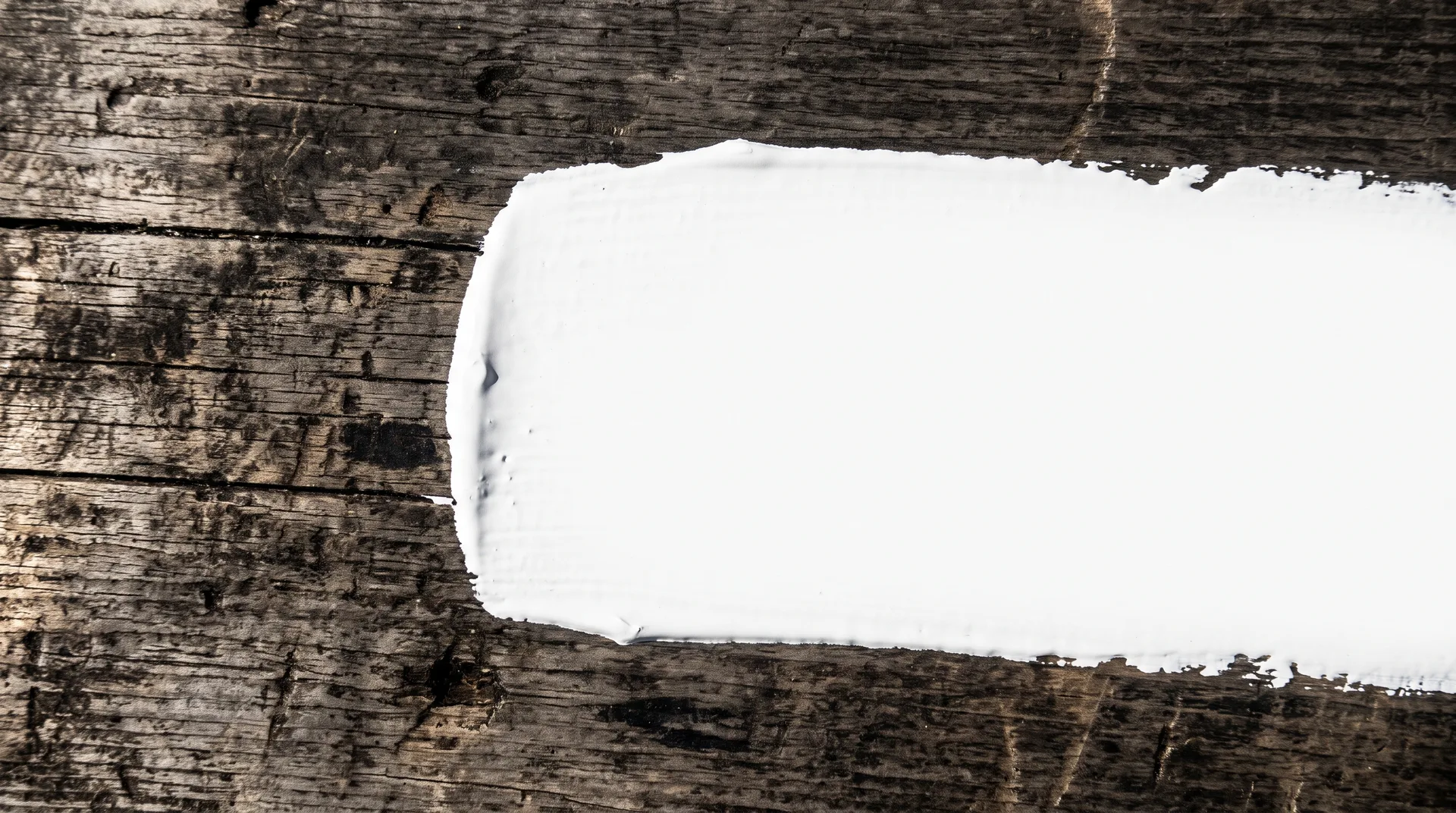
Look around a room and most of the white you see owes its whiteness to a single compound: titanium dioxide, TiO₂. It is the pigment in wall paint, in white and coloured plastics, in paper, in coatings and inks.
The reason is optical. TiO₂ has an exceptionally high refractive index — around 2.5 — which means it bends and scatters light more strongly than almost any other white material, giving it the highest "hiding power" of any white pigment (Essential Chemical Industry). In practice that means a little goes a long way: a thin layer of paint can completely mask what's beneath it. TiO₂ is also chemically inert and resists degradation by ultraviolet light, so the colour stays put over years of sun and weather (Essential Chemical Industry). No cheaper white pigment matches that combination, which is why titanium dioxide dominates the market it defines.
From ilmenite to pigment
That pigment has to come from somewhere, and mostly it comes from ilmenite. Ilmenite is an iron-titanium oxide and the most abundant titanium mineral; its TiO₂ content ranges from 35% to 65%, well below natural rutile's ~95% — but ilmenite is far more plentiful (USGS Minerals Yearbook).
There are two industrial routes from mineral to pigment. The older sulfate process can take lower-grade feedstocks such as ilmenite directly. The newer chloride process, which now accounts for roughly two-thirds of world production, favours higher-titanium feedstocks — rutile, synthetic rutile, or high-grade ilmenite — and runs continuously (Essential Chemical Industry; USGS 2025). Either way, the goal is the same: strip out the iron and impurities and finish with purified titanium dioxide of pigment quality. Because ilmenite is common and comparatively cheap, it underpins the bulk of the pigment supply even though it starts further from pure TiO₂ than rutile does.
Most of the white in the manufactured world begins as ilmenite — the common titanium mineral doing the quiet, heavy lifting.
Where Orión's ilmenite sits
At Orión the roles are, in a sense, reversed from the global norm — and only Osmond's figures apply here. Osmond reports that the deposit is rutile-dominant, with rutile outweighing ilmenite by roughly two to one or more; ilmenite is the smaller titanium mineral in the assemblage (osm_grade). In the Zone 1 bulk channel samples, ilmenite runs 4.82% to 6.19% (osm_grade, mass-balance), against rutile's 13.36–13.49% (mass-balance) in the same samples.
That ordering shapes how to read the deposit. Osmond describes its initial titanium product as a mixed titanium concentrate with a high rutile content (osm_zircon) — a reflection of the rutile-heavy mineralogy rather than an ilmenite-led pigment feed. Whether Orión's ilmenite would ultimately move as a pigment feedstock, a co-product, or something blended into that mixed concentrate is not something the releases specify, and this article won't guess.
What ilmenite earns is context. It is the mineral behind most of the world's titanium-dioxide pigment, the quiet reason so much of the manufactured world is white and opaque. At Orión it plays a supporting role to rutile — present, quantified in the bulk samples, and part of a titanium story whose lead character is the higher-grade mineral.
Orión data card — Ilmenite
| Status | Assayed / quantified |
| Bulk channel samples | Ilmenite 4.82–6.19% (osm_grade, mass-balance) |
| Assemblage | Rutile-dominant; ilmenite the smaller Ti mineral, rutile:ilmenite ≈ 2:1+ (osm_grade) |
| Processing | Mixed titanium concentrate, high rutile content (osm_zircon) |
| Pigment role (general) | Ilmenite 35–65% TiO₂; main feedstock for TiO₂ pigment via sulfate/chloride routes (USGS Minerals Yearbook; ECI) |
→ See the full Ilmenite dossier in the mineral hub.
Exploration results and mineralogical estimates only. Orión has no JORC-compliant Mineral Resource or Reserve; maiden MRE and Scoping Study pending, targeted Q3 CY26.
Sources
- Osmond figures: [osm_grade — 19 Feb 2026], [osm_zircon — 3 Mar 2026] (ASX:OSM releases)
- USGS Mineral Commodity Summaries 2025 — Titanium Minerals
- The Essential Chemical Industry — Titanium dioxide
Related reading
- Rutile vs ilmenite: why the split matters (Science · Rutile, Ilmenite)
- Why aerospace still can't design titanium out (Applications · Rutile)
- From outcrop to 187.8 metres: what the maiden drilling found (The Deposit · Rutile)
Sources
- PRIMARYosm_grade — ASX:OSM release, 19 Feb 2026 (bulk-sample ilmenite grades Table 3; rutile:ilmenite ratio).
- PRIMARYosm_zircon — ASX:OSM release, 3 Mar 2026 (mixed titanium concentrate with high rutile content, p.4).
- PRIMARYUSGS Mineral Commodity Summaries 2025 — Titanium Minerals (ilmenite vs rutile TiO₂ content; pigment and feedstock uses): https://pubs.usgs.gov/periodicals/mcs2025/mcs2025-titanium-minerals.pdf
- SECONDARYThe Essential Chemical Industry (University of York, CIEC) — 'Titanium dioxide' (pigment properties; sulfate vs chloride processes; share of production): https://www.essentialchemicalindustry.org/chemicals/titanium-dioxide.html