Minerals Hub / Geography & Supply Chains / What a scoping study is allowed to tell you
Geography & Supply Chains · · 5 min read
What a scoping study is allowed to tell you
The code defines the study as an order-of-magnitude exercise; the listing rules then decide what may be published from it, and the trigger is the forecast rather than the geology.
Reviewed by Peter Uppal
The short version
Under the Australasian reporting code, a scoping study is defined as an order-of-magnitude assessment of potential viability — and the code says so in that language, hedge by hedge. What decides how much of it a listed company may publish is a separate instrument: the listing rules, which fire not on the study but on the forecast of production drawn from it, and which attach a mandatory cautionary statement to each grade of geological confidence underneath.
The study has a definition, and it is a modest one
The JORC Code's own words are worth reading slowly, because almost every clause in them is qualified. A Scoping Study "is an order of magnitude technical and economic study of the potential viability of Mineral Resources". The clause continues — "including appropriate assessments of realistically assumed Modifying Factors together with any other relevant operational factors that are necessary to demonstrate at the time of reporting that progress to a Pre-Feasibility Study can be reasonably justified" — but that continuation appears in none of the three retrieved extracts of the Code, so it is given here without a link pending a reading off the page.
Order of magnitude. Potential viability. Realistically assumed. Reasonably justified. Four hedges, on this article's count rather than the Code's, and the sentence that follows draws a hard line: a Scoping Study "must not be used as the basis for estimation of Ore Reserves". The Code also supplies the cautionary wording it expects to see attached, which describes the study as based "on low-level technical and economic assessments, and is insufficient to support estimation of Ore Reserves or to provide assurance of an economic development case at this stage, or to provide certainty that the conclusions of the Scoping Study will be realised".
ASX's own guidance places the study in the sequence plainly: Scoping Studies "are commonly the first economic evaluation of a project undertaken".
The evidence underneath it comes in grades
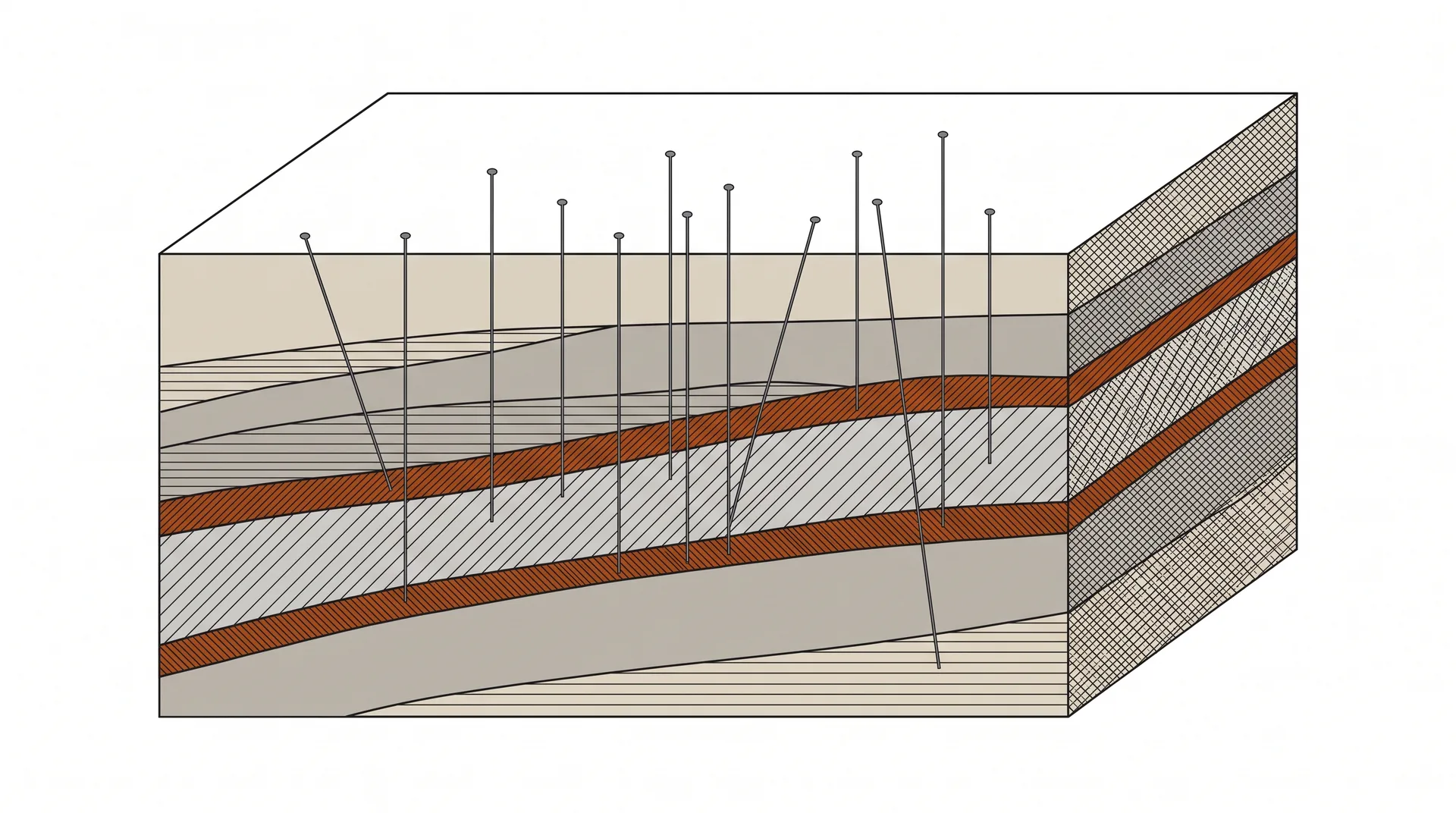
A study is only as good as what it is built on, and the Code sorts that material into three confidence classes. An Inferred Mineral Resource is "that part of a Mineral Resource for which quantity and grade (or quality) are estimated on the basis of limited geological evidence and sampling". An Indicated Mineral Resource is estimated "with sufficient confidence to allow the application of Modifying Factors in sufficient detail to support mine planning and evaluation of the economic viability of the deposit"; a Measured Mineral Resource, "with confidence sufficient to allow the application of Modifying Factors to support detailed mine planning and final evaluation of the economic viability of the deposit".
The Code then treats those classes differently by study stage, and the difference in its language is the point. For the later studies it is categorical: confidence in Inferred Mineral Resources "is not sufficient to allow the results of the application of technical and economic parameters to be used for detailed planning in Pre-Feasibility (Clause 39) or Feasibility (Clause 40) Studies". For the scoping stage it is not: caution "should be exercised if Inferred Mineral Resources are used to support technical and economic studies such as Scoping Studies".
That is a permission with a warning attached, not a prohibition, and reading it as a prohibition is the commonest way to get this wrong in either direction.
The code does not stop a company using its least certain material. It stops the company being quiet about having done so.
What actually triggers the rules
The listing rules for Australian-listed entities attach their disclosure machinery to something other than the study itself — which is an observation about where the obligations sit, not a ranking the rules themselves make. Chapter 19 does not even define the study independently — it gives it the meaning in Appendix 5A, the JORC Code. What Chapter 19 does define, and what the disclosure machinery of Chapter 5 is built around, is a different object: a production target, "a projection or forecast of the amount of minerals to be extracted from a particular mining tenement or tenements for a period that extends past the current year and the forthcoming year".
Publish one of those and Rule 5.16 engages. Among other things it requires disclosure of the relevant proportions of proved and probable ore reserves, of inferred, indicated and measured mineral resources, and of an exploration target, underpinning the target — so the confidence mix becomes a published fact rather than a modelling assumption. Each of the weaker categories then carries prescribed wording. Where any proportion rests on inferred resources, the statement must say that there "is a low level of geological confidence associated with inferred mineral resources", with equal prominence to the target itself; where it rests on an exploration target, that the potential quantity and grade is conceptual in nature, "there has been insufficient exploration" to determine a resource. And where the production target "is based solely on inferred mineral resources", the rule adds an independent technical report and a further, longer caution.
Guidance Note 31 supplies the reason the machinery exists at all: production targets and the financial information derived from them are forward looking statements and "must be based on reasonable grounds or else they will be deemed to be misleading".
How to read one
Three things follow for anyone reading a study announcement.
The result is a range, not a number. ASX's guidance warns in its own words that reporting the results of a scoping study as a single specific figure "may mislead investors by conveying a degree of accuracy, rigour or certainty that is simply inappropriate" — note that this is a may, and that the guidance is guidance.
The confidence mix is disclosed, and it is the most informative part of the release. A target underpinned largely by measured and indicated material is a different document from one underpinned solely by inferred material, and the rules make that difference visible on the page.
And the cautionary statement is not boilerplate. It is prescribed text, matched to a specific weakness in the evidence, printed with equal prominence to the claim it qualifies — which means that skipping it discards the one part of the announcement written by someone with no interest in the outcome.
Related
- Mining Regions — the districts these developments sit within
- Regulation — the wider approval sequence a project passes through
- Processing Capacity — the downstream step a study has to assume
- Market Developments — why an announcement and an operating asset are different things
- Exploration — the sampling and assaying the confidence classes are built from
Sources
- PRIMARYAustralasian Code for Reporting of Exploration Results, Mineral Resources and Ore Reserves (JORC Code), 2012 Edition. Clause 21 (Inferred Mineral Resource definition; the limits on using Inferred material in Pre-Feasibility and Feasibility Studies; the 'caution should be exercised' wording for Scoping Studies); Clause 22 (Indicated); Clause 23 (Measured); Clause 38 (Scoping Study definition, the Ore Reserve prohibition, and the recommended cautionary statement).
- PRIMARYASX Listing Rules, Chapter 5 — Additional reporting on mining and oil and gas production and exploration activities. Rule 5.16 and its sub-rules, including 5.16.3 (the categories underpinning a production target), 5.16.4 and 5.16.5 (mandatory cautionary statements) and 5.16.6 (a production target based solely on inferred mineral resources); Rule 5.17 (forecast financial information derived from a production target). VERSION: read at the 1 July 2022 version; two live ASX URLs serve different versions of Chapter 5, so a claim about what the rules require needs its version attached.
- PRIMARYASX Listing Rules, Chapter 19 — Interpretation and definitions. Definition of 'production target'; 'scoping study' defined by reference to Appendix 5A (JORC Code) rather than independently.
- PRIMARYASX, guidance on reporting scoping studies (with checklist), November 2016. 'Scoping Studies are commonly the first economic evaluation of a project undertaken'; the caution that reporting a scoping study result as a single specific figure 'may mislead investors'.
- PRIMARYASX Guidance Note 31, 'Reporting on Mining Activities'. Section 8.1 definition of a production target; the statement that production targets and forecast financial information derived from them are forward looking statements which must be based on reasonable grounds.
- ANALYSISANALYSIS — the reading that the disclosure trigger is the forecast rather than the geology, and that the code permits with caution what the listing rules then make expensive to say, is this publication's framing. Note what is NOT claimed: JORC does not prohibit the use of Inferred Mineral Resources in a Scoping Study, and no source consulted describes the two instruments as being in tension.Non-public document · no public URL