Minerals Hub / Mining & Production / From 50.2% to premium: the zircon target
Mining & Production · Zircon · 9 min read
From 50.2% to premium: the zircon target
Osmond's first zircon concentrate came in at 50.2% ZrO₂, with a stated target of ≥66% — the grade Osmond calls premium, and one that sits close to zircon's stoichiometric ceiling of 67.2% ZrO₂.
Reviewed by Peter Uppal
The short version
Osmond's preliminary testwork produced a combined zircon concentrate grading 50.2% ZrO₂ — by mass, of concentrate — at about 70% recovery, with roughly 97.4% of the zircon liberated from other minerals; the company's stated target for further testwork is ≥66% ZrO₂, which Osmond describes as premium grade (osm_zircon, 3 Mar 2026). That target is meaningful because stoichiometric zircon is 67.2% ZrO₂ by weight — so ≥66% sits right against the mineral's chemical ceiling. This is preliminary testwork, not a production spec.
For three days in August 2026, there was a middle term between that achieved result and the premium target: a Scoping-flowsheet design value, published on 14 August and retracted by Osmond on 17 August after ASX ruled the design statement a production target under the Listing Rules (osm_retraction, 17 Aug 2026). The story is now two numbers again — a result and a target — and the retraction itself is worth understanding, because it is a live demonstration of the disclosure rules this publication keeps pointing at. Both are explained below.
The ceiling, and the yardstick
To read the numbers, you need two reference points, and it matters which is which.
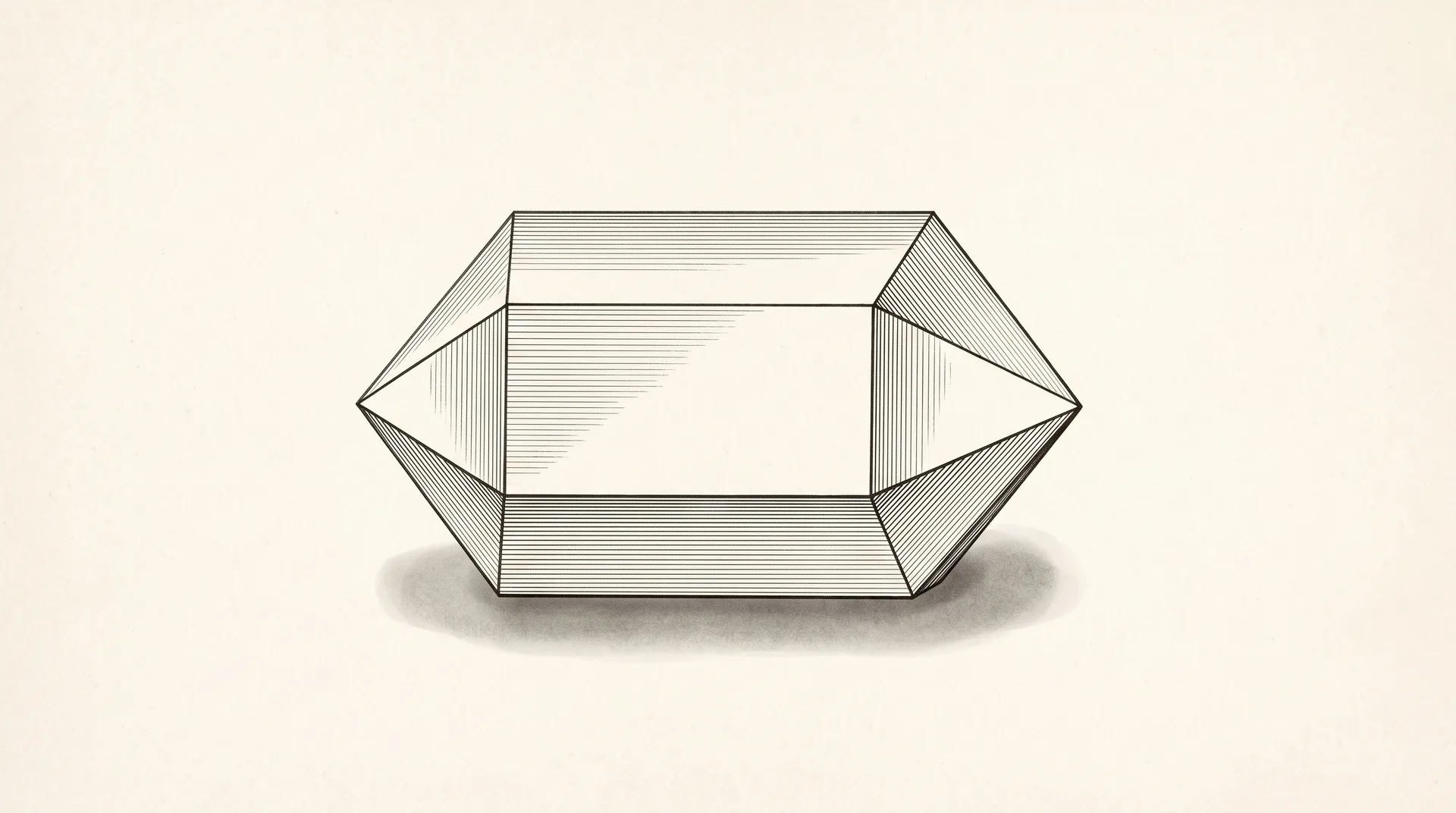
The first is chemistry. Zircon is zirconium silicate, ZrSiO₄, and by stoichiometry a perfectly pure zircon crystal is 67.2% ZrO₂ by weight — the rest is silica. That is the ceiling: no zircon concentrate can exceed it, because the zirconium is chemically bound to silicon.
The second is the commercial yardstick, and — as the zirconium reference page notes — commercial concentrate is typically specified around 65%, stated as ZrO₂ plus HfO₂ combined rather than ZrO₂ alone: the two elements are not separated at this stage. Both figures are carried publication-wide under the same ruling, so a correction to either sweeps both locations.
The word premium in this article is Osmond's own, used for its own ≥66% ZrO₂ target (osm_zircon, 3 Mar 2026). It is the company's characterisation of what it is aiming at, not a market definition applied here. Zircon's end uses are broad — the USGS lists ceramics, use as an opacifier, foundry work and refractories — and where a concentrate lands against the commercial range is a matter for the buyer and the specification, not for this article.
Alongside Osmond's word sits a published commercial specification, on a different basis again. Fastmarkets' zircon assessments define quality for the premium-grade assessment as premium grade, "66.5% ZrO2 min" and for the standard-grade assessment as standard grade "min 65.5% ZrO2" — stated as ZrO₂ alone, where the ~65% benchmark above is stated as ZrO₂ plus HfO₂ combined. On those published boundaries, a ≥66% ZrO₂ product sits above the standard-grade minimum and below the premium-grade minimum. Both statements stand here as published: Osmond's target in Osmond's own word, the assessment's boundaries in the assessment's own numbers. Nothing is reconciled between them, because neither source reconciles them — the same two-basis treatment this publication uses for the monazite composition and for the mineral-versus-oxide zircon grades.
The result, and the streams behind it
Now Osmond's sourced numbers. Its preliminary metallurgical testwork produced a combined zircon concentrate grading 50.2% ZrO₂ (by mass, of concentrate) at about 70% recovery, with about 97.4% of the zircon liberated (osm_zircon, 3 Mar 2026). The release states that recovery figure without specifying whether it is zircon recovery or zirconium recovery, and the two are not interchangeable; it is carried here exactly as reported, unqualified.
Behind that combined figure were two streams. A cleaner stream 1 graded about 56% ZrO₂ at roughly 54% zirconium recovery and 97.5% liberation; a lower-grade stream 2 came in around 30% ZrO₂ at 93.2% liberation (osm_zircon, 3 Mar 2026). The release does not state the mass split between the two streams, so the combined 50.2% is reported here as Osmond reports it, not derived from the stream figures.
That 50.2% ZrO₂ is a result — achieved in preliminary testwork at SGS, as reported in the 3 Mar 2026 release. The gap between it and the ≥66% target is the distance the next round of testwork is meant to close.
Liberation — the number that makes the rest possible
The easy figure to skip past is liberation, and it may be the most important. Liberation is the percentage of the zircon grains that have been physically freed from the other minerals they were intergrown with. It matters because you cannot separate what is still stuck together: if zircon grains are locked to quartz or to titanium minerals, no amount of clever separation will pull out a clean, high-grade concentrate.
At roughly 97.4% liberation (osm_zircon, 3 Mar 2026), Osmond reports that almost all of the zircon in this material is physically available to be separated. High liberation doesn't guarantee a high-grade concentrate — but it is close to a precondition for one, which is why it sits alongside the grade figure rather than buried beneath it.
The Scoping flowsheet, and the retraction
On 14 August 2026, Osmond announced that Wood Australia had completed the Scoping Study flowsheet and quoted design-stream concentrate grades from it. Three days later, Osmond retracted the design statement. The Retraction Statement of 17 August 2026 records that ASX considered the 2.0 Mtpa processing-design statement a production target under the Listing Rules (Chapter 19 definitions; Chapter 5 mining reporting), that Osmond is not in a position to comply with Listing Rule 5.16, and that investors are warned not to rely on the retracted statement (osm_retraction, 17 Aug 2026). The design-stream grades quoted in the 14 August release — including the zircon design value — fall with it, and they are not quoted here.
Why the rule exists is the instructive part. A production target — a throughput, a saleable-product configuration — implies a mining operation, and the Listing Rules require such statements to stand on at least an Inferred Mineral Resource with stated material assumptions. Orión has no Mineral Resource yet; that is the central fact of its stage, stated at the top of this hub's overview. A design statement that got ahead of that sequence has been formally withdrawn — which is the disclosure regime working exactly as designed, and a cleaner illustration of "results are not resources, and neither is engineering" than any hypothetical this publication could construct.
What stands after the retraction is the same pair the story started with: a result of 50.2% ZrO₂ (achieved, SGS preliminary testwork, 3 Mar 2026) and a target of ≥66% ZrO₂ (Osmond's premium-grade aim, unachieved). Two numbers, two kinds, and the distance between them is real and undiminished.
The forward path toward the target runs through PFS-level work that the 14 August release described and the retraction does not disturb as activity: dry Induced Roll Magnetic Separator (IRMS) separation is a named PFS activity, and bulk-sample testing is underway at Nagrom in Perth, generating design data for PFS-level flowsheet development (osm_scoping_aug26, 14 Aug 2026). What that work may ultimately support in the way of published design figures is a matter for future, compliant disclosure.
On the commercial significance of the distinction, the release states that premium grade zircon attracts higher payabilities relative to standard zircon (about 65% ZrO₂) and zircon-in-concentrate (osm_scoping_aug26, 14 Aug 2026). That framing — payability tiers keyed to grade — is Osmond's commercial characterisation as published in the release; it is reported here as such, not offered as independent analysis.
The path, and its limits
Put together, the testwork sketches a path rather than a destination: most of the zircon is liberated, a first pass reached 50.2% ZrO₂ (result), and the stated aim remains ≥66% ZrO₂ (target). A flowsheet design value briefly sat between them and was retracted; the path now runs directly from the result to the target, through PFS work whose outputs await compliant disclosure.
What makes that aim demanding is the chemistry rather than any market band. Stoichiometric zircon is 67.2% ZrO₂, so a ≥66% product would land within about a percentage point of everything the mineral can chemically give. The limits are the usual ones, and they matter here as much as anywhere: this is preliminary metallurgy on bulk material, not an optimised flowsheet and not a resource; the ≥66% figure is a target, in Osmond's word, not an achieved grade. What the results establish is narrower and still real — the zircon is highly liberated, and an early concentrate reached 50.2% ZrO₂.
Stoichiometric zircon is 67.2% ZrO₂ by weight, so a ≥66% target is a run at the mineral's ceiling.
Testwork card — Orión zircon (preliminary)
| Preliminary combined concentrate | 50.2% ZrO₂ (by mass, of concentrate) at ~70% recovery, basis as reported (osm_zircon, 3 Mar 2026) |
| Liberation | ~97.4% (osm_zircon, 3 Mar 2026) |
| Stream 1 / Stream 2 | ~56% ZrO₂ (54% Zr recovery) / ~30% ZrO₂ (osm_zircon); mass split not stated |
| Scoping flowsheet design values | Published 14 Aug 2026; RETRACTED 17 Aug 2026 — ASX ruled the design statement a production target (LR 5.16); investors warned not to rely (osm_retraction) |
| PFS status | Commenced; IRMS separation a named PFS activity; Nagrom bulk-sample testing underway (osm_scoping_aug26, 14 Aug 2026 — activity facts undisturbed by the retraction) |
| Target | ≥66% ZrO₂ — Osmond's target, and Osmond's word "premium" (osm_zircon, 3 Mar 2026) |
| Commercial assessment specification | Fastmarkets zircon assessments, quality field: premium grade "66.5% ZrO2 min"; standard grade "min 65.5% ZrO2", stated as ZrO₂ alone (fastmarkets_im, May 2026). Stated beside Osmond's target, on a different basis; not reconciled |
| Reference points | Stoichiometric zircon 67.2% ZrO₂; commercial concentrate typically specified ~65%, stated as ZrO₂ + HfO₂ combined — as the zirconium reference page notes |
| Status | Preliminary testwork — not a resource or production spec |
→ See the full Zircon dossier in the mineral hub.
Exploration results and mineralogical estimates only. Orión has no JORC-compliant Mineral Resource or Reserve; maiden MRE and Scoping Study pending, targeted Q3 CY26.
Sources
- Osmond figures: [osm_zircon — 3 Mar 2026] (ASX:OSM release)
- Zircon concentrate benchmark and stoichiometry: industry specification, as carried on the zirconium reference page
- USGS Mineral Commodity Summaries — Zirconium and Hafnium
- Commercial assessment specifications: Fastmarkets, Industrial Minerals Methodology and price specifications, May 2026 — quality fields only, no price levels
Related reading
- Reading the Orión seams: what the heavy-mineral layers tell us (The Deposit · Zircon)
- Zircon and the Critical Raw Materials Act (Supply & the EU · Zircon)
- Zirconium in the nuclear revival (Applications · Zirconium)
Sources
- PRIMARYosm_zircon — ASX:OSM release, 3 Mar 2026 (preliminary metallurgy: combined zircon concentrate 50.2% ZrO₂ at ~70% recovery, ~97.4% liberation; stream 1 56% ZrO₂ / 54% Zr recovery / 97.5% liberation; stream 2 30% ZrO₂ / 93.2% liberation; stated target ≥66% ZrO₂ premium).
- PRIMARYUSGS Mineral Commodity Summaries — Zirconium and Hafnium (zircon end uses: ceramics, opacifier, foundry, refractories): https://pubs.usgs.gov/periodicals/mcs2025/mcs2025-zirconium-hafnium.pdf
- PRIMARYFastmarkets, 'Industrial Minerals Methodology and price specifications', May 2026. Used only for the published quality fields of the two zircon assessments: premium grade 'Premium grade, 66.5% ZrO2 min' (MB-ZIR-0014) and standard grade 'Standard grade min 65.5% ZrO2' (MB-ZIR-0015). No price level is taken from this document.
- PRIMARYosm_scoping_aug26 — ASX:OSM release, 14 Aug 2026 'Further Positive Progress Towards Scoping Study Completion' (its 2.0 Mtpa processing-design statement and design-stream grades were RETRACTED by OSM on 17 Aug 2026; cited here for the retraction narrative and for the non-retracted PFS-activity facts only).
- PRIMARYosm_retraction — ASX:OSM 'Retraction Statement', 17 Aug 2026 (retracts the 14 Aug 2.0 Mtpa processing-design statement as a production target under ASX Listing Rules Ch. 19/5; LR 5.16; investor warning attached).