Minerals Hub / Mining & Production / Orión Project Overview
Mining & Production · Rutile · 7 min read
Orión Project Overview
A lithified heavy-mineral placer in southern Spain — what has been measured, who holds it, and what the exploration programme has not yet produced.
Reviewed by Peter Uppal

Eleven articles in this publication point to this page. It exists to give any newcomer a complete, unembellished picture of what Orión is, what has been measured, and where the limits of that measurement currently sit — before pointing toward the rest of the hub.
What Orión is
Orión is an EU Critical Minerals Project situated in Jaén Province, Andalucía, southern Spain. The target minerals are rutile and ilmenite (titanium), zircon (zirconium and hafnium), monazite-hosted rare earths (neodymium, praseodymium, samarium, terbium, and dysprosium), and silica, per company information provided for this publication.
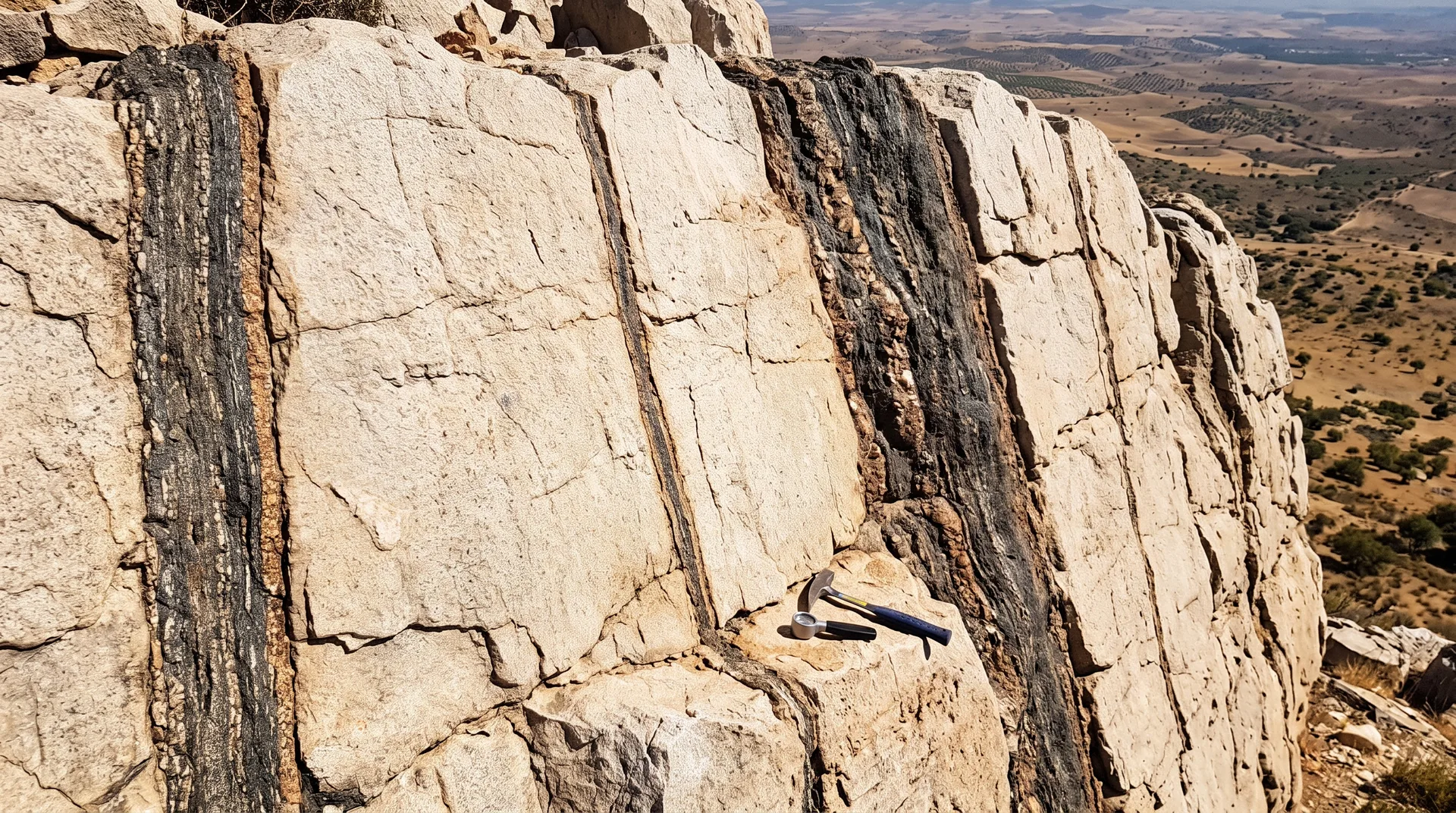
The deposit type is a lithified heavy-mineral placer: mineral sands hosted in consolidated rock rather than loose sediment. That distinction matters for both the mining case and the metallurgy, and the hub's article "What a lithified placer actually is" covers the geology in full.
The Investigation Permit, Licence No. 16271, covers approximately 232 km². The work reported to date is concentrated in a fraction of that area.
What does not exist yet
This section sits near the top of the page deliberately. Orión has no JORC-compliant Mineral Resource and no Ore Reserve. Every figure quoted in this article and across the hub represents exploration results and mineralogical estimates. They are not resources; they are not reserves; they carry no attached economics and no production decision. A maiden Mineral Resource Estimate and Scoping Study are targeted for Q3 CY2026 (ASX release). Until those exist, the numbers are evidence of a prospective deposit, not a defined one.
Who holds it
Osmond Resources (OSM, ASX-listed) holds its interest in Orión through a staged corporate chain, per company information provided for this publication. OSM holds 80% of Iberian Critical Minerals (ICM); ICM holds Omnis Mineria; Omnis holds 75.5% of Green Mineral Resources (GMR), which holds 100% of the rights to Orión. The effective OSM interest is approximately 60.4% at present, rising to approximately 76% on completion of the Scoping Study, following the completion of the 80% ICM acquisition on 5 August 2025 and an agreement over a further interest on 23 April 2025. The acquisition's completion and terms are stated in the company's reviewed half-year financial report (12 March 2026); readers should consult current ASX disclosures for the most recent position.
The zones
Osmond's materials describe three target zones within the permit area — a framing that appears in the company's geological-mapping announcements from September 2024 through June 2025 and on its website. What can be said about each zone still differs sharply.
Zone 1 is where all published sampling and assay work sits. The bulk channel samples and the drill programme are both concentrated here, and Zone 1 hosts the maiden MRE target area, which covers approximately 5% of the permit area (per company information provided for this publication for the area figure; ASX releases for the work itself).
Zone 2 has published surface results, but no drilling results yet. Outcrop samples mapped in Zone 2 returned assays reported on 20 June 2025: 8.2% rutile with 4.0% zircon (sample Z2_03) and 7.1% rutile with 3.2% zircon (Z2_04) — mineral grades ratio-estimated from oxide assays per the bulk-sample QEMSCAN method, per that release, which followed Zone 2 mapping referenced in the company's 17 and 18 June 2025 announcements. Drilling has since occurred in Zone 2 — the 14 August 2026 release quotes Zone 2 drill-hole spacing — but no Zone 2 drilling assay results have been published to date. That is the precise state of the record: surface mineralisation confirmed by outcrop assay, drill results pending. (An earlier version of this page stated Zone 2 had no published results of any kind; that was wrong — the June 2025 outcrop assays were public — and was corrected on 17 August 2026 when the gap in this publication's own archive was found and closed.)
Zone 3 has appeared in published results through step-out drilling. Holes NWOR-03 and NWOR-04 returned mineralisation that Osmond interprets as correlating with the Zone 1 seams (ASX release, 19 February 2026). That is an interpretation — correlation has not been demonstrated as continuity. The 28 April 2026 release reported mineralisation intersected across a distance of more than 10 km, in multiple layers — the release-backed statement of the corridor between Zone 1 and Zone 3.
What has been measured
Discovery drilling — Zone 1
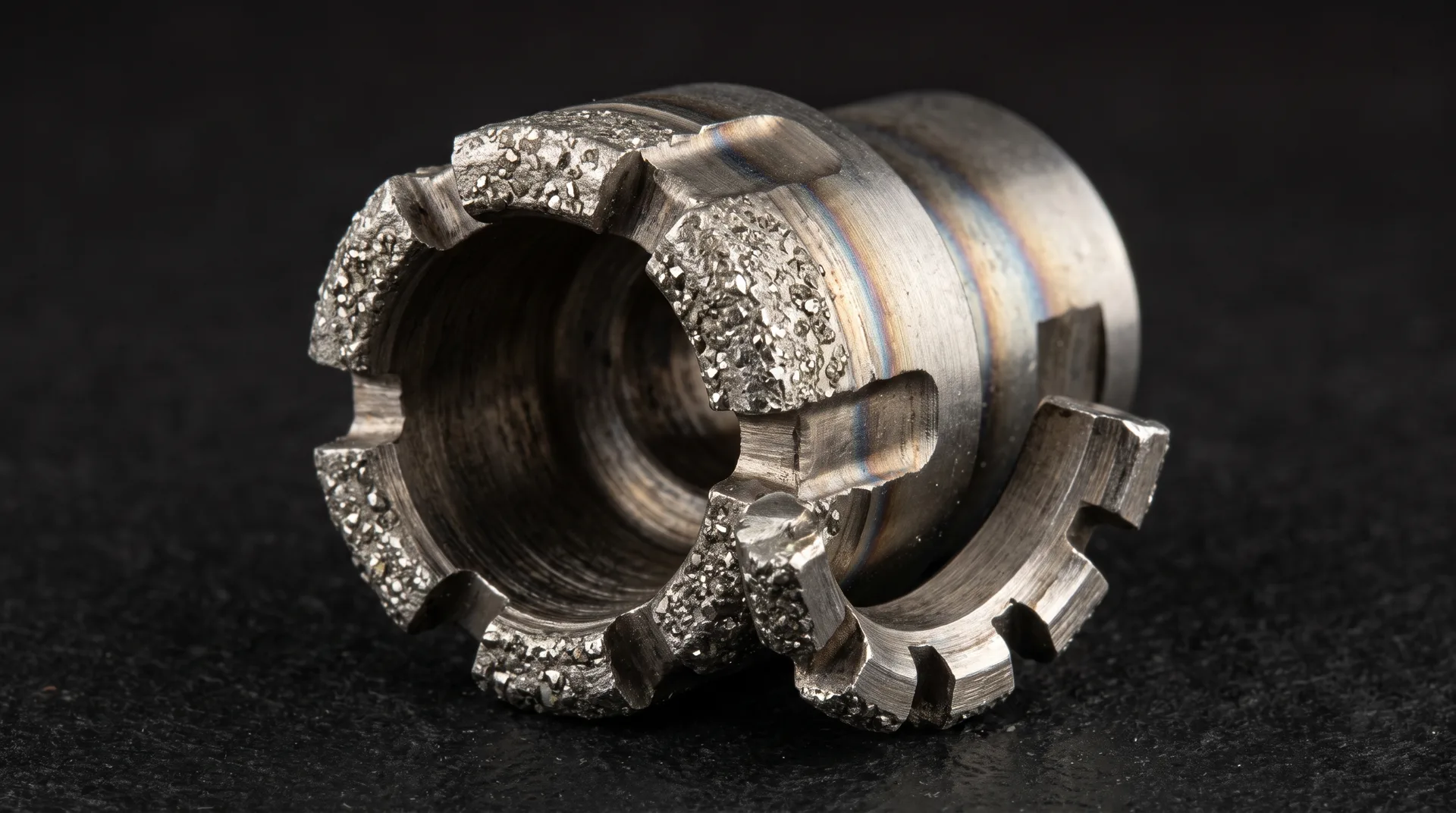
Advanced exploration drilling began in September 2025. The first drill hole was reported intersecting the target stratigraphy in October 2025; the first assay results — the grades that made the holes discoveries — followed in November 2025. Hole AV-01 (total depth 187.8 m) returned a 3 m interval at 10.39% TiO₂, approximately 6.1% zircon, and approximately 30% heavy minerals, all on a mass-balance basis (ASX release, 19 November 2025). Hole AV-01bis returned 3 m at 13.20% TiO₂, approximately 8.0% zircon, and approximately 40% heavy minerals on the same basis — the project's highest heavy-mineral estimate to that date (ASX release, 24 November 2025). Both intervals apply a 3% TiO₂ cut-off per the 24 November 2025 release.
Bulk channel samples — Zone 1
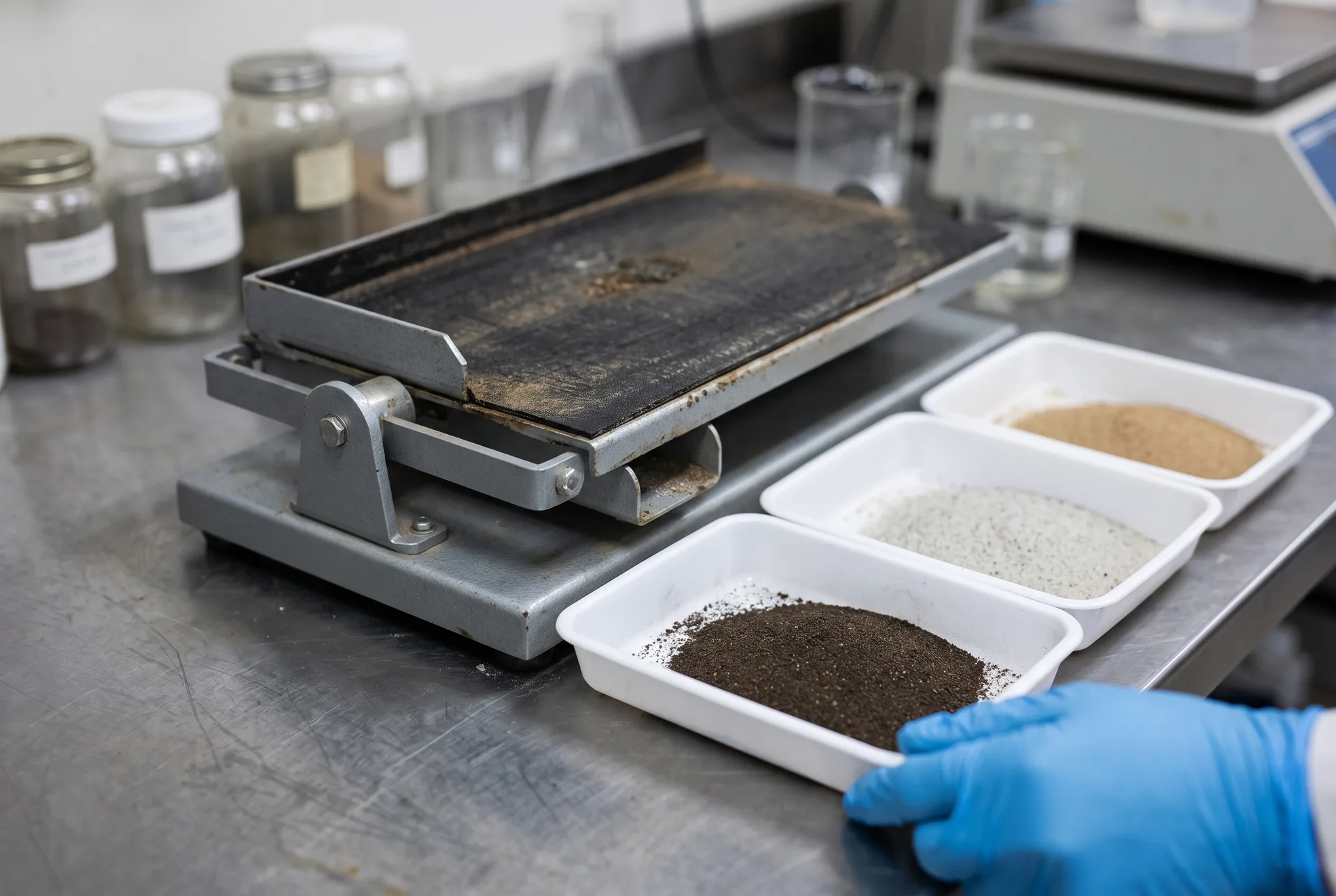
Zone 1 bulk channel samples (150 kg outcrop composites) returned rutile 13.36–13.49%, zircon 8.77–9.79%, monazite 1.56–1.62%, ilmenite 4.82–6.19%, and total heavy minerals 29.4–32.8%, all mass-balance figures calculated from oxide assays rather than directly measured. On an oxide basis the same samples returned ZrO₂ 5.07–5.57% and HfO₂ 1,178–1,204 ppm (ASX release, 19 February 2026).
Step-out drilling — Zone 1 and Zone 3
Holes NWOR-03 and NWOR-04 were reported in the 19 February 2026 release using a 2/5/8% TiO₂ weighted-average cut-off scheme. As of that release the programme comprised 9 holes for 2,806 m, with assays pending on several holes.
Metallurgical testwork
Preliminary metallurgical testwork (ASX release, 3 March 2026) produced a combined zircon concentrate grading 50.2% ZrO₂ at approximately 70% recovery, against a target of 66% or better — "premium" is Osmond's term for that target grade threshold. A monazite concentrate returned 19.4% total rare earth oxides (excluding yttrium) and 25% mixed rare earth oxides at approximately 76% recovery.
Most recent published hole
Hole SOR-08A (ASX release, 16 July 2026) intersected 2.7 m from 209.7 m depth at ZrO₂ 3.82% on assay, zircon 5.7% on a mass-balance basis, and HfO₂ 815 ppm. Osmond described SOR-08A as its best hole to date. Assays for hole SOR-07A were outstanding at that date. A second drilling programme of 13 holes was targeted for late September to early October 2026, per the 3 July 2026 release.
The running results picture for zircon is maintained in "Zircon at Orión: the exploration results to date, and the EU supply picture they sit in," which is updated as new releases appear and is the right place for interval-by-interval detail.
Finding your way around the hub
This publication is organised across five areas. The Deposit covers what Orión is and what the exploration programme has produced — this page, the results tracker, and the geology explainer all sit here. Science explains the minerals themselves: what rutile, ilmenite, zircon, and monazite are and how they behave. Applications & Demand covers what the minerals are used for and where demand is heading. Supply & the EU places Orión in the context of European critical minerals policy and existing supply chains. Investment addresses how to read an early-stage explorer — what the numbers mean, what they do not mean, and what to watch for as a project moves from results to resource.
Element reference pages for Zirconium, Hafnium, and Titanium sit across those pillars and are designed to be read independently; they teach the underlying science without assuming prior knowledge.
Three articles are particularly useful alongside this one. "What a lithified placer actually is" explains why the deposit type matters and what it implies for the work ahead. "Zircon at Orión: the exploration results to date, and the EU supply picture they sit in" maintains the running record of drill results and is the right starting point for anyone tracking the programme hole by hole. "How to read an early-stage mineral-sands explorer" sets out the framework for understanding where Orión sits in the exploration-to-production sequence — and why the absence of a resource, noted above, is the central fact about the project's current stage rather than a caveat attached to it.
Sources
- PRIMARYOsmond Resources (ASX: OSM) — ASX release, 19 Nov 2025 (AV-01 discovery)
- PRIMARYOsmond Resources (ASX: OSM) — ASX release, 24 Nov 2025 (AV-01bis; 3% TiO₂ cut-off)
- PRIMARYOsmond Resources (ASX: OSM) — ASX release, 19 Feb 2026 (bulk channel samples; NWOR step-outs)
- PRIMARYOsmond Resources (ASX: OSM) — ASX release, 3 Mar 2026 (SGS preliminary metallurgical testwork)
- PRIMARYOsmond Resources (ASX: OSM) — ASX release, 28 Apr 2026 (Phase 1 final assays; >10 km corridor)
- PRIMARYOsmond Resources (ASX: OSM) — ASX release, 20 Jun 2025 (Zone 2 outcrop assay results)
- PRIMARYOsmond Resources (ASX: OSM) — ASX release, 3 Jul 2026 (second drilling programme)
- PRIMARYOsmond Resources (ASX: OSM) — ASX release, 16 Jul 2026 (SOR-08A; MRE target area expanded)
- PRIMARYOsmond Resources — Half-year financial report, 12 Mar 2026 (acquisition completion and terms)
- PRIMARYOsmond Resources — company information response provided for this publication (2026; non-public). Carries only what no public document states; unlinked by nature.Non-public document · no public URL
- PRIMARYosm_drivers — ASX:OSM release, 3 Jul 2026 (project area 232 km² / 772 units, p.1, p.6).
- PRIMARYASX:OSM release, 14 August 2026 — the JORC tenement table lists Orión 16271 as GRANTED.