Minerals Hub / Sustainability / When a mineral concentrate becomes a regulated material
Sustainability · Monazite · 6 min read
When a mineral concentrate becomes a regulated material
Monazite carries thorium, and European radiation law names the industries that must reckon with it — with a numerical line that a separation plant is designed to cross.
Pending review
The short version
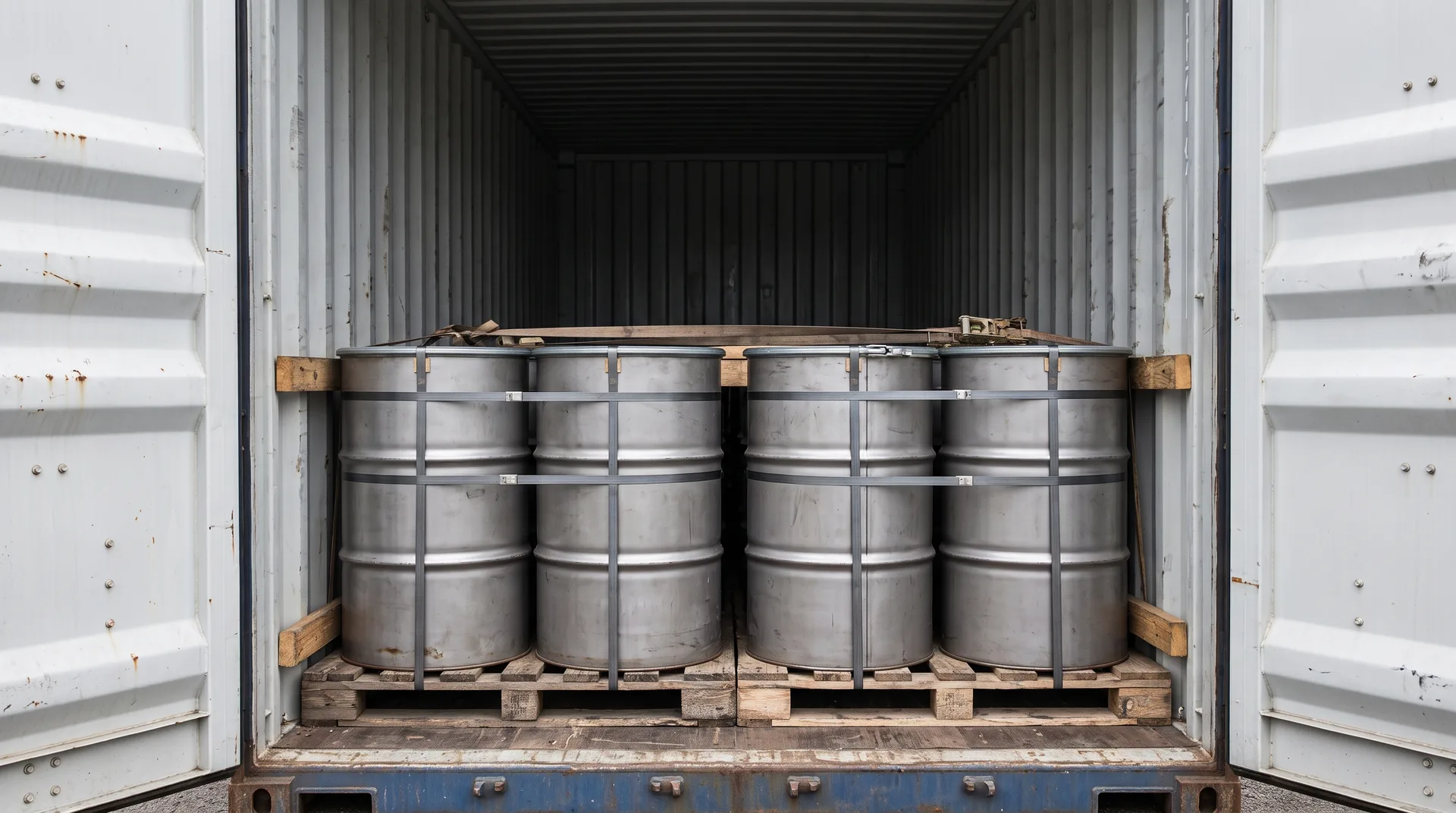
Monazite is a rare-earth phosphate that also carries thorium, which is radioactive. European radiation law does not treat that as exotic: it requires member states to identify practices involving naturally occurring radioactive material, and points them at a list of industrial sectors that includes the extraction of rare earths from monazite, the zircon and zirconium industry and titanium dioxide pigment production. What decides whether a particular material can be exempted or cleared is not its mineralogy but its activity concentration, for which the directive sets default values of one kilobecquerel per kilogram for the uranium-238 and thorium-232 decay series. A separation plant exists to raise concentrations, which is why the number matters at the concentrate rather than at the pit.
The duty is to identify, not to assume
The relevant obligation is written as an identification exercise, and its wording repays attention. Member States, the directive says, "shall ensure the identification of classes or types of practice involving naturally-occurring radioactive material and leading to exposure of workers or members of the public which cannot be disregarded from a radiation protection point of view", and "such identification shall be carried out by appropriate means taking into account industrial sectors listed in Annex VI" (Directive 2013/59/Euratom, Article 23).
Three things follow from that sentence. The duty sits on the member state, not on the operator, which is why the practical form these rules take differs between jurisdictions even under a common directive. The test is exposure that "cannot be disregarded" — a judgement, not a bright line. And Annex VI is an input to that judgement, not the answer to it: a sector on the list is one to be taken into account, not one automatically regulated.
The list
Annex VI is headed "List of industrial sectors involving naturally-occurring radioactive material as referred to in Article 23", and it opens by directing that "When applying Article 23 the following list of industrial sectors involving naturally-occurring radioactive material, including research and relevant secondary processes, shall be taken into account" — which is what makes it an operative instrument rather than a bare list. Three of its entries bear directly on the mineral assemblage this hub follows: "Extraction of rare earths from monazite", the "Zircon and zirconium industry", and "TiO2 pigment production".
The company those entries keep is the useful part. The same list carries "Oil and gas production", "Production of phosphate fertilisers", "Cement production, maintenance of clinker ovens", "Coal-fired power plants, maintenance of boilers" and "Mining of ores other than uranium ore". This is an inventory of ordinary heavy industry. A page on environmental management that treated the radiological question as unusual would be misdescribing it; the framework exists because naturally occurring radioactivity turns up wherever rock, brine or phosphate is processed at scale.
Where the line is drawn
The mineralogy tells you which sector you are in. A number tells you whether a given material is inside the regime.
Annex VII, headed "Exemption and clearance criteria as referred to in Articles 24, 26 and 30", sets default values by radionuclide. Its Table A, Part 2 is captioned "Values for exemption or clearance for naturally occurring radionuclides in solid materials in secular equilibrium with their progeny", and the figures under it are "Natural radionuclides from the U-238 series | 1 kBq kg-1", "Natural radionuclides from the Th-232 series | 1 kBq kg-1" and "K-40 | 10 kBq kg-1" — one kilobecquerel per kilogram being the same quantity as one becquerel per gram. Paragraph 1(b) adds that the values "apply to all radionuclides in the decay chain of U-238 or Th-232, but for segments of the decay chain, which are not in equilibrium with the parent radionuclide, higher values may be applied". Those defaults are the directive's own; instruments written for other purposes — transport regulation among them — set different values for the same decay series.
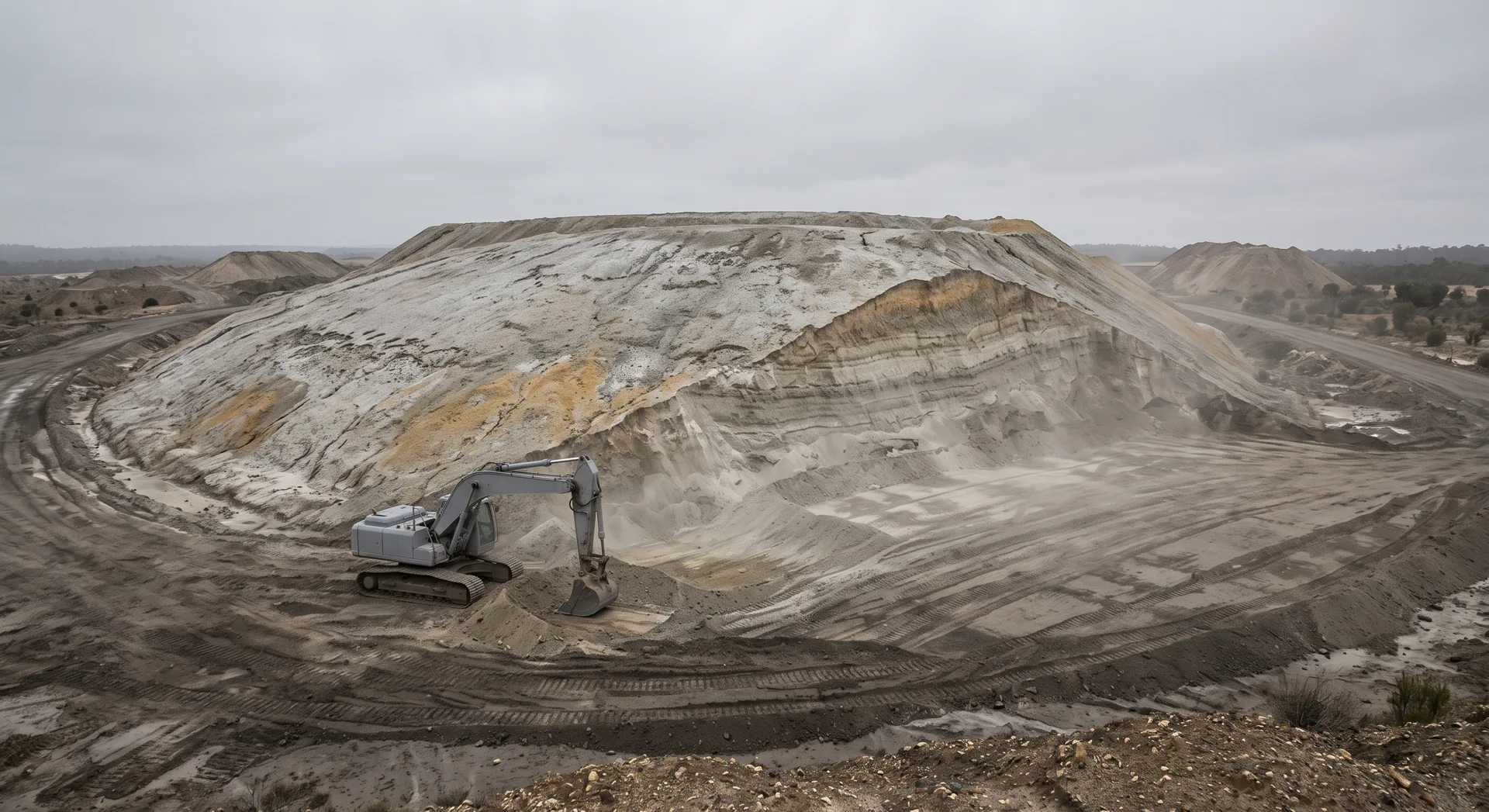
Note what is being measured. Activity concentration is activity per unit mass, so it is a property of the material as it stands at a given point, not of the deposit as a whole. The same thorium, in the same rock, gives a different figure in run-of-mine ore, in a heavy-mineral concentrate, in a monazite concentrate and in the residue left after monazite has been removed.
A separation plant exists to raise concentrations. Radioactivity concentrates alongside everything the plant is trying to collect.
That observation is this hub's framing rather than a statement in either instrument, but it is the mechanism that makes the subject a processing question rather than a geological one. Monazite is a minor constituent of a heavy-mineral assemblage and a major constituent of a monazite concentrate. A flowsheet designed to achieve exactly that enrichment is also, unavoidably, designed to raise the activity concentration of one product stream — and to lower it in the streams monazite has been taken out of. Which vessels, piles and filter cakes fall on which side of the line is therefore determined by the flowsheet, and is knowable only by measurement.
What it obliges an operation to do
Because the identification duty falls on the state, the obligations an operator actually carries are set in national implementing law rather than in the directive itself, and this article does not attempt to summarise any national regime. What the directive establishes is the shape: practices in listed sectors have to be identified; material above the relevant values is not exempt and not clearable; and the concepts of exemption and clearance are what govern whether a material can leave the regime — including, in principle, at the point where a residue would otherwise be handled as ordinary waste.
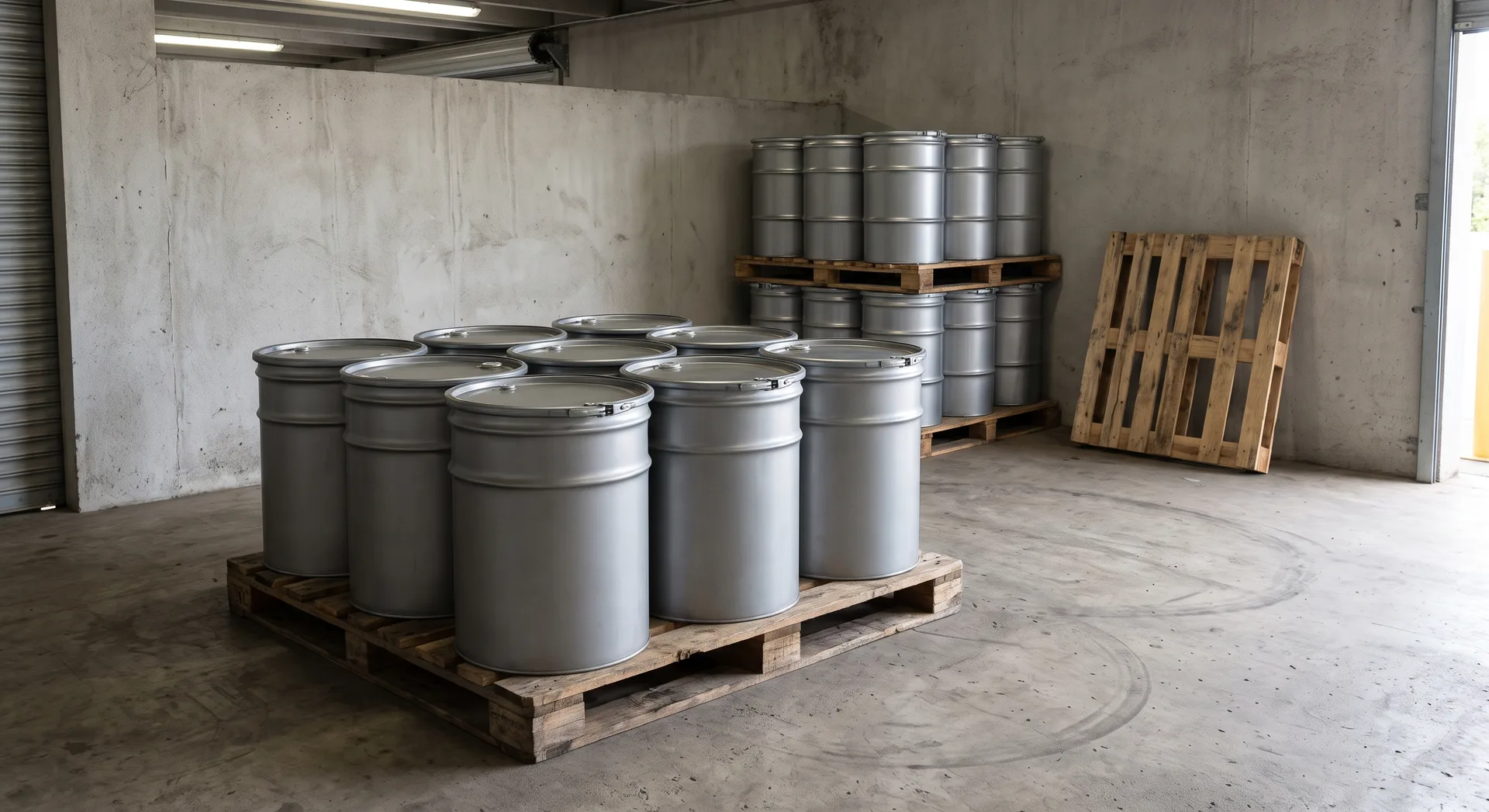
Two consequences follow that are worth naming for a general reader. Storage and disposal of a residue stream cannot be settled by its chemistry alone, because a stream can be inert and still above a clearance value. And the accounting is continuous rather than one-off: a change to the flowsheet that improves monazite recovery changes the activity concentration of at least two streams at once.
What is on the record for Orión, and what is not
Osmond describes Orión as a lithified tidal-sand placer whose economic minerals are rutile, ilmenite, zircon and monazite — so the deposit sits, on its own mineralogy, in the territory Annex VI describes.
Beyond that, the record is silent. No thorium content, uranium content or activity concentration for Orión ore, for any concentrate produced in the preliminary testwork, or for any residue stream appears in Osmond's disclosures. This article makes no estimate of one and no inference from mineral percentages, which are not measurements of activity. The project has no Mineral Resource, no reserve and no operating flowsheet; the maiden estimate and scoping study were targeted for the third quarter of calendar 2026.
Related
- Circular Economy — why extractive residues sit under a different legal regime from other waste
- Regulation — the permitting architecture, and the radiological rules that sit outside mining law
- Rare Earths — the mineral chemistry behind the controls described here
- Responsible Mining — the standards against which site practice is assessed
Sources
- PRIMARYCouncil Directive 2013/59/Euratom of 5 December 2013 laying down basic safety standards for protection against the dangers arising from exposure to ionising radiation. Article 23 quoted in full: 'Member States shall ensure the identification of classes or types of practice involving naturally-occurring radioactive material and leading to exposure of workers or members of the public which cannot be disregarded from a radiation protection point of view. Such identification shall be carried out by appropriate means taking into account industrial sectors listed in Annex VI.'
- PRIMARYCouncil Directive 2013/59/Euratom, Annex VI and Annex VII, as reproduced by legislation.gov.uk (retained EU law text; the annexes could not be retrieved in full from EUR-Lex for this article, and the UK reproduction was used for the annex text only). Annex VI heading: 'List of industrial sectors involving naturally-occurring radioactive material as referred to in Article 23'; the list is preceded by the chapeau 'When applying Article 23 the following list of industrial sectors involving naturally-occurring radioactive material, including research and relevant secondary processes, shall be taken into account:'; the sixteen entries include 'Extraction of rare earths from monazite', 'TiO2 pigment production', 'Zircon and zirconium industry', 'Production of phosphate fertilisers', 'Oil and gas production', 'Cement production, maintenance of clinker ovens', 'Coal-fired power plants, maintenance of boilers' and 'Mining of ores other than uranium ore'. Annex VII heading: 'Exemption and clearance criteria as referred to in Articles 24, 26 and 30'; Table A, Part 2 is captioned 'Values for exemption or clearance for naturally occurring radionuclides in solid materials in secular equilibrium with their progeny:', and the values returned from it are 'Natural radionuclides from the U-238 series | 1 kBq kg-1', 'Natural radionuclides from the Th-232 series | 1 kBq kg-1' and 'K-40 | 10 kBq kg-1'.
- PRIMARYASX:OSM release, 19 February 2026 — Orión is described by Osmond as a lithified tidal-sand placer whose economic minerals are rutile, ilmenite, zircon and monazite.
- UNVERIFIEDGAP — no release, testwork summary or company statement in the record addresses radiological measurement of Orión material: thorium content, uranium content, or activity concentration of ore, concentrate or residue. Searched: the source-of-truth record of everything OSM has published, reviewed for any radiological figure. An absence over the whole record cannot cite a document; it is recorded here as the search that found nothing.Non-public document · no public URL
- UNVERIFIEDGAP — no published activity-concentration figure exists in the Osmond record for Orión ore, for any concentrate produced in its preliminary testwork, or for any residue stream. Nothing in this article should be read as an estimate of one. 'Not stated' is the accurate answer.Non-public document · no public URL
- ANALYSISOURS — the observation that beneficiation concentrates activity along with value, and the consequence that a regulatory threshold can be crossed by processing rather than by geology, is this hub's framing of the two cited instruments rather than a statement made in either of them.Non-public document · no public URL