Minerals Hub / Sustainability / When mine waste stops being waste
Sustainability · · 6 min read
When mine waste stops being waste
European law has two doors out of waste status, each with four cumulative conditions — and a carve-out that puts extractive residues through a different door entirely.
Pending review
The short version
In European law a material is waste because of what its holder does with it, not because of what it is: waste is anything the holder "discards or intends or is required to discard". Two provisions let a material out of that status — the by-product test and the end-of-waste test — and each imposes four conditions that must all be met. But the directive containing both expressly excludes waste from prospecting, extraction, treatment and storage of mineral resources where that waste falls under the separate extractive-waste directive. So the question "can these tailings become a feedstock" is not answered by the recycling law most circular-economy discussion is built on.
Waste is a status, not a substance
The definitional sentence is the one to hold onto, because everything downstream of it is machinery. Waste, the Waste Framework Directive says, is "any substance or object which the holder discards or intends or is required to discard" (Directive 2008/98/EC, Article 3(1)).
Two features of that definition do most of the work. It is about the holder's conduct and intention, so the same physical material can be waste in one yard and a product in another. And the third limb — "or is required to discard" — means the status can be imposed by law regardless of what anyone wants. Once a material has that status it carries the permitting, tracking, storage and transfer obligations that attach to waste, and those obligations are what a circular-economy proposal is usually trying to get out from under.
Two doors out, four conditions each
The directive provides two routes, and confusing them is the commonest error in this area.
The first is the by-product route, for material that never becomes waste at all. It applies to a substance arising from a production process whose primary aim was not to produce it — the Article 5(1) chapeau, given here from this article's reading of the provision rather than from a retrieved quotation of it — and it requires four things at once: that further use "is certain"; that the substance can be "used directly without any further processing other than normal industrial practice"; that it is produced "as an integral part of a production process"; and that further use is lawful, meaning the substance fulfils "all relevant product, environmental and health protection requirements for the specific use and will not lead to overall adverse environmental or human health impacts" (Article 5).
The second is the end-of-waste route, for material that has already become waste and has since been recycled or recovered. Its four conditions are that the substance is "to be used for specific purposes"; that a "market or demand exists" for it; that it meets "the technical requirements for the specific purposes" and "the existing legislation and standards applicable to products"; and again that its use will "not lead to overall adverse environmental or human health impacts" (Article 6).
The distinction is chronological rather than technical. By-product status is a claim that the material never entered waste status; end-of-waste is a claim that it has left. Both are cumulative tests, and both turn substantially on demand — a residue with no buyer fails the second condition of either route however recoverable it may be in the laboratory.
The law does not ask whether a residue could be used. It asks whether its further use is certain, and whether a market for it already exists.
The carve-out
Here is where a mineral-sands or hard-rock operation parts company with the rest of the recycling literature. The same directive that contains Articles 5 and 6 removes extractive residues from its own scope.
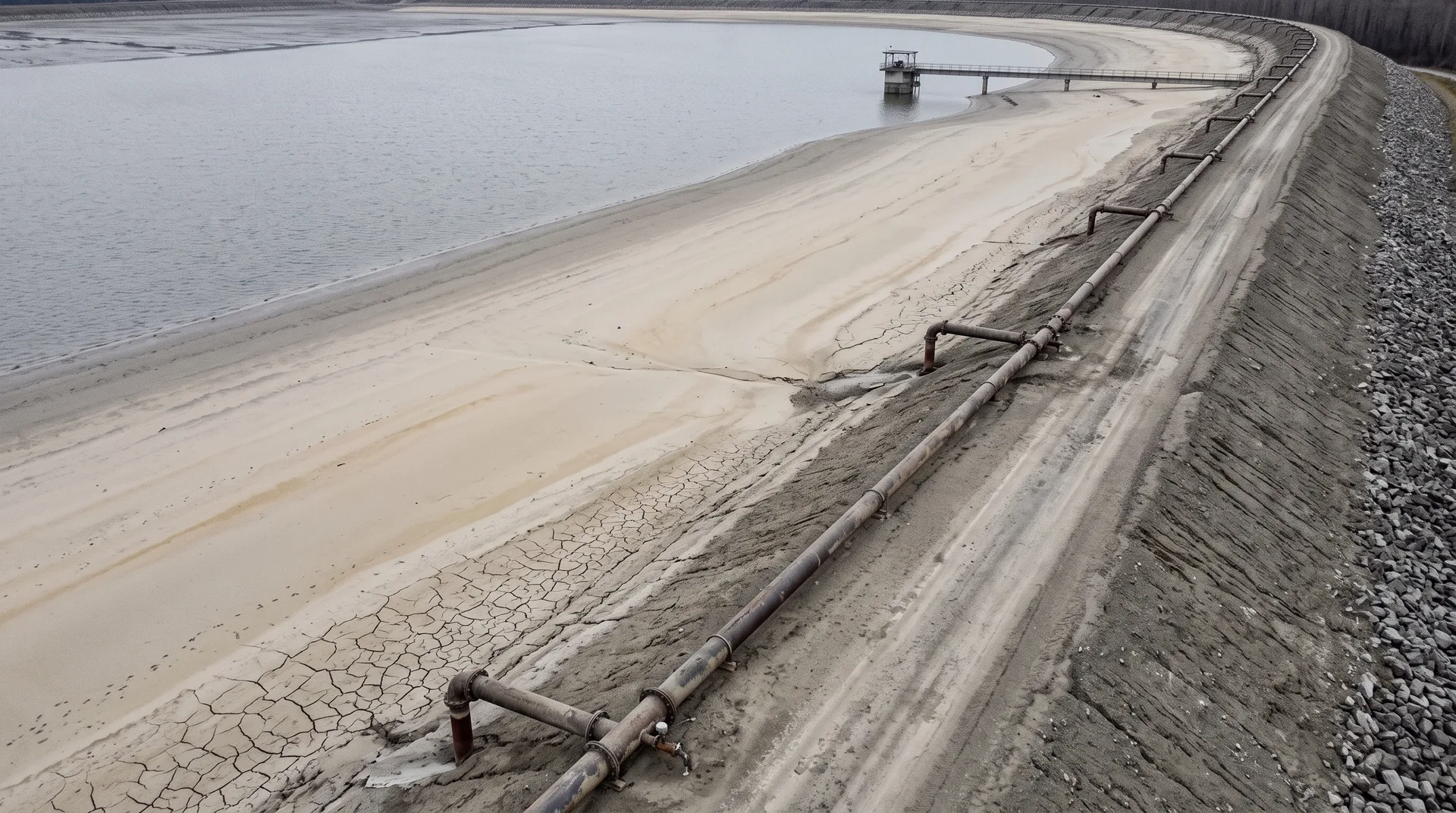
Article 2(2) excludes, at point (d), "waste resulting from prospecting, extraction, treatment and storage of mineral resources and the working of quarries covered by Directive 2006/21/EC". The exclusion is drafted to bite where that other directive covers the waste, which is a wide field: the extractive-waste directive applies to the "management of waste resulting from the prospecting, extraction, treatment and storage of mineral resources and the working of quarries" (Directive 2006/21/EC, Article 2(1)), and it defines tailings, in terms that describe a gravity or flotation circuit exactly, as the "waste solids or slurries that remain after the treatment of minerals by separation processes (e.g. crushing, grinding, size-sorting, flotation and other physico-chemical techniques)". The quotation stops at the parenthesis because that is where the retrieved text of the definition stops; any continuation of it is not reproduced here.
What that directive then does is govern how the material is contained. It defines a waste facility as any "area designated for the accumulation or deposit of extractive waste, whether in a solid or liquid state or in solution or suspension …". Whether it builds an approval, operation and closure regime around that definition is not established by the text consulted here, which carries the directive's scope provision and two definitions and no more; the description of it as a management regime is the shape of the instrument rather than a reading of provisions checked. No provision equivalent to Article 6 — a route by which the material stops being waste — was found in the text consulted for this article, and that is stated as a limit on what was checked rather than as a settled conclusion; national implementing law and case law were not examined.
Why the distinction is not academic
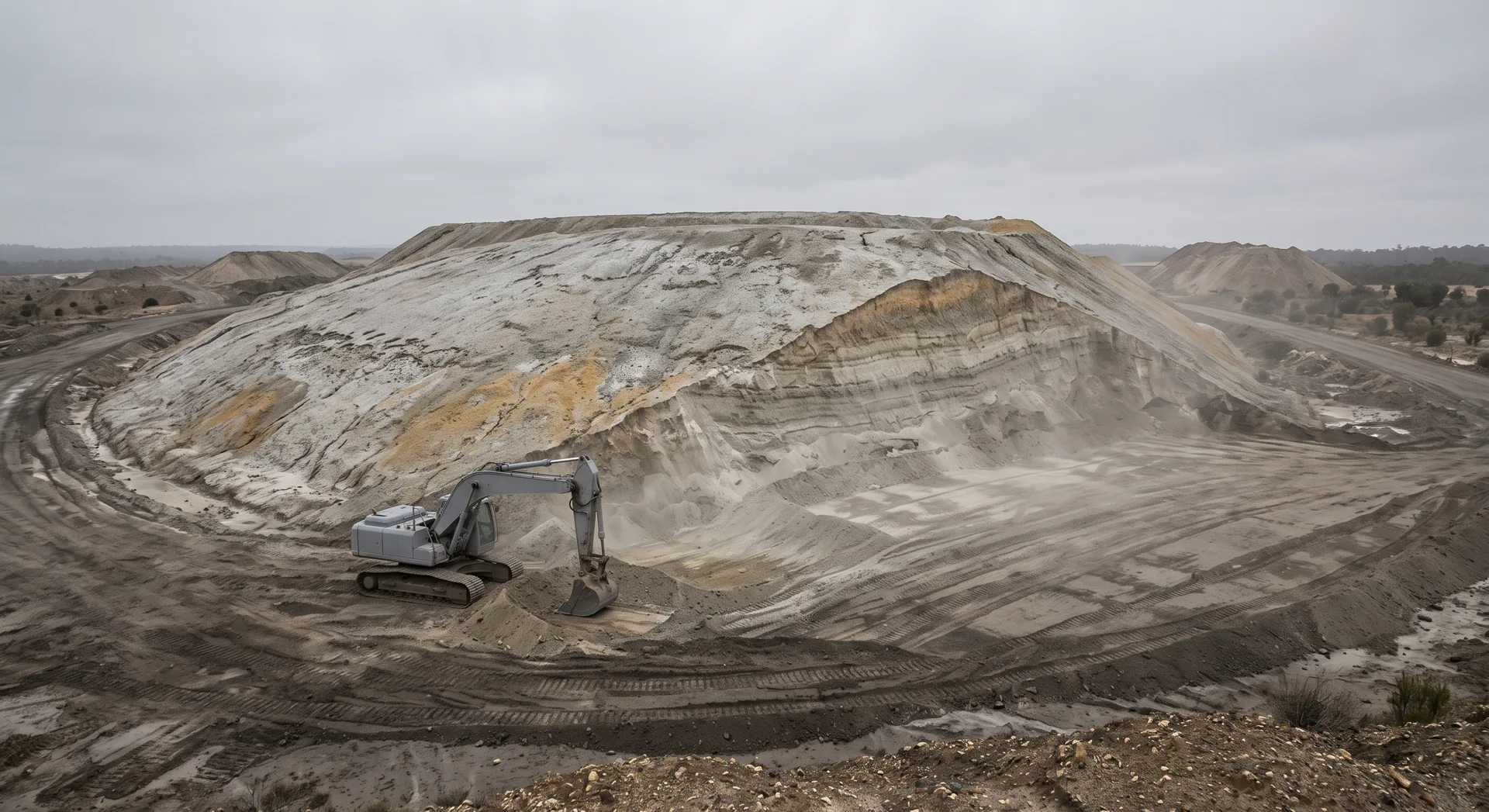
Reprocessing an old tailings deposit is one of the most frequently proposed circular-economy moves in mining, and it is often described as though the material's legal status followed automatically from the fact that someone now wants it. It does not. The residue's status was fixed when it was deposited, under a regime that governs its containment; the marketable concentrate a retreatment plant produces is a product on ordinary principles; and the fraction that goes back to storage is extractive waste again.
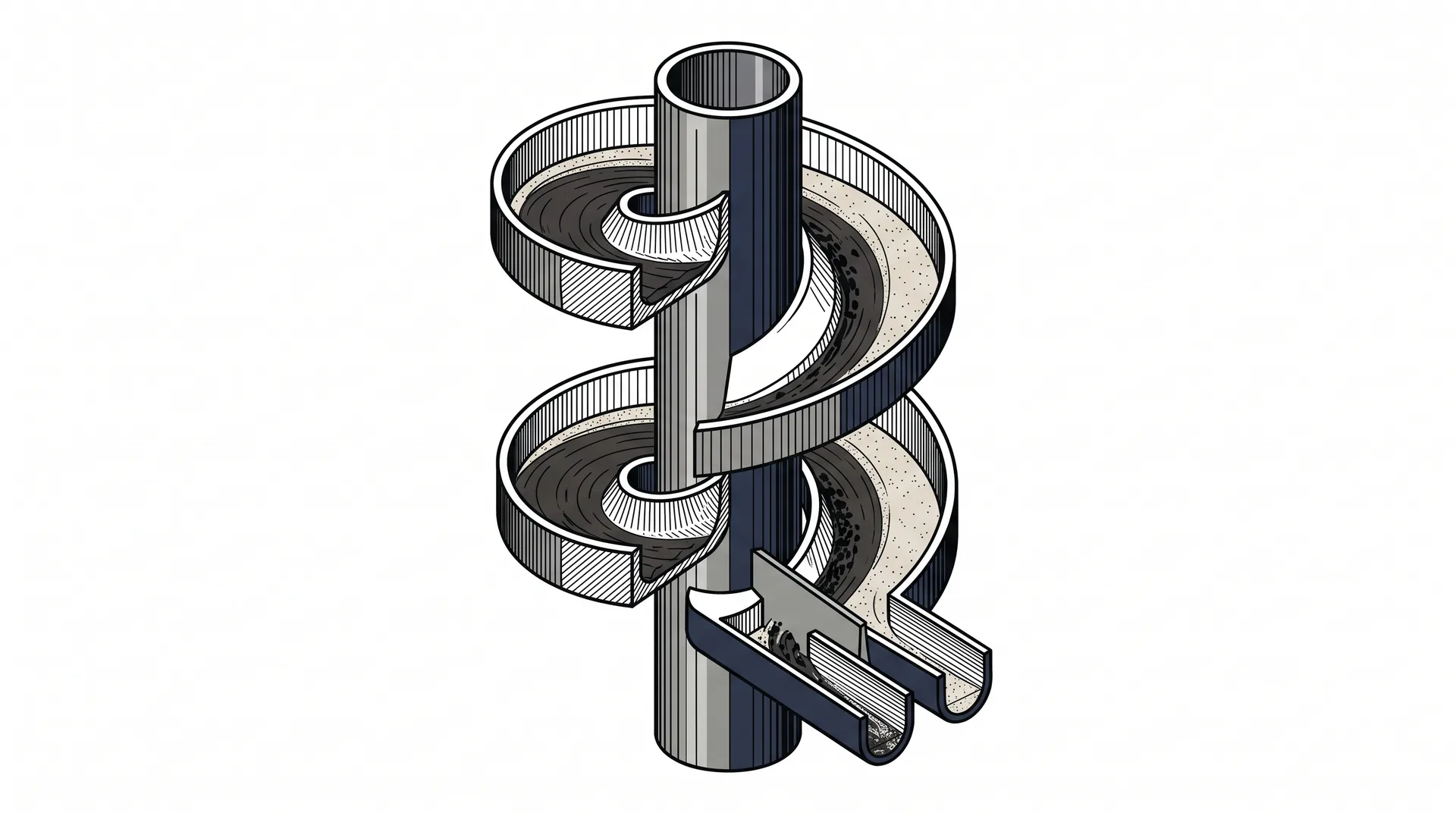
The practical consequence is that circularity for these materials is mostly decided at the flowsheet, not at the tip. A mineral separated out on the first pass and sold is a co-product and never acquires waste status at all — which is why a multi-product heavy-mineral circuit that recovers monazite alongside zircon and rutile is doing something legally different from a single-product circuit that sends monazite to storage and hopes to recover it later. Same mineral, same tonnage, two different regimes, decided years apart.
Related
- Recycling in Practice — what is actually recovered from end-of-life material, and what stops more of it
- Environmental Management — the site controls that apply to residues while an operation runs
- Regulation — the permitting architecture these obligations attach to
- Rehabilitation — the closure obligations set at approval
Sources
- PRIMARYDirective 2008/98/EC on waste (Waste Framework Directive), consolidated text as at 18 February 2024. Article 3(1) defines waste as 'any substance or object which the holder discards or intends or is required to discard'. Article 2(2), point (d), excludes 'waste resulting from prospecting, extraction, treatment and storage of mineral resources and the working of quarries covered by Directive 2006/21/EC'. Article 5 (by-products) conditions quoted: (a) 'further use of the substance or object is certain'; (b) 'the substance or object can be used directly without any further processing other than normal industrial practice'; (c) 'the substance or object is produced as an integral part of a production process'; (d) 'further use is lawful, i.e. the substance or object fulfils all relevant product, environmental and health protection requirements for the specific use and will not lead to overall adverse environmental or human health impacts'. Article 6 (end-of-waste status) conditions quoted: (a) 'the substance or object is to be used for specific purposes'; (b) 'a market or demand exists for such a substance or object'; (c) 'the substance or object fulfils the technical requirements for the specific purposes and meets the existing legislation and standards applicable to products'; (d) 'the use of the substance or object will not lead to overall adverse environmental or human health impacts'.
- PRIMARYDirective 2006/21/EC on the management of waste from extractive industries, consolidated text as at 7 August 2009. Article 2(1) scope: applies to 'the management of waste resulting from the prospecting, extraction, treatment and storage of mineral resources and the working of quarries'. Article 3 defines tailings as 'the waste solids or slurries that remain after the treatment of minerals by separation processes (e.g. crushing, grinding, size-sorting, flotation and other physico-chemical techniques) to remove the valuable minerals from the less valuable rock', and defines a waste facility as 'any area designated for the accumulation or deposit of extractive waste, whether in a solid or liquid state or in solution or suspension …', the definition continuing with time-period conditions that vary by waste type and were not reproduced in full. NOTE: the paragraph numbering within Article 3 returned by the retrieval used here was not independently confirmed and is therefore not cited.
- UNVERIFIEDGAP — no provision equivalent to Article 6 of Directive 2008/98/EC (an end-of-waste mechanism) was located within Directive 2006/21/EC for this article. The absence of such a provision in the text read is stated as a limit of what was checked, not as a settled legal conclusion; national implementing law and case law were not examined.Non-public document · no public URL