Minerals Hub / Sustainability / The water that leaves in the tailings
Sustainability · · 5 min read
The water that leaves in the tailings
Most of the water a wet separation plant loses is not evaporated or discharged — it is carried away inside the waste, and it is the hardest loss to see.
Pending review
The short version
Water leaves a wet separation plant by four routes: it evaporates, it seeps, it is discharged, and it is carried out of the gate inside the tailings. That fourth route is called entrainment, and because the water is inside the waste rather than on top of it, it is the loss least visible in a plant's own instrumentation and the one a recirculation percentage is least able to describe. An operation can raise its reuse efficiency and still lose the same volume to entrainment, because the two numbers measure different things.
Water that is used, and water that is gone
A gravity circuit separating heavy minerals does not consume much of the water it handles. Water is the medium the separation happens in: it carries the feed through spirals and cyclones, and the great majority of what enters a stage leaves it again, still liquid, still in the plant. Pumped around a closed circuit, the same water is used many times over in a day.
So the volume moving through the plant tells you almost nothing about the volume the operation takes from the environment. What matters is the difference between water that is used and water that is gone — and the routes out are few enough to name.
The Minerals Council of Australia's Water Accounting Framework, the reporting standard most widely used in the sector, sets those routes out as operational outputs and defines each one. Evaporation is water lost "from the site, including but not limited to evaporation of water from tailings storage facilities, water stores, and used for dust suppression." Seepage is water lost "from the site to groundwater." Discharge is water released deliberately, under a licence, at a specified quality. And entrainment — the one this piece is about — is defined, in the same table of operational outputs, as "water in waste or product streams. Typically the water in the tailings, coarse rejects, concentrates or product" (MCA Water Accounting Framework, Table 3).
What entrainment actually is
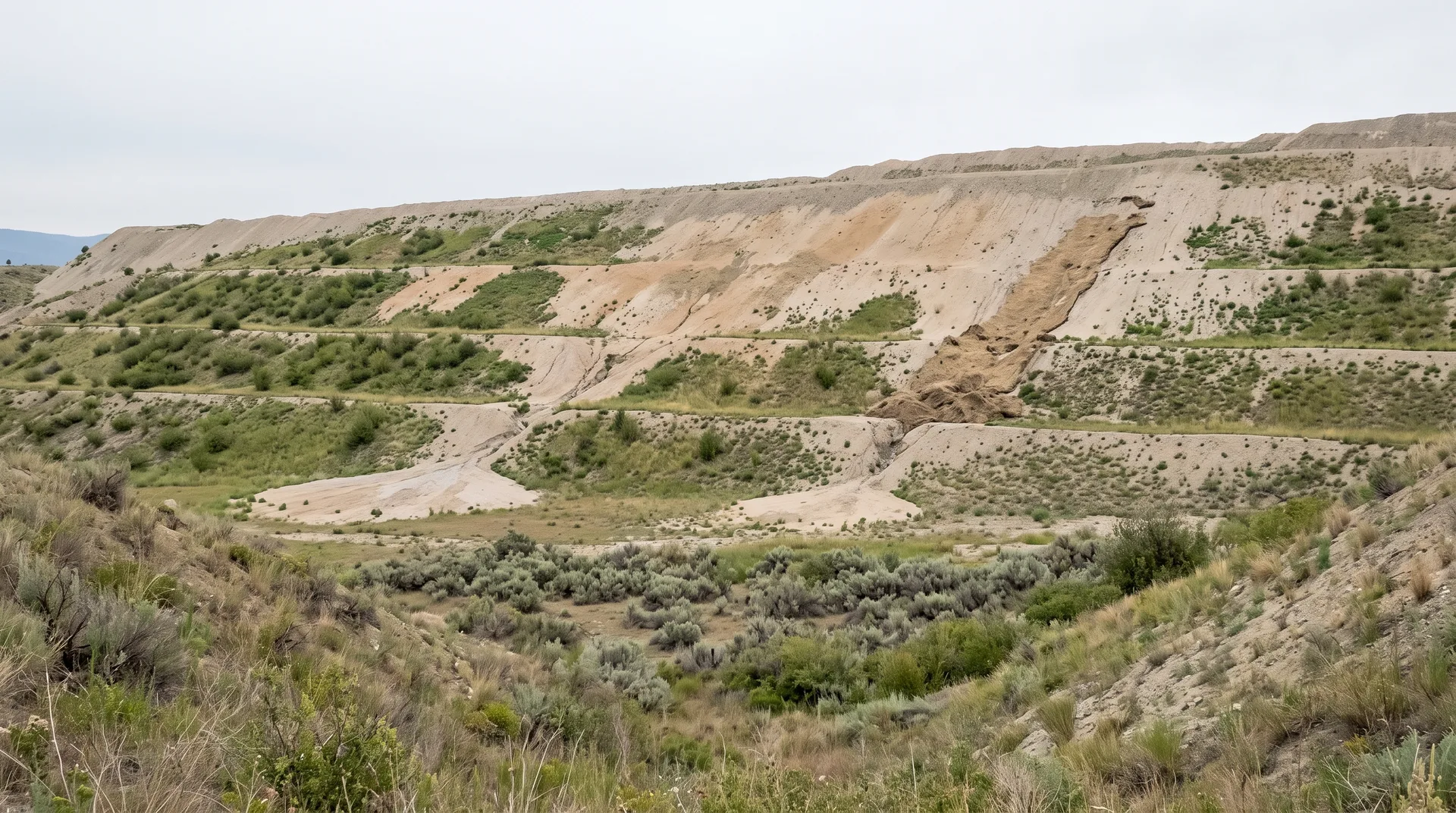
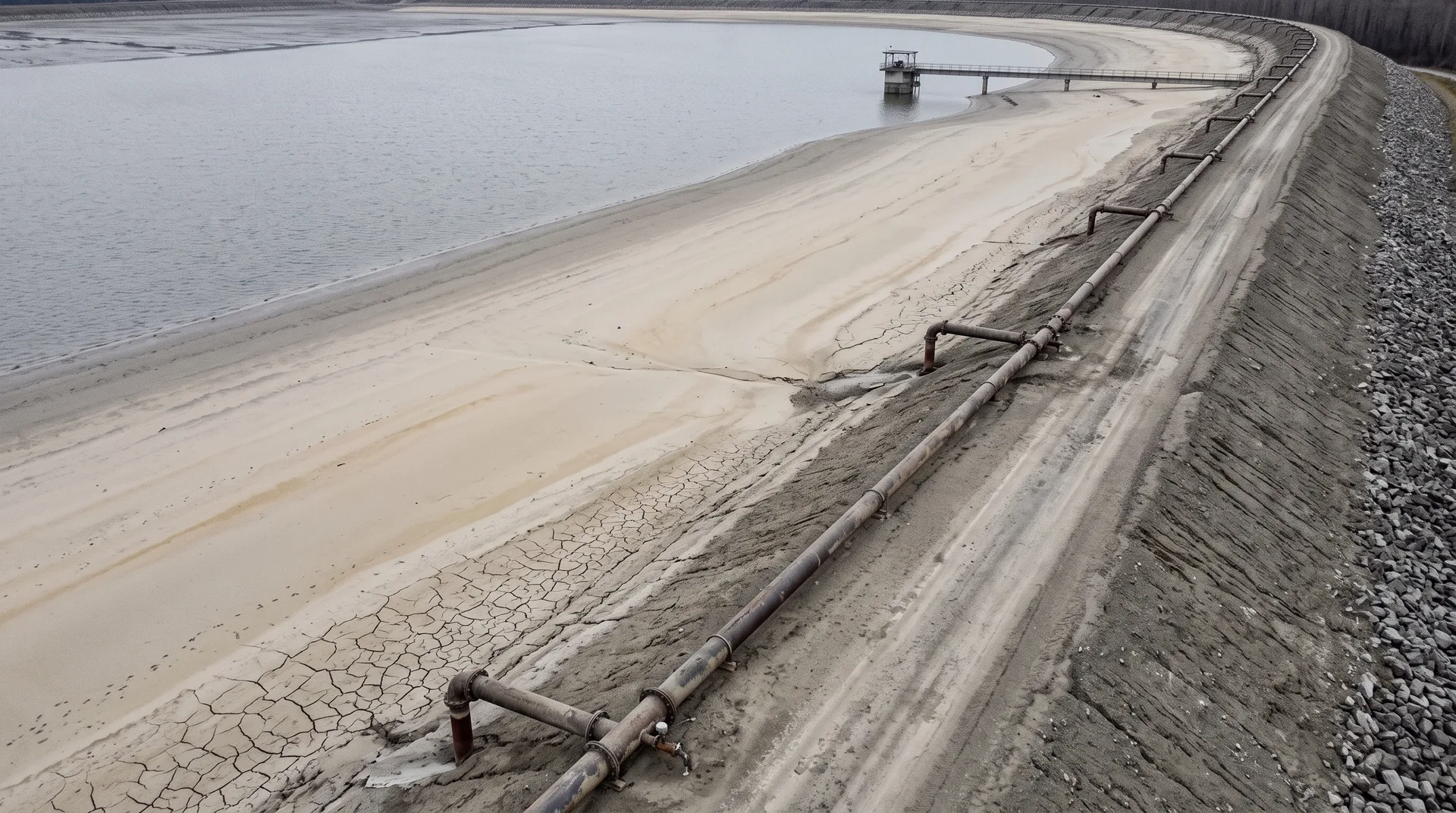
When tailings leave a plant they are not dry. They are a slurry, and even after that slurry has been thickened and deposited and has sat in a storage facility for months, water remains held between and around the particles. Some of it will eventually reach a decant pond and be pumped back. Some of it will not: it stays locked in the pore space of the deposited solids, held there by capillary forces that a pump cannot overcome.
That fraction is entrained. It has not evaporated, it has not seeped to groundwater, it has not been discharged, and it has not been recovered. It has simply been buried, in a structure the operation built for the solids, and it is unrecoverable for the life of the facility.
The important property of entrainment is that it scales with tonnage rather than with anything the water circuit does. Every tonne of solids sent to storage takes a quantity of water with it that depends on the particle size distribution, on how finely the ore was ground, on the density the tailings were thickened to, and on how they were deposited. Run more tonnes and more water goes out of the gate, whatever the recirculation loop is doing.
Entrainment is the only major water loss that is set by the ore rather than by the water circuit.
Why a recirculation percentage cannot see it
Operations often report a reuse or recirculation figure, and it is a real measure of something — but of the circuit, not of the withdrawal. The Water Accounting Framework user guide defines reuse efficiency precisely: worked water flowing to tasks, as a proportion of all water flowing to tasks (MCA Water Accounting Framework, Calculation 7). "Worked water" is simply water that has already been through a task once.
Read carefully, that is a statement about how many times water goes round, not about how much water leaves. Two operations can report the same reuse efficiency while one loses twice as much water to entrainment, because the entrained water was never a flow to a task in the first place — it left with the solids. Raise the number of internal passes and the reuse efficiency rises; the entrainment stays where the tonnage put it.
This is why the framework separates the accounts rather than combining them, and why a single headline abstraction figure is a poor description of an operation's water position. The abstraction number tells you what came in. The reuse number tells you how hard the circuit works. Neither tells you what left inside the waste.
What changes it
Because entrainment is a function of how the tailings are handled, that is where it is reduced. Thickening the slurry before deposition recovers water at the plant rather than hoping to decant it later. Higher-density and paste deposition trade pumping energy for water returned. Where a flowsheet allows a dry or reduced-water route for part of the separation, it removes the tonnage from the wet circuit altogether rather than making that circuit more efficient.
Chatham House's 2026 assessment of minerals-trade water footprints makes the same connection from the other direction: the approach to waste management will influence the water balance, through evaporation, seepage, discharge or physical entrainment in tailings material. The tailings decision and the water decision are the same decision, taken once, at flowsheet design.
Related
- Ore Processing — the wet separation route the water serves
- Processing Innovation — work aimed at reducing what that route consumes
- Environmental Management — the wider set of site water controls
- Circular Economy — the case for treating residues as material rather than waste
Sources
- PRIMARYMinerals Industry Water Accounting Framework — User Guide Version 2.0, Minerals Council of Australia. NO PUBLICATION DATE IS PRINTED IN THE DOCUMENT; the year 2022 appears only in the file path and is not asserted here. Entrainment is defined TWICE: Table 2, operational inputs, p. 16 — 'Water in the raw material, typically the ore to be processed'; and Table 3, operational outputs, p. 17 — 'Water in waste or product streams. Typically the water in the tailings, coarse rejects, concentrates or product'. This article cites the Table 3 output definition only. Evaporation and seepage, Table 3, p. 17. A task is defined at §2.3.1, p. 24; worked water at §2.5.1, p. 32 (the phrase 'task water' does not occur in the document). Reuse Efficiency, Calculation 7, p. 33.
- SECONDARYNxumalo, P. and Mathews, R.E., 'The water footprints of the global minerals trade', chapter 02 'Water in mining operations', Chatham House, 13 August 2026; ISBN 978 1 78413 678 9. 'Approach to waste management will influence water balance due to evaporation, seepage, discharge or physical entrainment in tailings material.' The chapter states an influence on the balance and gives no volumes for entrainment, evaporation or seepage.
- UNVERIFIEDGAP — no published figure was found for the share of process water lost to entrainment specifically in heavy-mineral gravity separation, as distinct from tailings water losses in mining generally. The mechanism is documented; the proportion is not, and none is asserted here.Non-public document · no public URL