Minerals Hub / Geography & Supply Chains / How a dry-looking cargo turns to liquid at sea
Geography & Supply Chains · · 5 min read
How a dry-looking cargo turns to liquid at sea
The moisture number stamped on a concentrate shipment is set in the dewatering circuit months before loading, and it is the number a ship's stability depends on.
Pending review
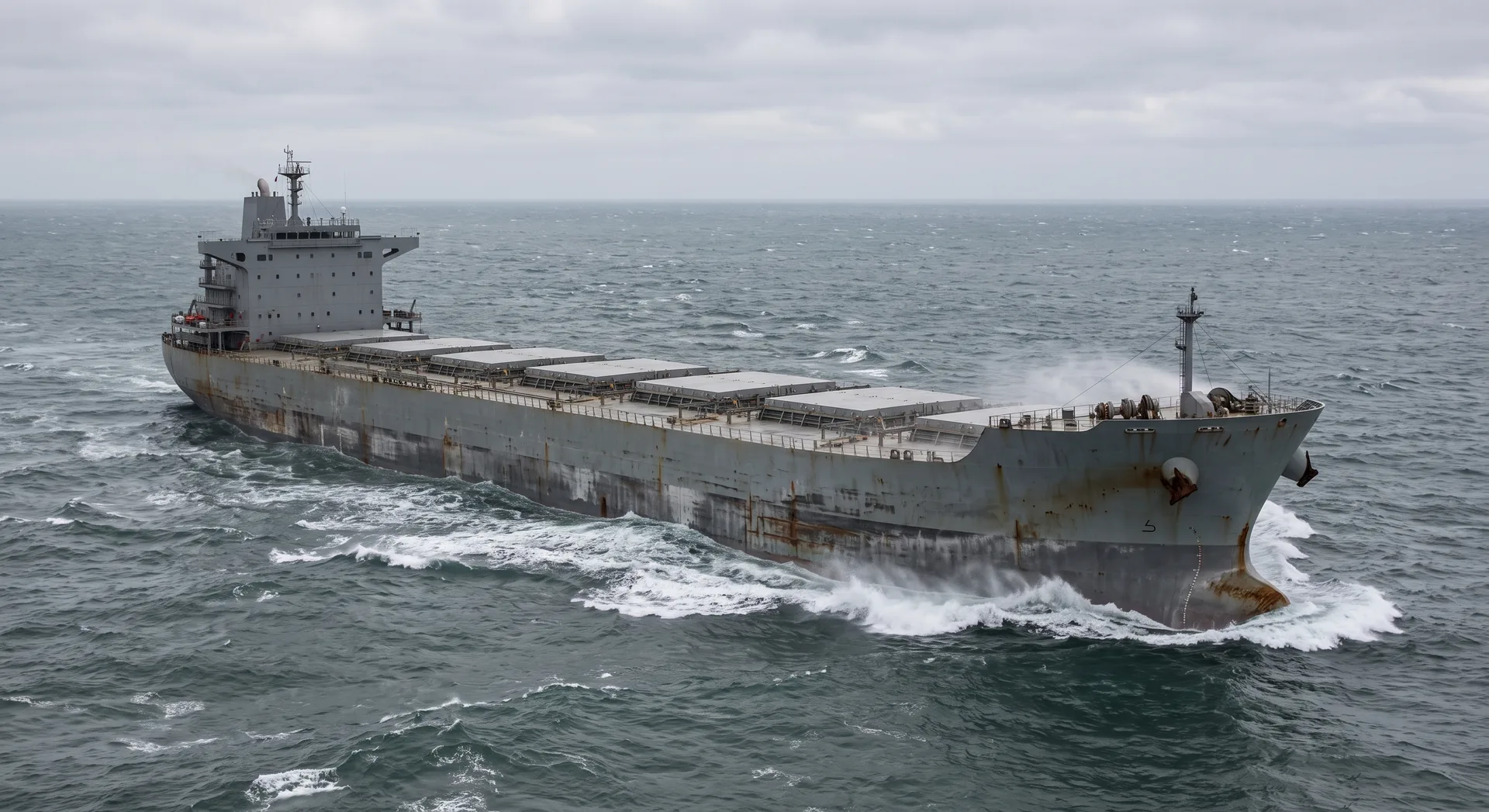
The short version
A mineral concentrate that handles like damp sand on a conveyor can behave like a liquid in a ship's hold, because days of engine vibration compact the cargo, squeeze water into the shrinking spaces between grains, and eventually push those grains apart. The material then has no shear strength, moves freely with the roll of the vessel, and can capsize it. The regulatory apparatus around shipping concentrates — one laboratory number, one certificate, one crude shipboard check — exists to prevent that, and the number it turns on is fixed in the plant, not at the port.
What happens in the hold
A bulk cargo of fine particles is a granular solid: the grains touch, they interlock, and the pile has strength because of that contact. Loaded into a hold it behaves accordingly — it forms a slope, and it stays where it is put.
Then the ship sails, and for the next several days the cargo is subjected to something no stockpile ashore experiences: continuous vibration from the main engine and the sea, applied to a body of material metres deep and confined on all sides. Vibration consolidates. The grains settle into tighter packing, the void spaces shrink, and water occupying those voids cannot drain fast enough, so the pressure it carries rises. The International Institute of Marine Surveying describes the endpoint precisely: "the water which cannot escape from the void spaces will ultimately push the solid particles apart."
At that moment the grains are no longer in contact. The load is carried by water instead, and the cargo has no shear strength at all: "when the solid particles lose contact with each other, the cargo will lose strength and will behave as a liquid, affecting the ship's stability."
A liquid in a partly filled hold has a free surface: it runs to the low side as the vessel rolls and stays there, so the list is progressive rather than oscillating. Ships in this condition capsize. Citing INTERCARGO figures for the preceding decade, the IIMS reports that ship losses attributable to cargo liquefaction accounted for less than 20% of all vessel casualties in the period, but "resulted in the loss of 70 lives, representing over 60% of the total fatalities". A minority of the casualties; most of the deaths.
The cargo does not fail when it is wettest. It fails when it has been vibrated for long enough at a moisture content nobody thought was high.
The number the whole system turns on
Because the failure is caused by moisture beyond a threshold rather than by moisture as such, the regulatory answer is to find the threshold and stay below it. The first quantity is the Flow Moisture Point: "the percentage moisture content (wet mass basis) at which a flow state develops under the prescribed method of test." That is the laboratory condition at which a sample of this particular material stops behaving as a solid.
The second is the Transportable Moisture Limit — "the maximum moisture content of the cargo which is considered safe for carriage in ships not complying with special provisions." The TML is not the FMP. For the Flow Table Test and the Penetration Test, the TML equates to 90% of the flow moisture point — arithmetically, a margin below the moisture content at which the material was observed to flow. The source states that relation for those two tests, gives no relation for the Proctor/Fagerberg family, and gives no reason for the figure.
Which test applies depends on the material. The Swedish Club lists six approved procedures — the Flow Table Test, the Penetration Test, the Proctor/Fagerberg test, and modified Proctor/Fagerberg tests for iron ore fines, coals and bauxite. The proliferation of methods is an admission that one test does not describe every cargo.
Certification carries a clock: a TML certificate "must not be older than six months at the time of loading".
The check that is not a measurement
Against this laboratory apparatus stands a shipboard check. Crew members must be trained to carry out "can tests" regularly during loading operations — a sample struck repeatedly against a hard surface, with additional laboratory moisture tests to be arranged if free moisture is visible on the surface of the sample at the end of the test.
It is worth being exact about what it establishes. The can test indicates whether the flow moisture point may have been exceeded, and is, in the Swedish Club's words, "not quantitative." It cannot produce a moisture figure and it cannot clear a cargo — only raise an alarm. A negative can test is not evidence that a cargo is within its TML.
Dynamic separation, and why the category had to widen
The framework above was built around liquefaction of the whole cargo body, and practice then produced a failure it did not quite describe. Where water can partly drain but not completely, it "may migrate upwards from the area of high pressure to the area of low pressure, ultimately collecting on the surface of the cargo forming a liquid slurry."
The result is a solid mass with a free-flowing layer on top. The bulk has not liquefied, so a regime looking for whole-body liquefaction may miss it, and the slurry delivers a free-surface effect anyway. This is dynamic separation, and Group A of the IMSBC Code now covers cargoes that "possess a hazard due to moisture that may result in liquefaction or dynamic separation" — the second half of that phrase a later addition to a definition once thought complete.
Where the number is actually set
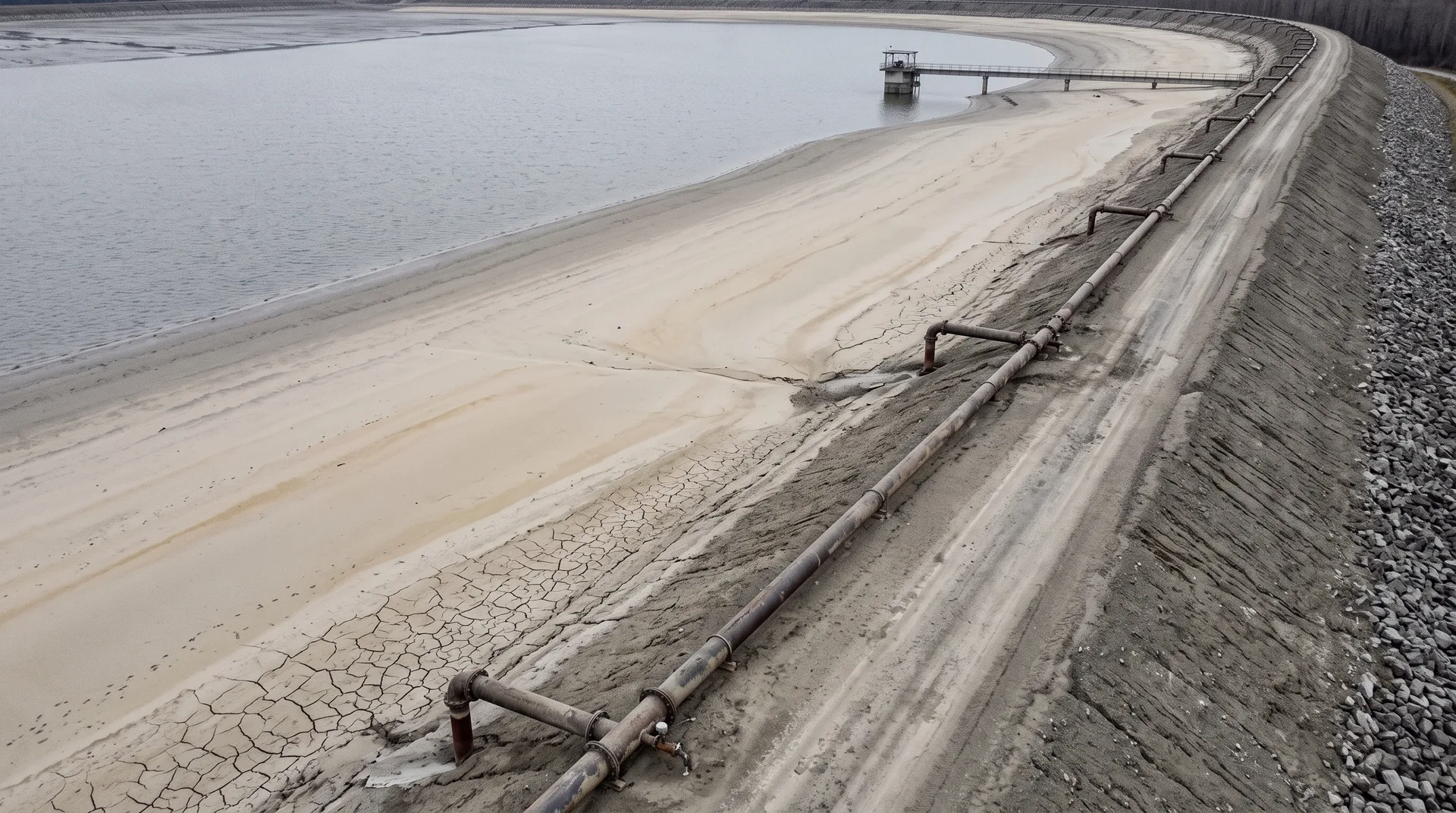
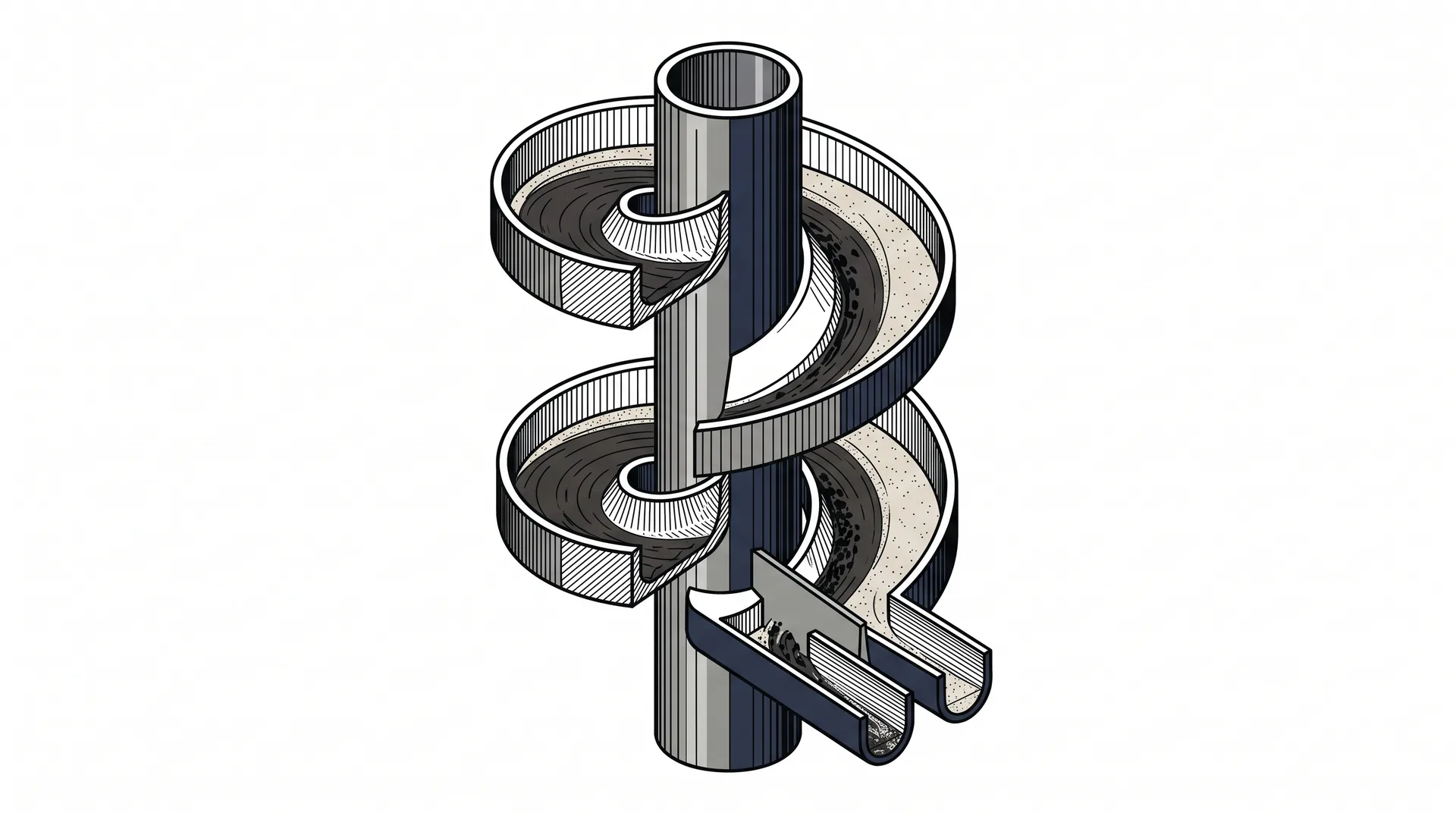
Trace the chain backwards and the moisture content of a shipment is not a shipping decision. It is set by how hard the material was dewatered — by the thickeners, filters and dryers chosen at flowsheet design, often years before the first vessel loaded, by engineers optimising for capital cost rather than for a certificate.
A concentrate that leaves the plant well under its TML costs money in dewatering and buys unremarkable voyages. One that leaves close to the limit saves that money and transfers the margin to a master with a can and a hard surface, at a berth, under commercial pressure to load.
Related
- Export Routes — the corridors these shipments move through
- Ore Processing — where dewatering, and therefore the moisture figure, is set
- Regulation — the handling and carriage rules that apply
- Supply Chain Risk — what happens when a link in this sequence stops
- Global Trade — the commercial terms attached to a shipment
Sources
- PRIMARYThe Swedish Club, 'Cargo Advice — Liquefaction'. NO PUBLICATION DATE IS PRINTED IN THE DOCUMENT; the '2025/12' in the URL path is not evidence from the document and no date is asserted here. The document references the IMSBC Code 2020 Edition and states its own guidance is 'not exhaustive'. It says nothing whatever about dynamic separation. IMSBC Group A description; Flow Moisture Point defined as the percentage moisture content (wet mass basis) at which a flow state develops under the prescribed test; Transportable Moisture Limit defined as the maximum moisture content considered safe for carriage in ships not complying with special provisions; TML equal to 90% of FMP for the Flow Table Test and the Penetration Test; the six approved test procedures (Flow Table, Penetration, Proctor/Fagerberg, and Modified PF tests for iron ore fines, coals and bauxite); the can test as a non-quantitative shipboard check; TML certificate not to be older than six months at the time of loading.
- SECONDARYInternational Institute of Marine Surveying, 'Understanding liquefaction and dynamic separation in solid bulk cargoes', 10 July 2025. The INTERCARGO figures are attributed on the page to 'a recent INTERCARGO report' for 'the preceding decade', with no report title and no date range given — no specific decade is asserted here. Mechanism of liquefaction (void consolidation, water pushing solid particles apart, loss of strength); definition of dynamic separation (partial drainage, upward migration, slurry forming on the cargo surface); Group A defined as cargoes which may possess a hazard due to moisture that may result in liquefaction or dynamic separation; INTERCARGO decade figures — liquefaction accounted for less than 20% of vessel casualties but 70 lives lost, over 60% of total fatalities.