Minerals Hub / Policy & Geopolitics / How a five-mineral deal became a tax-credit key
Policy & Geopolitics · · 6 min read
How a five-mineral deal became a tax-credit key
An undefined phrase in a US tax statute turned a narrow executive agreement into a qualification for a consumer subsidy — and then the subsidy was repealed.
Pending review
The short version
A United States tax credit for clean vehicles required a share of the battery's critical minerals to have been extracted or processed in the US or in a country with which it has "a free trade agreement in effect" — a phrase Congress left undefined. The executive branch defined it by criteria loose enough that a five-mineral executive agreement with Japan qualified, and Japan duly appeared on a regulatory list of free trade agreement partners. The European Union announced negotiations for the same key and never concluded them. In July 2025 the credit itself was repealed for vehicles acquired after 30 September 2025.
The undefined term
The mechanism begins with a sourcing condition attached to money. Half the clean vehicle credit turns on where the battery's minerals came from: the requirement is that the percentage of the value of the applicable critical minerals in the battery that were extracted or processed in "the United States, or… in any country with which the United States has a free trade agreement in effect", or recycled in North America, meets an applicable percentage. Meeting it is worth $3,750.
Congress did not define "free trade agreement". That omission is the whole story: a term with an obvious ordinary meaning was left for the Treasury to interpret, and the interpretation decided which countries' mineral processing counted.
The definition the executive supplied
The proposed rules of April 2023 set out what would be looked for: an agreement might qualify if it reduces "or eliminates trade barriers on a preferential basis", commits "the parties to refrain from imposing new trade barriers", establishes "high-standard disciplines in key areas affecting trade (such as core labor and environmental protections)", "and/or" reduces "or eliminates restrictions on exports or commits the parties to refrain from imposing such restrictions on exports".
That conjunction is not a typographical detail: "and/or" means a single criterion could suffice. The same document named the intended beneficiary: one "example of such a country is Japan, with which the United States recently concluded a Critical Minerals Agreement (CMA) containing robust obligations to help ensure free trade in critical minerals, including a commitment to refrain from imposing duties on exports of critical minerals".
The final rules of May 2024 made it a list. The regulation defines the statutory term to mean any "of those countries identified in paragraph (b)(13)(ii) of this section or that the Secretary of the Treasury or her delegate (Secretary) may identify in the future", and that paragraph names Australia, Bahrain, Canada, Chile, Colombia, Costa Rica, Dominican Republic, El Salvador, Guatemala, Honduras, Israel, Japan, Jordan, South Korea, Mexico, Morocco, Nicaragua, Oman, Panama, Peru and Singapore.
A statutory term the legislature declines to define is a decision it has delegated without saying so.
What the qualifying agreement actually said
The instrument that produced this result is much smaller than its consequences. It was signed on 28 March 2023 — DONE "at Washington, D.C., this 28th day of March, 2023" — and it shall "enter into force upon signature", with no ratification step.
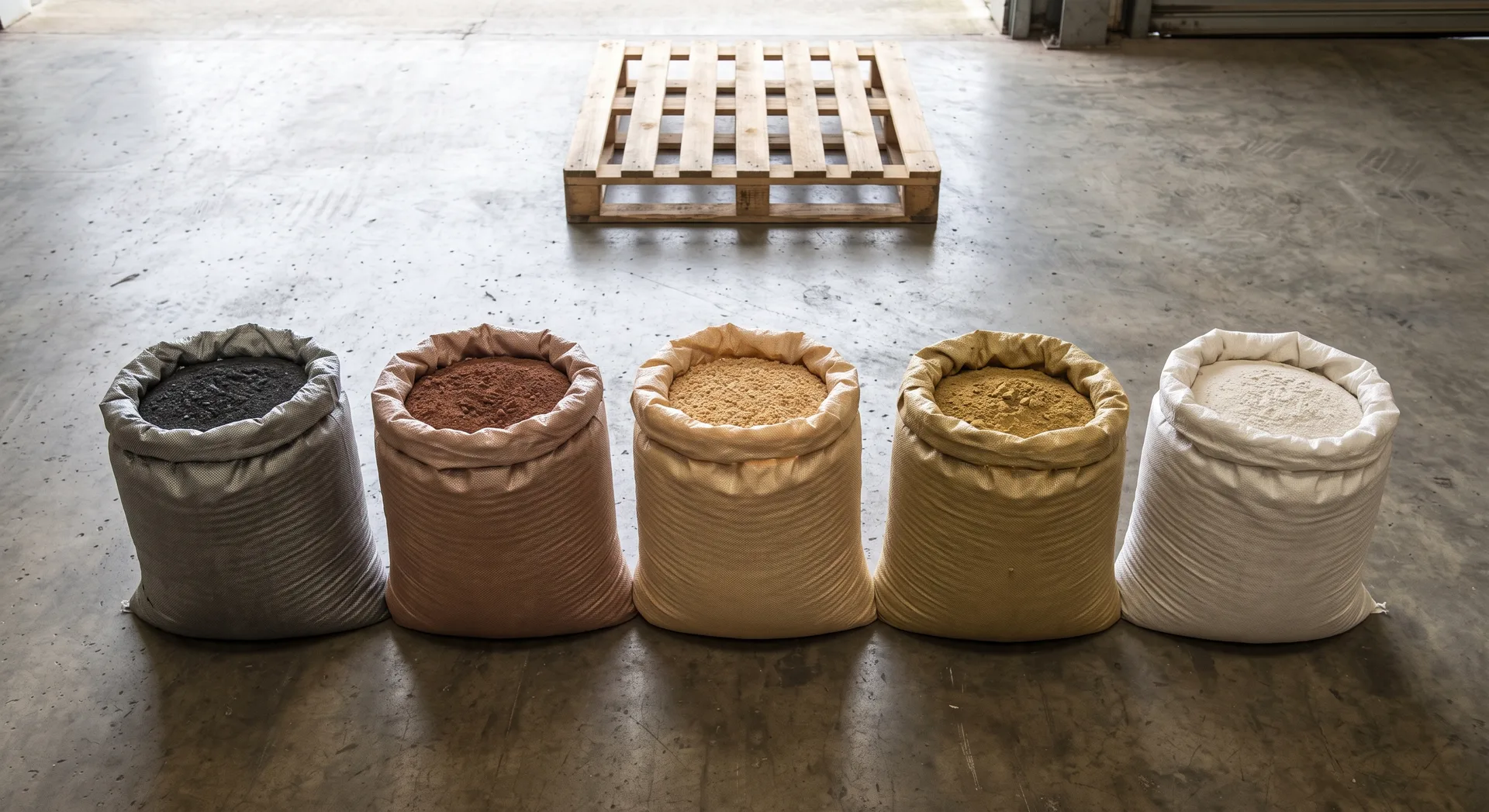
Its scope is a closed list. The agreement defines its subject as minerals "listed in the Annex to this Agreement, subject to amendments as the Parties may decide", and the Annex reads in its entirety: (a) "cobalt; (b) graphite; (c) lithium; (d) manganese; and (e) nickel". Five minerals. No titanium, no zirconium, no rare earths.
The obligations are correspondingly light. On trade in the covered minerals it largely affirms obligations the parties already had under the GATT and maintains existing practice on export duties. On labour and environment — the criteria the Treasury rules call "high-standard disciplines" — the prevailing formula is intention rather than obligation: each "Party confirms its intention to effectively enforce its labor laws", and the same construction governs paragraphs 1, 2, 3, 5, 6, 7, 8 and 10 of Article 5. It is not uniform. Paragraph 4 reads "shall endeavor"; paragraph 9 reads "shall", opening "Accordingly, the Parties shall:" and listing at (e) the undertaking to "promote employer neutrality in union organizing and operations". Its review clause looks at capacity to extract and process, not at compliance.
None of that makes the agreement a sham. It makes it a narrow instrument that acquired weight from what it unlocked.
Everyone else wanted the same key
The demonstration effect was immediate. Eighteen days before the Japan agreement was signed, a joint statement of the US President and the President of the European Commission announced an intention to immediately "begin negotiations on a targeted critical minerals agreement for the purpose of enabling relevant critical minerals extracted or processed in the European Union to count toward requirements for clean vehicles in the Section 30D clean vehicle tax credit of the Inflation Reduction Act" — the purpose stated without ornament. Those negotiations did not produce an agreement: CMA "negotiations with the EU and the United Kingdom (UK) were not concluded".
Then the lock was removed
In July 2025 Congress repealed the credit the whole structure had been built around. The statute now carries a termination subsection: no "credit shall be allowed under this section with respect to any vehicle acquired after September 30, 2025".
The Congressional Research Service's assessment of what that does to the agreement is worth quoting with its hedges intact, because the hedges are the honest part. In "July 2025, Congress passed P.L. 119-21, which terminates the IRA EV tax credit after September 30, 2025", it records, and some "analysts have noted that the termination of the Section 30D EV tax credit could diminish the benefits of the U.S.-Japan CMA, which was negotiated largely in connection with IRA requirements, and may disincentivize the negotiation of future CMAs". Its own conclusion is suspended: it "remains to be seen how this may impact implementation of the U.S.-Japan CMA, given that the agreement was negotiated largely in response to the IRA".
Whether the agreement itself is still in force was not confirmed for this article, and nothing is asserted here either way.
What survives when a subsidy does not
An agreement drafted to satisfy a definition in another country's tax code has exactly the durability of that definition. The parts of trade law that persist are duller and older. Origin is one. The delegated regulation lists what "wholly obtained" covers, beginning with mineral "products extracted within that country or territory", under a heading that refers the category back to Article 60(1) of the Union Customs Code. The rule that wholly-obtained goods originate in the country where they were obtained sits in that Code — Regulation (EU) No 952/2013, a different instrument, not read for this article — so it is stated here without a link. Ore has the simplest origin in trade law — it comes from where it was dug. The arguments are all downstream, where processing crosses borders and origin turns on the last substantial transformation; and those rules were there before the credit and remain after it.
Related
- Export Controls — the restrictions these agreements sometimes discipline, and
- International Partnerships — the non-binding arrangements that precede, and often
- Investment Incentives — the domestic programmes such agreements are written
- Global Trade — the flows and tariff mechanics all of
Sources
- PRIMARYAgreement between the Government of the United States of America and the Government of Japan on Strengthening Critical Minerals Supply Chains, signed 28 March 2023; official USTR text. Signature line: 'DONE at Washington, D.C., this 28th day of March, 2023.' Article 2 definition quoted: 'critical minerals means the minerals listed in the Annex to this Agreement, subject to amendments as the Parties may decide'. Annex quoted in full: '(a) cobalt; (b) graphite; (c) lithium; (d) manganese; and (e) nickel.' Article 14: 'This Agreement shall enter into force upon signature.' Article 5.3 quoted: 'Each Party confirms its intention to effectively enforce its labor laws.' Employer neutrality is Article 5.9(e) — 'promote employer neutrality in union organizing and operations' — governed by the chapeau 'Accordingly, the Parties shall:'; it is not a standalone sentence in the Agreement. Within Article 5 the 'confirms its intention to' formula governs paragraphs 1, 2, 3, 5, 6, 7, 8 and 10, while paragraph 4 is 'shall endeavor' and paragraph 9 is 'shall'; Article 4 was not retrieved in full, so the formula there is not established; Article 12 provides for each Party to review its capacities to extract and process critical minerals at least every two years.
- PRIMARYInternal Revenue Code section 30D (clean vehicle credit), US Code. Section 30D(e)(1)(A) quoted, including the phrase 'in any country with which the United States has a free trade agreement in effect'. Section 30D(b)(2): 'In the case of a vehicle with respect to which the requirement described in subsection (e)(1)(A) is satisfied, the amount determined under this paragraph is $3,750.' Section 30D(h), Termination: 'No credit shall be allowed under this section with respect to any vehicle acquired after September 30, 2025.' Amendment note records subsection (h) as added by Pub. L. 119-21, section 70502, enacted 4 July 2025.
- PRIMARYInternal Revenue Service and Department of the Treasury, final regulations T.D. 9995, 89 FR 37706, 6 May 2024, codified at 26 CFR 1.30D-2(b)(13). Quoted: 'The term country with which the United States has a free trade agreement in effect means any of those countries identified in paragraph (b)(13)(ii) of this section or that the Secretary of the Treasury or her delegate (Secretary) may identify in the future.' Criteria quoted: '(A) Reduces or eliminates trade barriers on a preferential basis'; '(B) Commits the parties to refrain from imposing new trade barriers'; '(C) Establishes high-standard disciplines in key areas affecting trade (such as core labor and environmental protections)'; '(D) Reduces or eliminates restrictions on exports or commits the parties to refrain from imposing such restrictions'. Country list at (b)(13)(ii) quoted, including Japan.
- PRIMARYNotice of proposed rulemaking REG-120080-22, 88 FR 23370, 17 April 2023. Proposed criteria quoted with the disjunctive as printed: '(A) reduces or eliminates trade barriers on a preferential basis, (B) commits the parties to refrain from imposing new trade barriers, (C) establishes high-standard disciplines in key areas affecting trade (such as core labor and environmental protections), and/or (D) reduces or eliminates restrictions on exports or commits the parties to refrain from imposing such restrictions on exports'. Also quoted: 'one example of such a country is Japan, with which the United States recently concluded a Critical Minerals Agreement (CMA) containing robust obligations to help ensure free trade in critical minerals, including a commitment to refrain from imposing duties on exports of critical minerals'.
- SECONDARYCongressional Research Service, Report R48676, 'U.S.-Japan Critical Minerals Agreement: Background and Issues for Congress', 3 September 2025. Quoted: 'In July 2025, Congress passed P.L. 119-21, which terminates the IRA EV tax credit after September 30, 2025.'; 'Some analysts have noted that the termination of the Section 30D EV tax credit could diminish the benefits of the U.S.-Japan CMA, which was negotiated largely in connection with IRA requirements, and may disincentivize the negotiation of future CMAs.'; 'It remains to be seen how this may impact implementation of the U.S.-Japan CMA, given that the agreement was negotiated largely in response to the IRA.'; 'CMA negotiations with the EU and the United Kingdom (UK) were not concluded.' Consulted via a mirror of the CRS report.
- PRIMARYJoint Statement by President Biden and President von der Leyen, 10 March 2023. Quoted: 'we intend to immediately begin negotiations on a targeted critical minerals agreement for the purpose of enabling relevant critical minerals extracted or processed in the European Union to count toward requirements for clean vehicles in the Section 30D clean vehicle tax credit of the Inflation Reduction Act.'
- PRIMARYCommission Delegated Regulation (EU) 2015/2446, Article 31, 'Goods wholly obtained in a single country or territory (Article 60(1) of the Code)'. Chapeau quoted: 'The following goods shall be considered as wholly obtained in a single country or territory:' and point (a): 'mineral products extracted within that country or territory'. Union Customs Code, Regulation (EU) No 952/2013, Article 60(1) and 60(2) on acquisition of origin; the Article 60 text was read in a reproduction rather than on EUR-Lex and is described rather than quoted here.
- UNVERIFIEDGAP — whether the 2023 US-Japan Critical Minerals Agreement remains in force was not confirmed. No notice of termination under its Article 15 was located, and no positive in-force confirmation was obtained from an official treaty record; the agreement is therefore described here without a statement about its current status.Non-public document · no public URL