Minerals Hub / Applications & Industries / Counting the ceramic capacitors in a phone
Applications & Industries · · 4 min read
Counting the ceramic capacitors in a phone
The titanium in consumer electronics is not metal — it is a ceramic, stacked in hundreds of layers inside a component most people have never heard of and every device contains by the thousand.
Reviewed by Peter Uppal
The short version
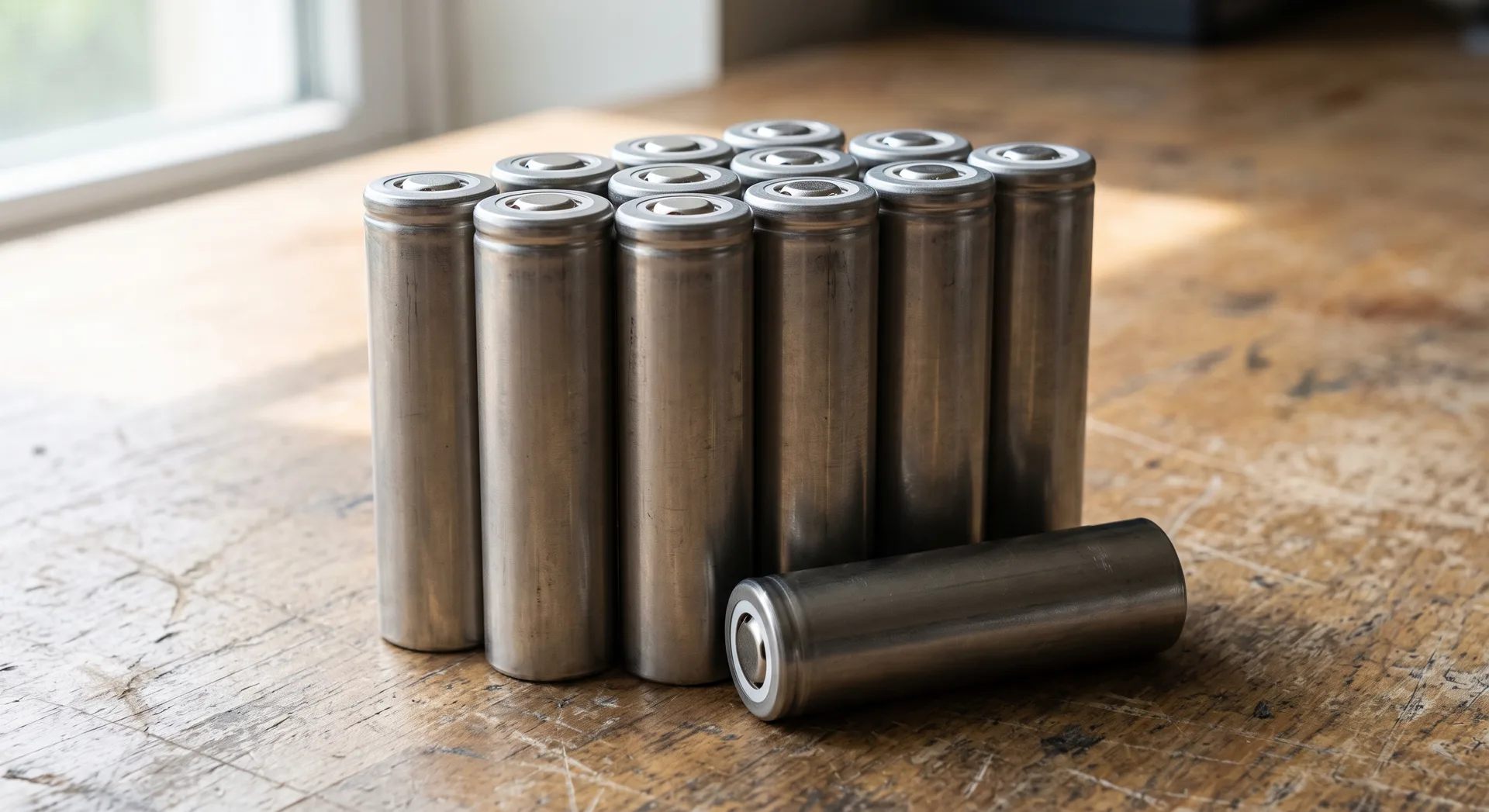
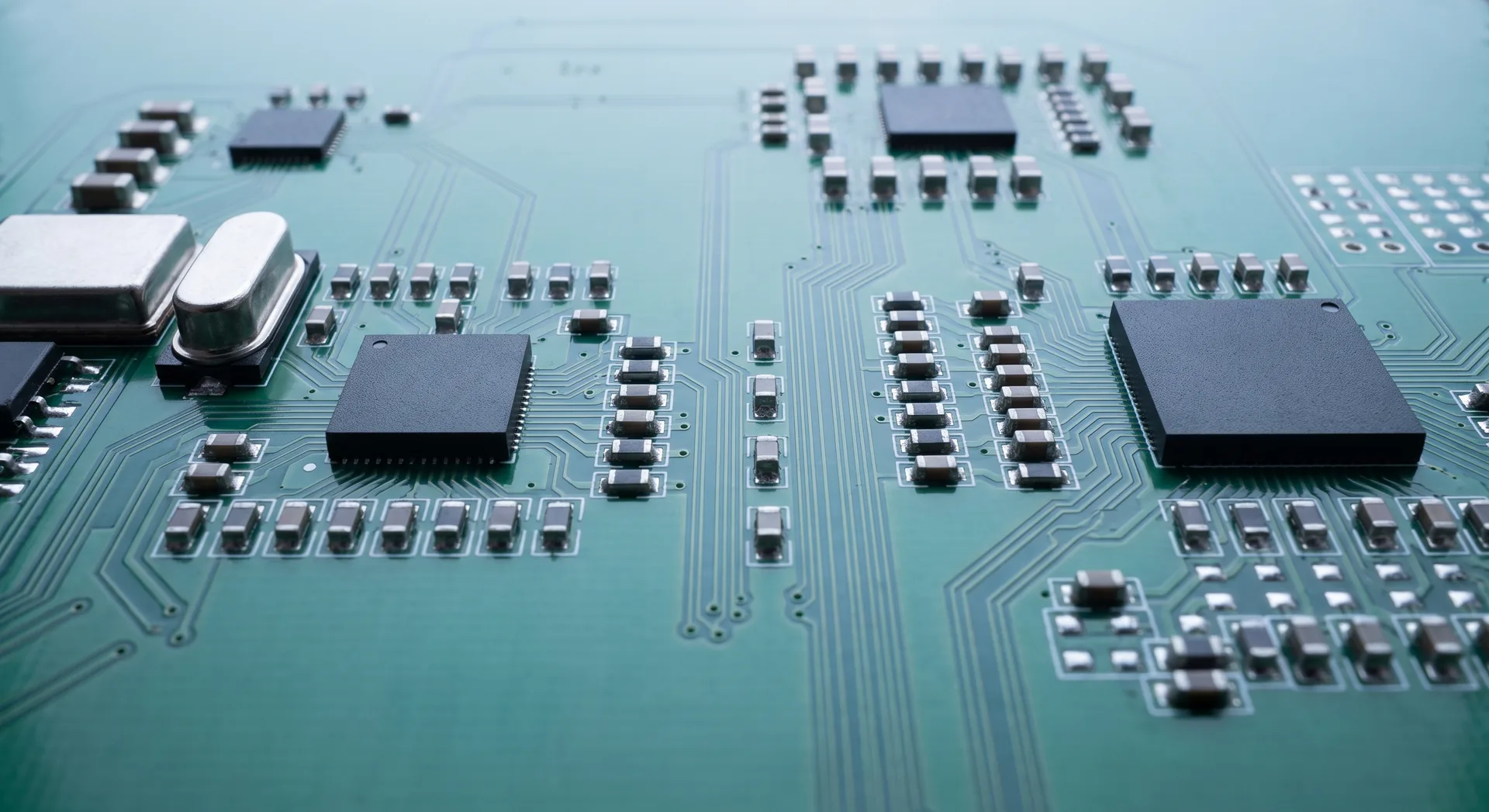
The component in question is the multilayer ceramic capacitor, and its dielectric — the insulating material that does the actual work — is described by NIST as 'stacked layers of dielectric polycrystalline ceramic material, usually barium titanate (BaTiO3)'. One manufacturer states that approximately 800 to 1000 MLCCs are used in each smartphone, and a NIST paper relays a published figure of about three trillion MLCCs manufactured in 2018. That is where a great deal of the titanium in electronics is: not as metal, but as a barium titanium oxide, in components too small to see.
A different titanium from the one in the headlines
Titanium's public reputation belongs to the metal — aerospace, implants, the strong light thing. That is not what the electronics industry mostly buys, and it is not what a titanium mineral mostly becomes. The USGS reports that more than 95% of titanium mineral concentrates were consumed by domestic TiO2 pigment producers, a United States figure that the agency does not repeat at world scale. The chemical route dominates; the metal route is the exception.
The multilayer capacitor sits on the chemical side, one step further along. Barium titanate is not pigment-grade titanium dioxide either — a route claimed in a now-expired US patent makes the powder from an aqueous acidic titanium oxychloride solution, via barium titanyl oxalate, calcined to barium titanate. The mineral feeds a chemical industry, and the chemical industry feeds an electroceramics industry, and only at the third remove does anything resemble a capacitor.
Manufacturers arrived at the material by trial. One recounts that it used titanium oxide as the dielectric material during the initial phase after product release, but introduced barium titanate at a relatively early stage, because the relative dielectric constant of barium titanate 'has become two orders of magnitude greater than that of titanium oxide'. More capacitance in the same volume is the whole game, and the titanium compound won it.
Layers, and a disagreement about how thin they are
An MLCC is built the way its name says: dielectric layers interdigitated with layers of conducting metal electrodes, usually nickel. Stacking is what multiplies capacitance without multiplying footprint, and NIST reports that up to 1000 layers may comprise a single MLCC, depending on capacitance requirements.
How thin those layers are is a place where the published record does not agree with itself, and it is worth showing rather than smoothing. NIST states that the ceramic layers are typically tens of micrometers thick, separated by micrometer-scale electrodes. A manufacturer's own technical report, describing its product history, states that the thickness of the dielectric material was gradually reduced from 50 μm during the initial phase to 0.5 μm at present — the page is dated 2013, but does not itself say what 'at present' refers to. Both are quoted here as published. They are not the same measurement of the same population, and this article does not reconcile them.
A capacitor is a sandwich you cannot see the layers of. The engineering is in how many times you can repeat a slice half a micrometre thick before the block stops working.
Small parts, large numbers
The reason any of this registers as mineral demand is arithmetic. Alongside the smartphone figure, the same manufacturer states that more than 1,000 MLCCs are used in each high-end, state-of-the-art smartphone — a narrower claim about a narrower population, and not the same number as the first. For vehicles it states that as many as 3,000 to 5,000 MLCCs are utilized per vehicle, and that there are already luxury electric vehicles (BEVs: Battery Electric Vehicles) equipped with Level 2+ automated driving features that use more than 10,000 MLCC components.
Against the three trillion units the NIST paper cites for 2018, the individual quantities stop being trivial. No source read for this article converts that unit count into a tonnage of titanium, and none is calculated here; the honest statement is that the component count is very large, the material per component very small, and the product of the two unpublished.
The mineral end, stated narrowly
Osmond's Orión reporting sits several transformations upstream of any of this. In the Zone 1 bulk channel samples the company reports TiO₂ at 14.04–15.16%, with rutile at 13.36–13.49% and ilmenite at 4.82–6.19%, all mass-balance estimates rather than direct measurement. Those are figures about rock. Whether a titanium feedstock is suitable for pigment, for metal, or for the chemical routes that lead to electroceramics is decided by impurity specifications set much further downstream, and no such assessment exists in the record.
Exploration results and mineralogical estimates only. Orión has no JORC-compliant Mineral Resource or Reserve; maiden MRE and Scoping Study pending, targeted Q3 CY26.
Related
- Titanium/Rutile — the mineral and its two divergent routes
- Semiconductors — the chips these capacitors sit beside
- Recycling Technology — why small quantities in sealed assemblies are hard to recover
Sources
- PRIMARYHowell, J.A., Vaudin, M.D., Friedman, L.H., Cook, R.F., 'Microscale Mapping of Structure and Stress in Barium Titanate', Journal of Research of the National Institute of Standards and Technology, Vol. 125, Article 125013, published 19 April 2020, Section 1 (Introduction) — MLCC construction, 'usually barium titanate (BaTiO3)'; 'Up to 1000 layers may comprise a single MLCC [5], depending on capacitance requirements'; 'The ceramic layers are typically tens of micrometers thick'; 'About three trillion MLCCs were manufactured in 2018 [4].'
- SECONDARYMurata Manufacturing Co., 'Technical Report — Evolving Capacitors: Multilayer Ceramic Capacitors, Part 1 Trend', dated 28 November 2013 — 'The thickness of the dielectric material was gradually reduced from 50 μm during the initial phase to 0.5 μm at present' (the page is dated 2013; the document does not itself define 'at present'); Murata's own account of moving from titanium oxide to barium titanate. A manufacturer's technical publication.
- SECONDARYMurata Manufacturing Co., 'Installing Electronic Circuits of Dramatically Increasing Size into Compact Devices — Murata's MLCC for 5G Smartphones (Part 1 of 2)', dated 5 March 2021 — 'Approximately 800 to 1000 MLCCs are used in each smartphone'; separately, 'more than 1,000 MLCCs in each high-end, state-of-the-art smartphone'. Two distinct figures for two distinct populations.
- SECONDARYMurata Manufacturing Co., 'Automotive MLCCs Balancing Reliability with Miniaturization and High Capacitance…', dated 23 June 2021 — 'Currently, as many as 3,000 to 5,000 MLCCs are utilized per vehicle'; 'luxury electric vehicles (BEVs: Battery Electric Vehicles) equipped with Level 2+ automated driving features that use more than 10,000 MLCC components'.
- PRIMARYU.S. Geological Survey, Mineral Commodity Summaries 2026 — Titanium Mineral Concentrates (February 2026), Domestic Production and Use: 'More than 95% of titanium mineral concentrates were consumed by domestic TiO2 pigment producers.' This is a United States figure; USGS states no equivalent world split.
- PRIMARYUS Patent 7,001,585 B2, 'Method of making barium titanate', granted 21 February 2006 — a route to barium titanate powder via titanium oxychloride and barium titanyl oxalate, and the statement that 'as the fired dielectric thickness of MLCC's continues to decrease (e.g., to less than about 3 microns), it becomes necessary to make a finer BT powder.' One documented route, not evidence that all commercial powder is made this way.
- PRIMARYosm_grade — ASX:OSM release, 19 Feb 2026 (Zone 1 bulk channel samples: TiO₂ 14.04–15.16%, rutile 13.36–13.49%, ilmenite 4.82–6.19%; mineral percentages are mass-balance estimates).
- UNVERIFIEDGAP — no current manufacturer or industry-body statement of the layer count in a present-day MLCC was obtained. The only sourced figures are NIST's hedged 'Up to 1000 layers may' (2020) and a 2007 dissertation quoting a projection. No world production figure for MLCCs later than 2018 was obtained either.Non-public document · no public URL
- UNVERIFIEDGAP — zirconium's role in commercial multilayer capacitor dielectrics could not be established. The one peer-reviewed paper located reported that the benefit observed in zirconium-doped ceramics did not transfer to MLCC samples. No claim about zirconium in capacitors is made in this article.Non-public document · no public URL