Minerals Hub / Mining & Production / The monazite upgrade: what the preliminary testwork found
Mining & Production · Monazite · 4 min read
The monazite upgrade: what the preliminary testwork found
Preliminary testwork concentrated Orión monazite — and the head grade and the concentrate grade are two different measures, which is the part worth reading slowly.
Reviewed by Peter Uppal
The short version
Osmond's preliminary metallurgical testwork, at SGS Lakefield, took Orión bulk material with a monazite head grade of 1.56–1.62% and produced a monazite concentrate grading 19.4% TREO (total rare-earth oxide, excluding yttrium) at approximately 76% recovery (osm_zircon, 3 Mar 2026). The head figure is a monazite mineral percentage; the concentrate figure is TREO. Osmond separately characterises the result as an upgrade of roughly twenty times — its own figure, reported here as stated and not recomputed. The head grades are mass-balance estimates — calculated from oxide assays rather than directly measured — and that basis applies to every mineral percentage in this article. This is preliminary testwork, not a resource or a production spec.
What "upgrading" means
Ore almost never comes out of the ground at the grade a customer wants. The job of beneficiation — the processing step between mining and selling — is to raise the concentration of the target mineral by separating it from everything else. Two terms describe how well that goes, and it's worth knowing them before the results make sense.
The first is the upgrade ratio: how much richer the concentrate is than the feed. The second is recovery: what fraction of the valuable mineral present in the feed actually ends up in the concentrate, rather than being lost to the discard stream. The two pull against each other — chase an ever-higher grade and you tend to lose more to the tailings — so a good result is a balance, not a single number. Both are glossary terms here, not Osmond disclosures; the figures attached to them below are Osmond's.
What the testwork found
Working at SGS Lakefield on Orión material, Osmond reports that a -38 µm flotation / WHIMS stream produced a monazite concentrate grading 19.4% TREO (excluding yttrium) — the percentage being rare-earth-oxide content of the concentrate, by mass — including 25% MREO, the magnet-relevant rare earths, defined in that release as neodymium, praseodymium, dysprosium and terbium, at approximately 76% recovery (osm_zircon, 3 Mar 2026).
The feed is measured differently. The bulk-sample monazite head grade is 1.56–1.62% — a monazite mineral percentage, mass-balance (osm_grade, 19 Feb 2026). The concentrate figure is quoted as TREO: related, but not the same measure, and the two should not be read as endpoints of a single arithmetic.
On the upgrade itself, Osmond states roughly a twenty-fold improvement (osm_zircon, 3 Mar 2026). That is the company's own characterisation, on a basis it does not itemise — the release does not name which head measure the ratio is taken against — and it is reported here as stated rather than recalculated against either head figure.
What it shows, and what it doesn't
Read plainly, the result says the monazite in this material responds to conventional beneficiation: a low-grade feed can be concentrated into something substantially richer, while keeping most of the rare earths. That is a genuine and specific piece of information about how the mineral behaves.
It is also, just as specifically, preliminary. The testwork was done on a fraction of the Zone 1 bulk composite, on crushed bulk ore that Osmond notes was not optimised, and it is metallurgical testwork — not a resource, not a flowsheet, and not a production specification. What a full-scale, optimised process would achieve is a later question. The honest headline is the narrow one: on this sample, in preliminary work, monazite reported to a 19.4% TREO concentrate at approximately three-quarters recovery, and Osmond describes the upgrade as roughly twenty-fold.
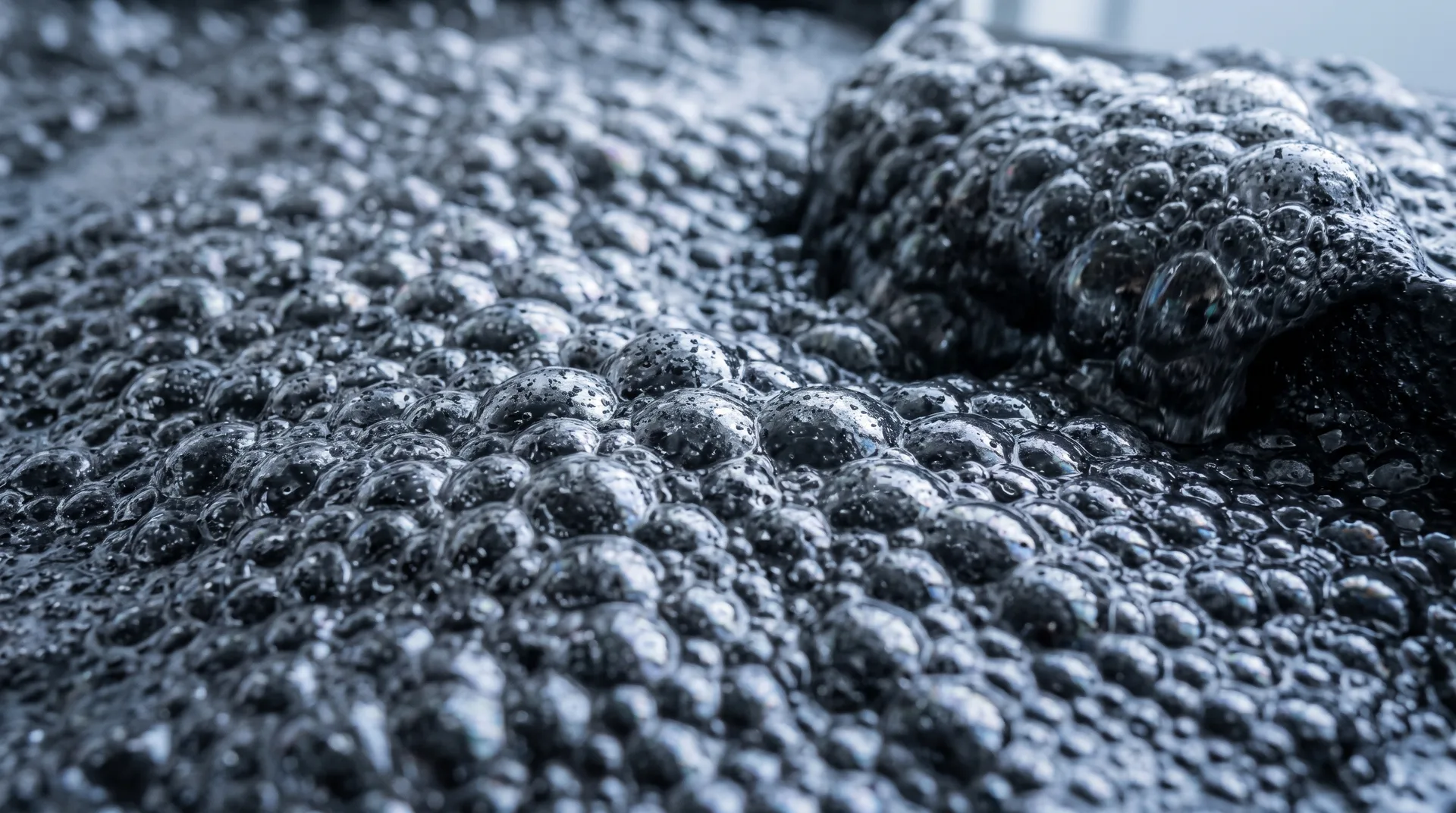
Beneficiation is sorting at industrial scale: persuade one mineral to behave differently from all the others, then collect the ones that took the hint.
Testwork card — Orión monazite (preliminary)
| Head grade | Monazite 1.56–1.62% (mineral %, mass-balance; osm_grade, 19 Feb 2026) |
| Preliminary concentrate | 19.4% TREO (excl. Y), by mass of concentrate, incl. 25% MREO (Nd, Pr, Dy, Tb) (osm_zircon, 3 Mar 2026) |
| Recovery | ~76% (osm_zircon, 3 Mar 2026) |
| Upgrade | ~20×, Osmond's stated figure; basis not itemised in the release, not recomputed here (osm_zircon) |
| Method / lab | -38 µm flotation / WHIMS stream; SGS Lakefield (osm_zircon, 3 Mar 2026) |
| Status | Preliminary testwork — not a resource or production spec |
→ See the full Monazite dossier in the mineral hub.
Exploration results and mineralogical estimates only. Orión has no JORC-compliant Mineral Resource or Reserve; maiden MRE and Scoping Study pending, targeted Q3 CY26.
Sources
- Osmond figures: [osm_grade — 19 Feb 2026], [osm_zircon — 3 Mar 2026] (ASX:OSM releases)
Related reading
- Monazite to magnets: the rare-earth supply chain (Applications · Monazite)
- The rare-earth gap Europe can't recycle its way out of (Supply & the EU · Monazite)
- From 50.2% to premium: the zircon target (Science · Zircon)
Sources
- PRIMARYosm_grade — ASX:OSM release, 19 Feb 2026 (bulk-sample monazite head grade 1.56–1.62%; TREO 1.07–1.18%).
- PRIMARYosm_zircon — ASX:OSM release, 3 Mar 2026 (preliminary metallurgy at SGS Lakefield: monazite concentrate 19.4% TREO excl. Y, incl. 25% MREO (Nd, Pr, Dy, Tb), ~76% recovery via -38 µm flotation / WHIMS stream; ~20× upgrade vs head grade).
- COMMON-KNOWLEDGEWorking definitions of 'recovery' and 'upgrade ratio' — glossary terms, standard reference knowledge; not an Osmond disclosure.Non-public document · no public URL