Minerals Hub / Mining & Production / Zircon at Orión: the exploration results to date, and the EU supply picture they sit in
Mining & Production · Zircon · 12 min read
Zircon at Orión: the exploration results to date, and the EU supply picture they sit in
Osmond's zircon numbers from Jaén are exploration results, not a resource — here is what has actually been sampled, what preliminary metallurgy has achieved, and the European market context they sit alongside.
Reviewed by Peter Uppal
The short version
Zone 1 bulk channel samples returned zircon at 8.77–9.79% (mass-balance) with ZrO₂ of 5.07–5.57%; the discovery holes AV-01 and AV-01bis returned roughly 6.1% and 8.0% zircon over 3 m intercepts; and SOR-08A, reported on 16 July 2026, returned ZrO₂ of 3.82% over 2.7 m from 209.7 m. Preliminary SGS testwork produced a zircon concentrate grading 50.2% ZrO₂ at approximately 70% recovery, against Osmond's stated target of 66% or better, which has not been achieved. Alongside those results — as context, not as a claim about Orión — the EU is 83% import-reliant on zircon at the ore and concentrate stage on a 2016–2020 basis, and no EU figure exists at the zirconia stage at all.
Exploration-stage note. Orión has no JORC-compliant Mineral Resource or Mineral Reserve. Osmond Resources is an exploration-stage company; the maiden Mineral Resource Estimate and the Scoping Study are pending. Every number in this article is an exploration result, a mineralogical estimate, or preliminary metallurgical testwork. No tonnage figure exists for the project, and none should be inferred from what follows.
Where the project stands
Osmond Resources (ASX: OSM) is an EU critical-minerals explorer. Its stated goal is to become the European Union's first producer of rare-earth-bearing monazite, zircon and titanium minerals. That is Osmond's stated ambition, not a status this article can confer — everything below stays inside what has been measured.
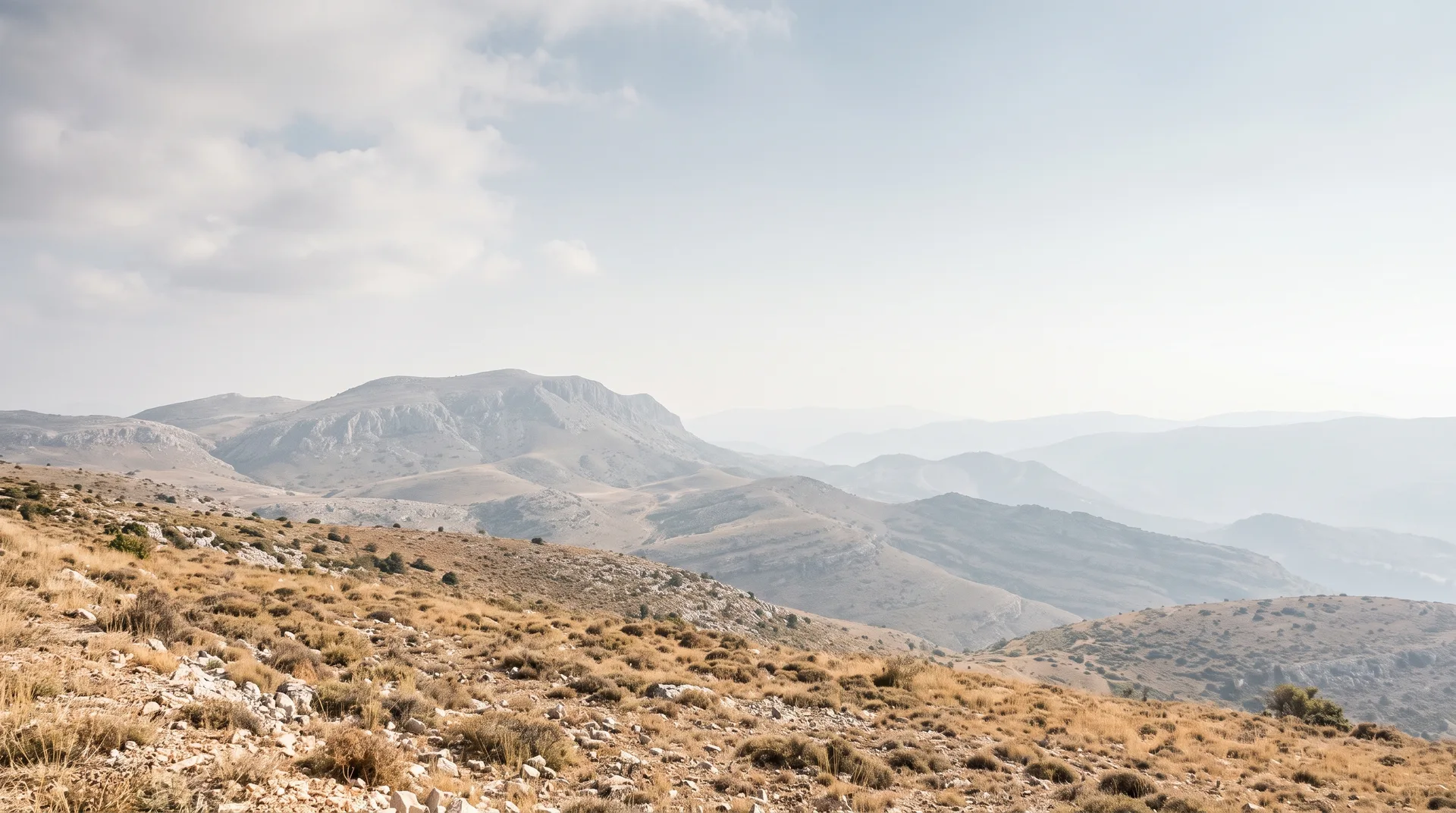
The Orión EU Critical Minerals Project sits in Jaén Province, Andalucía, Spain — roughly 70 km from Jaén and around 235 km from Madrid. The project covers 772 mining units, or 232 km².
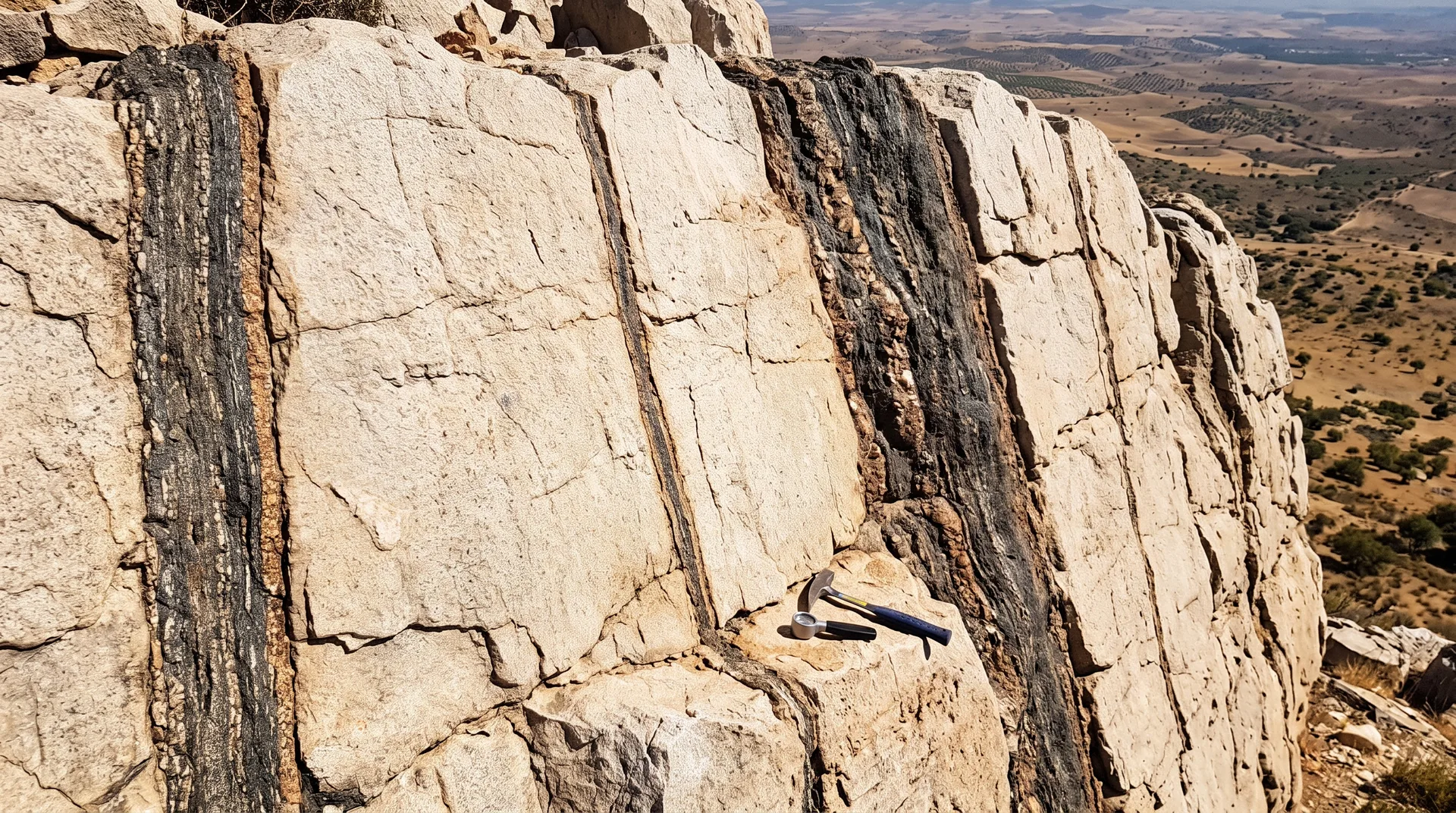
Geologically, Orión is a lithified tidal-sand placer hosted in weakly laminated Pochico Formation quartzite. The economic minerals identified are rutile, ilmenite, zircon and monazite, and Osmond describes the material as carrying "very low levels of deleterious elements." What zircon actually is as a mineral — and the zirconium and hafnium it carries — is covered on the Element page; this article stays with the commercial picture. This page is the running results picture for zircon at Orión; the per-topic pieces in the hub carry the standing analysis.
What has been sampled so far
The Zone 1 bulk channel sampling programme took 150 kg of material. In those bulk channel samples, zircon returned 8.77–9.79% as a mineral percentage — a mass-balance estimate, meaning it is calculated from the oxide assays rather than measured directly. That basis applies to every mineral percentage in this article, and subsequent figures carry it in short form as "(mass-balance)". On an oxide basis, the same exploration-stage bulk channel samples returned ZrO₂ of 5.07–5.57%. Hafnium in those same bulk channel samples was reported as HfO₂ at 1,178–1,204 ppm, also on an oxide basis. Total heavy minerals in the same samples ran 29.4–32.8% (mass-balance). Those samples also returned TiO₂ of 14.04–15.16% on an oxide basis, with rutile at 13.36–13.49% and monazite at 1.56–1.62% (both mass-balance).
AV-01 and AV-01bis, the discovery holes, gave a drill-supported picture. AV-01 returned approximately 6.1% zircon (mass-balance) over a 3 m intercept, with heavy minerals around 30% (mass-balance), on the 3% TiO₂ cut-off stated in the 24 November 2025 release. AV-01bis returned approximately 8.0% zircon over a 3 m intercept, with heavy minerals around 40% (both mass-balance; 3% TiO₂ cut-off).
SOR-02, the programme's third hole, was reported on 15 December 2025. Located approximately 1.7 km WSW of AV-01 in Zone 1, it returned a highlight interval of 1.2 m at 9.65% TiO₂, 3.0% ZrO₂, 635 ppm HfO₂, and 0.591% TREO (0.158% MREO) from 373.35 m (assay basis, as stated in that release). As the release frames it, SOR-02 confirms grades and scale potential in Zone 1 at distance from the discovery holes.
The February 2026 step-out holes NWOR-03 and NWOR-04 extended the drilled picture toward Zone 3; their intervals and cut-off scheme are covered in From outcrop to 187.8 metres (ASX release, 19 Feb 2026).
The 28 April 2026 release — "High-Grade Assay Results Continue at Orion Project" — reported the final four Phase 1 holes and, with them, the first release-backed statement of corridor scale. The holes were NWOR-04bis (a deviation hole from NWOR-04), NWOR-01 and NWOR-02 (all returning Seam 3 intervals), and SOR-01 (Pochico Formation). Highlight intervals, on an assay basis as stated in that release: NWOR-04bis returned 6.9 m at 3.65% TiO₂ (4.3% rutile), 0.82% ZrO₂ (1.6% zircon), and 0.169% TREO (0.25% monazite) from 256.2 m, and a further 1.2 m at 4.2% TiO₂ from 272.6 m; NWOR-01 returned 3.3 m at 3.46% TiO₂ from 320.9 m and 2.1 m at 4.24% TiO₂ from 346.95 m; NWOR-02 returned 0.9 m at 4.17% TiO₂ (1.09% ZrO₂, 2.1% zircon) from 159.6 m and 3.3 m at 2.62% TiO₂ from 242.5 m; SOR-01 returned 0.3 m at 2.43% TiO₂ from 431 m. That release is also the primary source for the corridor's scale: mineralisation has been intersected across a distance of more than 10 km, in multiple layers including Seam 3.
The 28 May 2026 release — "Additional High-Grade Outcrops to Support MRE" — reported additional channel sample assays from outcrops in the MRE target area. In-situ total heavy mineral grades (THM, defined in that release as rutile + ilmenite + zircon + monazite) exceeded 20% across the highlights: Sample Z1-26 at 29.3% THM, Z1-22 at 29.1%, Z1-27 at 25.1%, Z1-14 at 24.9%, and Z1-17 at 24.3% (assay basis). The release frames these results as supporting the maiden MRE target area.
The 22 June 2026 release then reported that SOR-08 had intersected the heavy-mineral-prospective Pochico Formation quartzites in the Southern Block — Osmond's name for this new domain, approximately 1.25 km ESE of AV-01/AV-01bis. At that date SOR-07 was in progress at 180 m depth.
The 16 July 2026 release — titled "Mineral Resource Target Area Expanded" — reported SOR-08A, Osmond's best hole to date. Over 2.7 m from 209.7 m, and on the 3% TiO₂ cut-off stated in that release, SOR-08A returned ZrO₂ of 3.82% on assay, with zircon at 5.7% (mass-balance). HfO₂ over that same 2.7 m interval was reported at 815 ppm (oxide basis; 3% TiO₂ cut-off). TiO₂ over that same interval was 10.75% (oxide basis; 3% TiO₂ cut-off). Within that intercept, a 1.2 m interval returned ZrO₂ of 6.55% and HfO₂ of 1,401 ppm (oxide basis; 3% TiO₂ cut-off).
Osmond reports that SOR-08A sits roughly 1.25 km east-south-east of AV-01, and that the seam thickens eastward.
The 14 August 2026 release — "Further Positive Progress Towards Scoping Study Completion" — reported the SOR-07A assays. SOR-07A intersected the Pochico Formation at 231.6 m downhole and the main heavy-mineral seam at 312.7 m, reaching a final depth of 387.6 m. The highlight interval was 1.2 m at 0.369% TREO (0.098% MREO), 1.62% ZrO₂, 342 ppm HfO₂ and 5.38% TiO₂ from 312.7 m, including 0.6 m at 0.512% TREO (0.137% MREO), 2.23% ZrO₂, 461 ppm HfO₂ and 6.43% TiO₂ from 313.3 m (assay basis; 3% TiO₂ primary cut-off with 0.9/0.6/0.3 m internal dilution, as stated in the release's highlight footnote). Indicative mineral grades on a mass-balance basis: 1.2 m at 0.55% monazite, 2.4% zircon, 4.5% rutile, 1.7% ilmenite; including 0.6 m at 0.77% monazite, 3.3% zircon, 5.4% rutile, 2.0% ilmenite. The release identifies this result as confirming east-west continuity of the main heavy-mineral seam in the Southern Block: SOR-07A sits 1.63 km from SOR-02 to the west and 1.34 km from SOR-08A to the east. Osmond attributes the apparent east-west thinning relative to SOR-08A to basin architecture and/or distance from the mineral source.
Concentrate grade: achieved and targeted
Preliminary metallurgical testwork carried out by SGS produced a zircon concentrate grading 50.2% ZrO₂ at approximately 70% recovery. As the zirconium reference page also notes, commercial concentrate is typically specified around 65%, stated as ZrO₂ + HfO₂ combined (stoichiometrically pure zircon is 67.2% ZrO₂).
A concentrate grade of 66% ZrO₂ or better — what Osmond terms premium grade — is the company's stated target. It has not been achieved. The distinction is the whole story of the metallurgical workstream: one number is a result, the other is an objective.
50.2% ZrO₂ at approximately 70% recovery is what preliminary testwork achieved. What Osmond terms premium grade — 66% or better — is what it is targeting. These are not the same kind of number, and nothing yet turns the second into the first.
The European picture, and where it goes quiet
Nothing in Orión's exploration results establishes any connection to the EU supply figures that follow; the two sit side by side here as context, not as a claim.
At the ore and concentrate stage, the EU consumes far more zircon than it produces. EU consumption of zircon at that stage, measured as zirconium content, averaged 147,666 tonnes per year across 2016–2020. EU production at that stage over the same 2016–2020 period, on the same zirconium-content basis, is characterised in SCRREEN as minor — a characterisation rather than a measured quantity we can report. EU import reliance for zircon at the ore and concentrate stage, on a zirconium-content basis, was 83%, again as a 2016–2020 average.
For separate scale context on a different year basis, world production of zirconium in ore and concentrate was 928,830 tonnes per year of zirconium content in 2024, per USGS Mineral Commodity Summaries 2025. That world figure and the EU figures above are not contemporaneous and should not be read as a single picture.
There is a gap in the verified data. No EU figure exists in SCRREEN for the ZrO₂ or zirconia stage — a major use of zircon. We do not have a number for it, and we will not estimate one. Nothing above should be read as describing European zircon demand beyond the ore and concentrate stage.
Hafnium runs the other way
Hafnium is worth separating out, because the intuitive European story is wrong here. Hafnium is not mined as such; it arises as a by-product of refining zircon to zirconium.
EU consumption of unwrought hafnium metal, on a hafnium-content basis, was 11.3 tonnes per year in 2016. EU production of unwrought hafnium metal was 35 tonnes per year on a 2016–2020 average basis. France is the world's largest producer at roughly 49% — a share of a world total that SCRREEN estimates at 71 tonnes per year, a figure for which USGS states world primary hafnium data is not available, making both the total and the share single-source — and France makes it from imported zircon. EU import reliance for hafnium metal was 0%, on the same 2016–2020 average basis.
The practical consequence: hafnium is a European supply asset, not a European supply gap. Osmond reports HfO₂ in parts per million in its zircon-bearing exploration samples. That hafnium occurs within zircon is settled mineralogy. Treating it as a commercial co-product of Osmond's results, however, is our editorial framing — Osmond has never characterised its results that way.
What is still pending
The maiden Mineral Resource Estimate is now expected over the coming four weeks, per the 14 August 2026 release; the MRE and Scoping Study remain targeted for Q3 CY26 (unchanged). The 14 August release also announced a completed Scoping Study flowsheet and quoted design-stream concentrate grades from it — and on 17 August 2026 Osmond retracted that design statement after ASX ruled it a production target under the Listing Rules (LR 5.16 requires at least an Inferred Mineral Resource behind such statements, which Orión does not yet have); investors are warned not to rely on the retracted figures, and this tracker does not carry them. The concentrate story that stands — 50.2% ZrO₂ achieved (3 Mar 2026) toward the ≥66% premium target, and what the retraction teaches about disclosure discipline — is covered in From 50.2% to premium: the zircon target. SOR-07A assays are no longer outstanding. The additional channel sampling reported on 28 May 2026 and the Southern Block results feed into the MRE target area; integration of the Southern Block is, in Osmond's word, "targeted" before the end of Q3 CY26.
No Mineral Resource exists at Orión today, and no tonnage figure with it. What exists is a set of exploration results, a preliminary concentrate grade, a completed flowsheet design awaiting PFS confirmation, and a European market whose zircon import reliance at the ore and concentrate stage is documented and whose zirconia-stage demand is not.
Orión data card — Zircon (current results)
| Status | Exploration results and preliminary testwork — no Mineral Resource, no tonnage |
| Bulk channel samples (Zone 1, 150 kg) | Zircon 8.77–9.79% (mass-balance); ZrO₂ 5.07–5.57%; HfO₂ 1,178–1,204 ppm; total HM 29.4–32.8% (mass-balance) |
| Discovery holes | AV-01 ~6.1% zircon over 3 m, HM ~30%; AV-01bis ~8.0% zircon over 3 m, HM ~40% (both mass-balance; 3% TiO₂ cut-off stated in the 24 Nov 2025 release) |
| SOR-08A (16 Jul 2026 release) | 2.7 m from 209.7 m: ZrO₂ 3.82%, zircon 5.7% (mass-balance), HfO₂ 815 ppm, TiO₂ 10.75%; incl. 1.2 m at ZrO₂ 6.55% and HfO₂ 1,401 ppm (3% TiO₂ cut-off stated in that release) |
| SOR-07A (14 Aug 2026 release) | 1.2 m from 312.7 m: TREO 0.369% (MREO 0.098%), ZrO₂ 1.62%, HfO₂ 342 ppm, TiO₂ 5.38%; incl. 0.6 m from 313.3 m: TREO 0.512%, ZrO₂ 2.23%, HfO₂ 461 ppm, TiO₂ 6.43% (assay basis; 3% TiO₂ primary cut-off per the highlight footnote); confirms E-W seam continuity in the Southern Block; 1.63 km from SOR-02 (west), 1.34 km from SOR-08A (east) |
| SOR-02 (15 Dec 2025 release) | 1.2 m from 373.35 m: TiO₂ 9.65%, ZrO₂ 3.0%, HfO₂ 635 ppm, TREO 0.591% (MREO 0.158%) (assay basis; ~1.7 km WSW of AV-01, Zone 1) |
| Phase 1 finals (28 Apr 2026 release) | NWOR-04bis 6.9 m at 3.65% TiO₂ from 256.2 m (Seam 3); NWOR-01 3.3 m at 3.46% from 320.9 m; NWOR-02 0.9 m at 4.17% from 159.6 m; SOR-01 0.3 m at 2.43% from 431 m; mineralisation >10 km, release-backed (assay basis) |
| Additional channel sampling (28 May 2026 release) | MRE-area outcrops, THM >20%: Z1-26 29.3%, Z1-22 29.1%, Z1-27 25.1%, Z1-14 24.9%, Z1-17 24.3% (THM = rutile + ilmenite + zircon + monazite; assay basis) |
| Preliminary concentrate (SGS) | 50.2% ZrO₂ at ~70% recovery; target 66% ZrO₂ or better (premium grade) — not achieved |
| EU context (SCRREEN, 2016–2020 basis) | Zircon ore/conc (Zr content): consumption ~147,666 t/yr; 83% import reliance; production characterised as minor. No EU figure at the ZrO₂/zirconia stage |
| Still pending | Maiden MRE expected over the coming four weeks (per the 14 Aug 2026 release); Scoping Study targeted Q3 CY26 (unchanged); Southern Block integration targeted Q3 CY26 |
→ See the full Zircon dossier in the mineral hub.
Exploration results and mineralogical estimates only. Orión has no JORC-compliant Mineral Resource or Reserve; maiden MRE and Scoping Study pending, targeted Q3 CY26.
Related reading
- From 50.2% to premium: the zircon target (Science · Zircon)
- From outcrop to 187.8 metres: what the maiden drilling found (The Deposit · Rutile)
- Zircon and the Critical Raw Materials Act (Supply & the EU · Zircon)
Sources
- PRIMARYOsmond Resources (ASX: OSM) — ASX release, 16 Jul 2026 (SOR-08A drill results)
- PRIMARYOsmond Resources (ASX: OSM) — ASX release, 24 Nov 2025 (AV-01/AV-01bis discovery holes)
- PRIMARYOsmond Resources (ASX: OSM) — ASX releases: Orión project description, Zone 1 bulk channel sampling, SGS preliminary metallurgical testwork
- SECONDARYSCRREEN2 factsheet — Zirconium (update, Dec 2023)
- SECONDARYSCRREEN2 factsheet — Hafnium (update2, Jan 2024)
- PRIMARYUSGS Mineral Commodity Summaries 2025 — Zirconium and Hafnium (data year 2024)
- PRIMARYOsmond Resources (ASX: OSM) — ASX release, 15 Dec 2025 (SOR-02 drill results)
- PRIMARYOsmond Resources (ASX: OSM) — ASX release, 28 Apr 2026 (Phase 1 final assays)
- PRIMARYOsmond Resources (ASX: OSM) — ASX release, 28 May 2026 (additional channel sampling)
- PRIMARYOsmond Resources (ASX: OSM) — ASX release, 22 Jun 2026 (SOR-08 Southern Block intersection)
- PRIMARYOsmond Resources (ASX: OSM) — ASX release, 14 Aug 2026 (Further Positive Progress Towards Scoping Study Completion)
- PRIMARYOsmond Resources (ASX: OSM) — ASX release, 3 Mar 2026 (preliminary mineral processing testwork: combined zircon concentrate 50.2% ZrO₂ at ~70% recovery, ~97.4% liberation; ≥66% target).