Minerals Hub / Markets & Economics / A stockpile has to choose which form to hold
Markets & Economics · · 5 min read
A stockpile has to choose which form to hold
A reserve cannot hold a mineral in the abstract: it holds a named substance at a named point in a chain, and that choice decides which failure it can actually answer.
Pending review
The short version
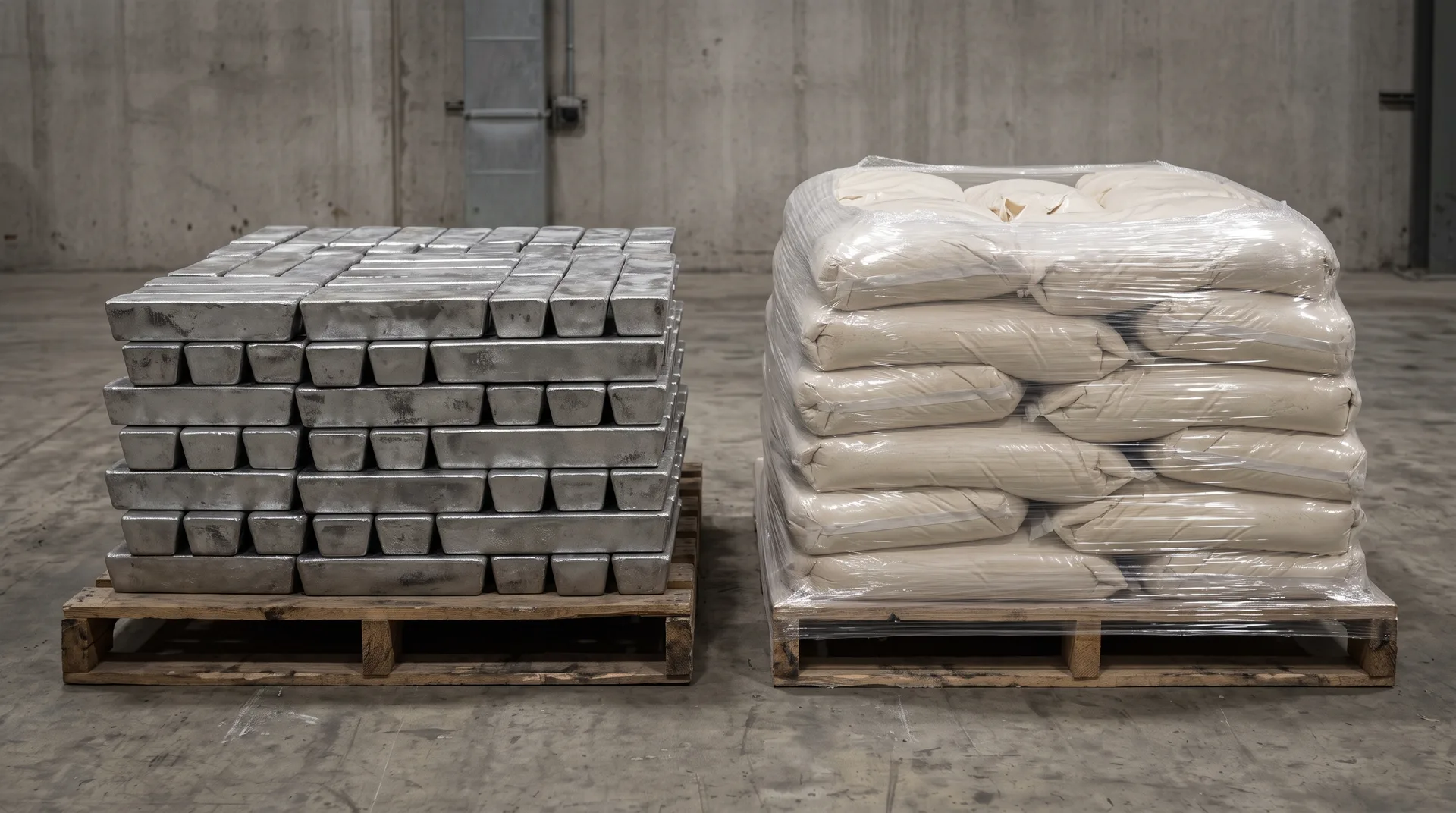
A reserve cannot hold "rare earths". It has to hold a specific substance in a specific form, stored in a specific way, and that decision is taken years before anything goes wrong. The United States' published stockpile plan names its candidate acquisitions as forms rather than elements, and the governing statute already contains authority to reprocess and rotate material precisely because a form can stop being the right one.
The plan is a list of forms, not of minerals
The annual notice that opens the US stockpile's proposed plan to public comment describes itself plainly: with it, Commerce, on behalf of the Defense Logistics Agency, lists "the quantities and types of activity—potential disposals, potential acquisitions, potential conversions (upgrade, rotation, reprocessing, etc.) or potential recovery (from government sources) —associated with each material in its proposed FY 2026 AMP".
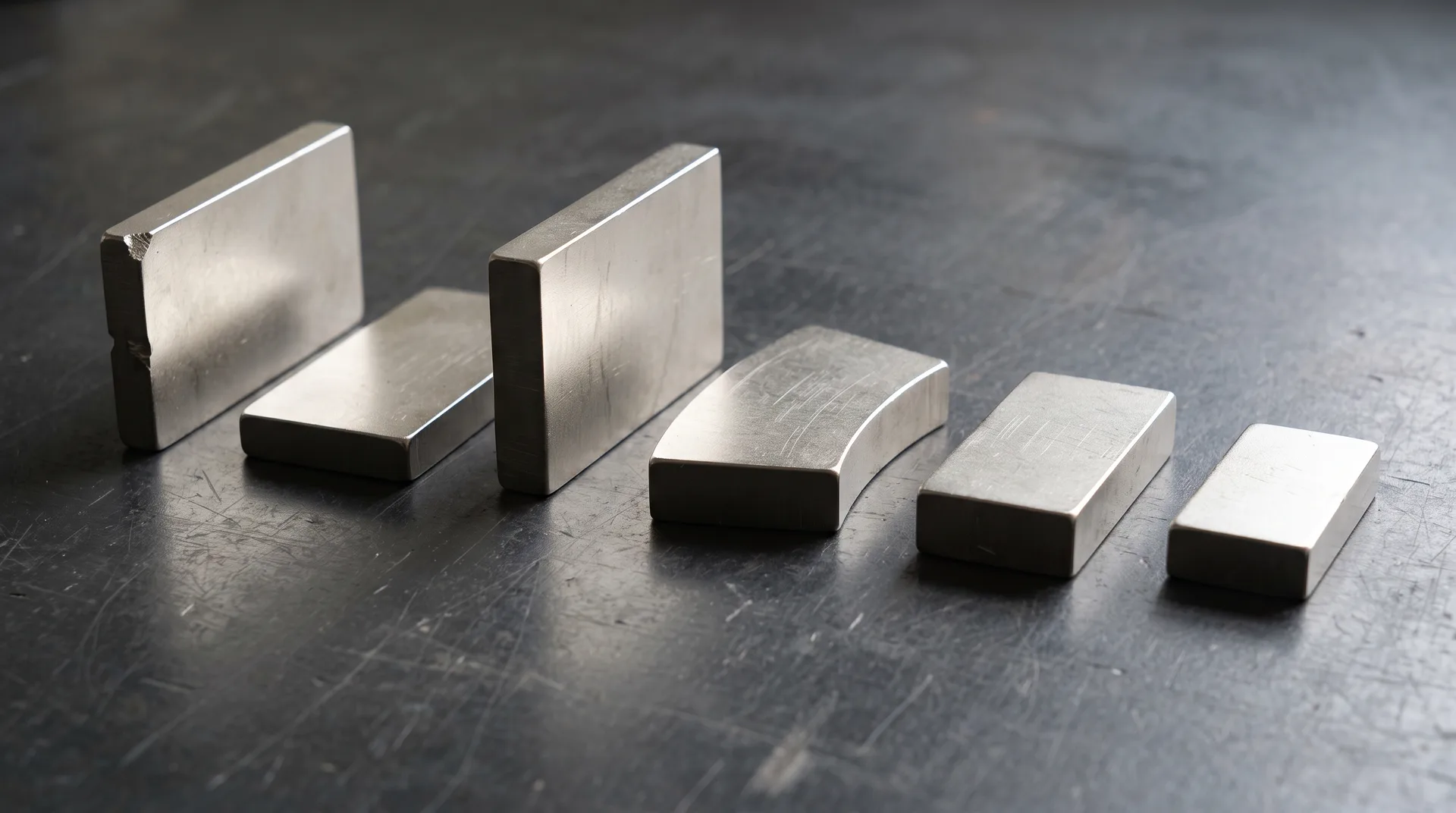
Read the potential acquisitions table for what its entries actually name and the design decision becomes visible. Among them: Neodymium-Praseodymium Oxide, 300 MT; NdFeB Magnet Block, 450 MT; Samarium-Cobalt Alloy, 60 MT; Zirconium-Hafnium, 2,300 MT; Titanium, 13,608 MT.
Two of those sit on the same chain at different points. As a general matter of that chain, an oxide is feedstock for metal-making and magnet-making, while a magnet block has already passed through every step in between. Holding one is not a smaller version of holding the other. These are ceilings on what may be acquired in a fiscal year rather than transactions, as the notice's own framing makes clear — but the form named is the form chosen.
Which failure is being insured against
The choice of form is, in effect, a choice about which link a reserve is being held against — and this reading is ours, not the notice's. A reserve of oxide is useful if the constraint turns out to be at the mine and the separation plant, and useless if the constraint is that no one outside a small number of countries can turn oxide into a magnet. A reserve of magnet blocks answers the second case and does nothing for the first.
Every form decision has that shape. It also carries a cost that only appears later: material held at one point in a chain has to travel the rest of it during the emergency, using capacity that may be exactly what is missing.
A stockpile is a bet on which step will fail. The bet is placed when the material is bought, and cannot be moved once it is in the shed.
The statute already knows this is a problem
The most interesting evidence that form is the hard part is that Congress wrote the remedies into the law. The stockpile manager is directed to provide for "the upgrading, refining, or processing of any material in the stockpile... when necessary to convert such material into a form more suitable for storage, subsequent disposition, and immediate use in a national emergency".
Technological obsolescence is the striking phrase. It is an acknowledgment, in statute, that a material can sit safely in storage, lose nothing physically, and still stop being the thing industry now uses. The Transaction Fund's authorised uses point the same way, covering the "Development of current specifications of stockpile materials and the upgrading of existing stockpile materials to meet current specifications" — spending authority for the case where held stock and current specification have drifted apart. No source consulted here documents a particular material to which that has happened; what the statute establishes is that the risk was anticipated.
What is actually in the sheds
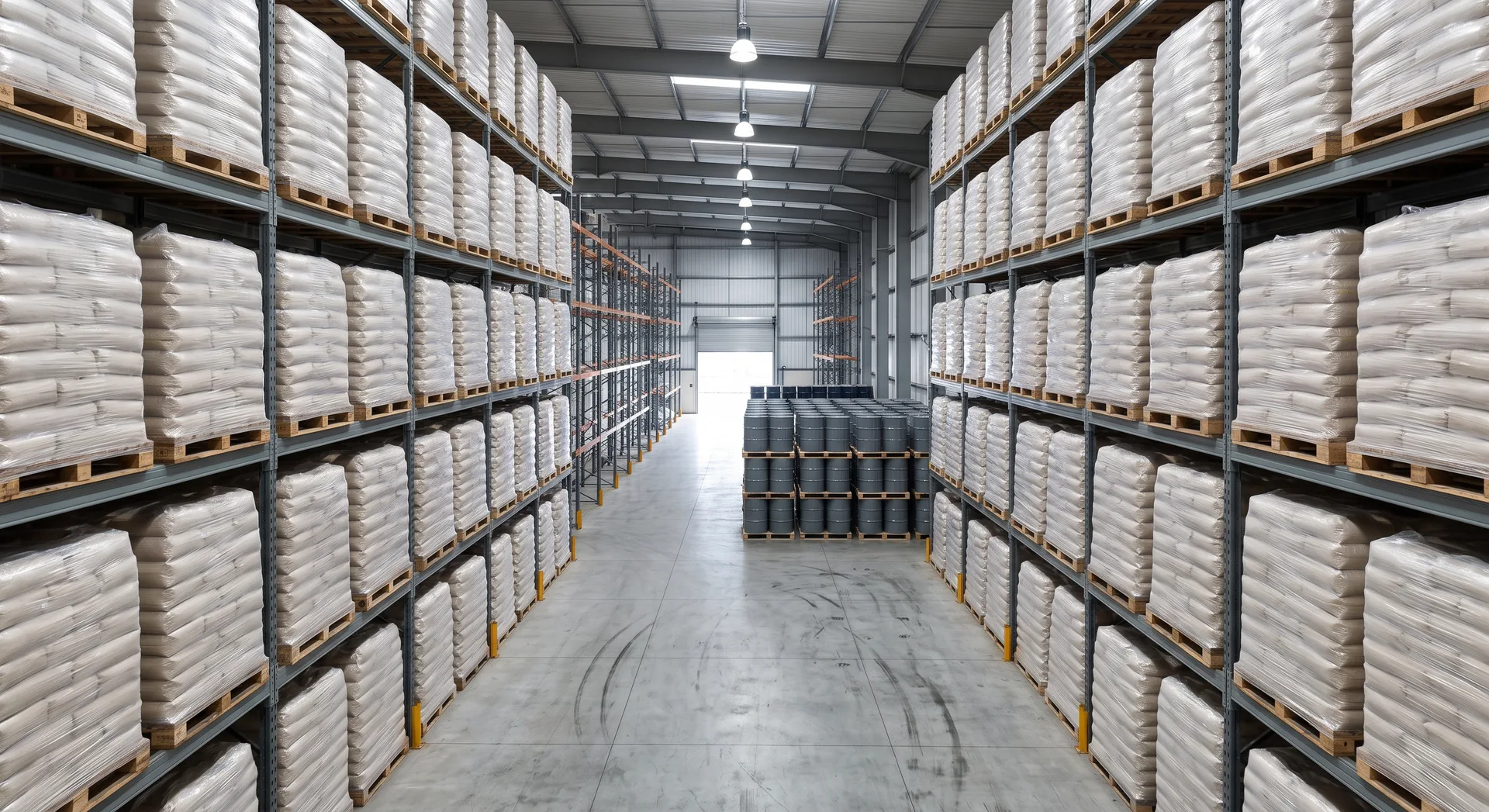
The physical inventory is described the same way the plan is: by form. The Defense Logistics Agency's depot listing gives, for instance, Hammond, Indiana: "Beryllium Metal, Chromium Metal, Low and High Carbon Ferrochromium, Tungsten O&C, Tin"; Pt. Pleasant, West Virginia: "Ferromanganese, Low Carbon Ferrochromium"; Wenden, Arizona: "Manganese Ore".
Ore in one place, ferroalloy in another, and ferrochromium distinguished by carbon content — a metallurgical specification, held as a separate line, because low-carbon and high-carbon ferrochromium are not interchangeable to a steelmaker.
A different design, the same decision
Other programmes make the choice differently and still have to make it. Japan's resource strategy describes a reserve sized in time rather than tonnes: through public-private cooperation, "stocks are currently kept with a target of 60 days (30 days for some metals) of standard domestic consumption", with, for the 34 rare metals, stocks "being built depending upon the political situations of the producing countries, Japan's dependency ratios and requirements".
Sixty days of consumption is a target expressed as coverage, which sounds like a quantity question and is still a form question underneath: sixty days of what substance, at which stage, meeting whose specification. The structural question about any reserve is less what it holds than where in the chain it decided to hold it — and unlike a quantity, that decision cannot be adjusted once the material is bought.
Related
- Critical Mineral Strategies — the policy reasoning behind these programmes
- Government Agencies — the bodies that administer and advise on them
- Processing Capacity — the midstream steps a held form does or does not skip
- Supply & Demand — the market a purchase or release lands in
- Global Trade — the terms and routes affected when a reserve moves
Sources
- PRIMARYBureau of Industry and Security, Department of Commerce, 'Request for Public Comments on the Potential Market Impact of the Proposed Fiscal Year 2026 Annual Materials Plan From the National Defense Stockpile Market Impact Committee', 89 FR 70166, published 29 August 2024. The introductory description of what the notice lists, and the Potential Acquisitions table, whose entries are named as specific substances and forms (Neodymium-Praseodymium Oxide 300 MT; NdFeB Magnet Block 450 MT; Samarium-Cobalt Alloy 60 MT; Zirconium-Hafnium 2,300 MT; Titanium 13,608 MT; among others). A proposed plan of maximum quantities that may be affected, not a schedule of transactions.
- PRIMARYStrategic and Critical Materials Stock Piling Act, 50 U.S.C. §98e(a)(3) — authority to provide for upgrading, refining or processing material in the stockpile when necessary to convert it into a form more suitable for storage, subsequent disposition and immediate use in a national emergency; and §98e(a)(4) — authority to provide for rotation of material when necessary to prevent deterioration or technological obsolescence.
- PRIMARYStrategic and Critical Materials Stock Piling Act, 50 U.S.C. §98h(b)(2)(C) — authorised uses of the Transaction Fund, including 'Development of current specifications of stockpile materials and the upgrading of existing stockpile materials to meet current specifications (including transportation, when economical, related to such upgrading)'.
- PRIMARYDefense Logistics Agency, Strategic Materials, depot information page. Materials listed by depot as forms — for example Hammond, IN: 'Beryllium Metal, Chromium Metal, Low and High Carbon Ferrochromium, Tungsten O&C, Tin'; Pt. Pleasant, WV: 'Ferromanganese, Low Carbon Ferrochromium'; Wenden, AZ: 'Manganese Ore'.
- PRIMARYAgency for Natural Resources and Energy / METI, 'Japan's new international resource strategy to secure rare metals', page dated 31 July 2020, English version 30 September 2020. 'Through public-private cooperation, stocks are currently kept with a target of 60 days (30 days for some metals) of standard domestic consumption.' and the statement on how stocks for the 34 rare metals are built.
- ANALYSISANALYSIS — the reading that holding an oxide and holding a magnet block are wagers on different failures, and that a form decision quietly selects which part of a chain a reserve can serve, is this publication's framing. Note what is NOT claimed: no source consulted documents an instance of stockpiled material failing a current specification, and neither the Federal Register notice nor the statute describes the form choice in these terms.Non-public document · no public URL