Minerals Hub / Markets & Economics / How a magnet was redesigned to need less dysprosium
Markets & Economics · · 5 min read
How a magnet was redesigned to need less dysprosium
Demand for a critical mineral falls when someone changes a manufacturing process, not when a market decides to want less — and permanent magnets are the clearest documented case in this set.
Pending review
The short version
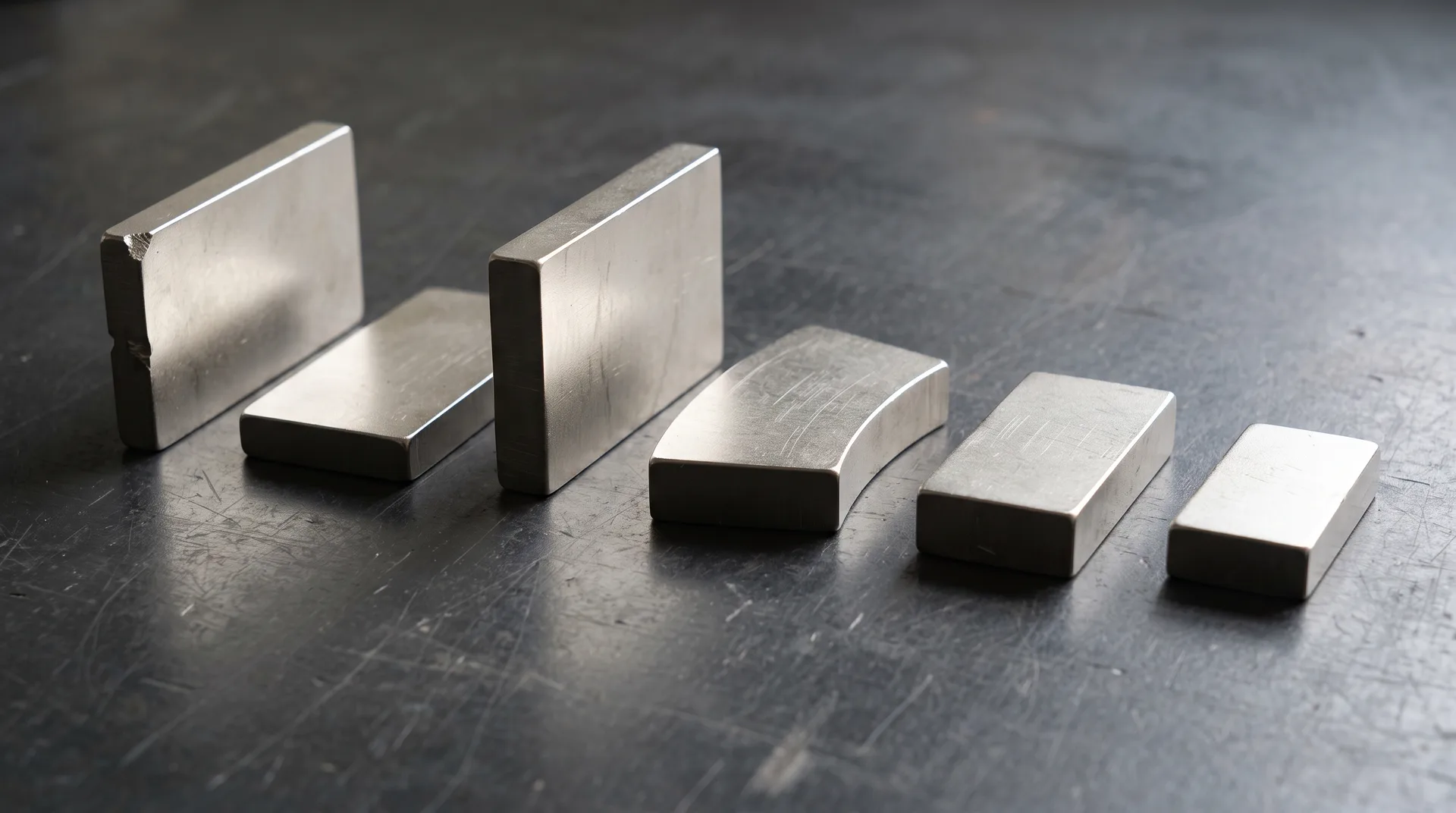
Heavy rare earths are added to a neodymium-iron-boron magnet to keep it magnetised at temperature, and manufacturers found a way to place them at the grain boundaries rather than throughout the material. The US Department of Energy records that, through process changes of that kind, the dysprosium content of a given magnet grade can be reduced — without any buyer choosing to want less of it. That is what a demand driver in this sector usually looks like: a process change, made for engineering reasons, by people who do not think of themselves as being in the minerals business.
The metallurgy, briefly
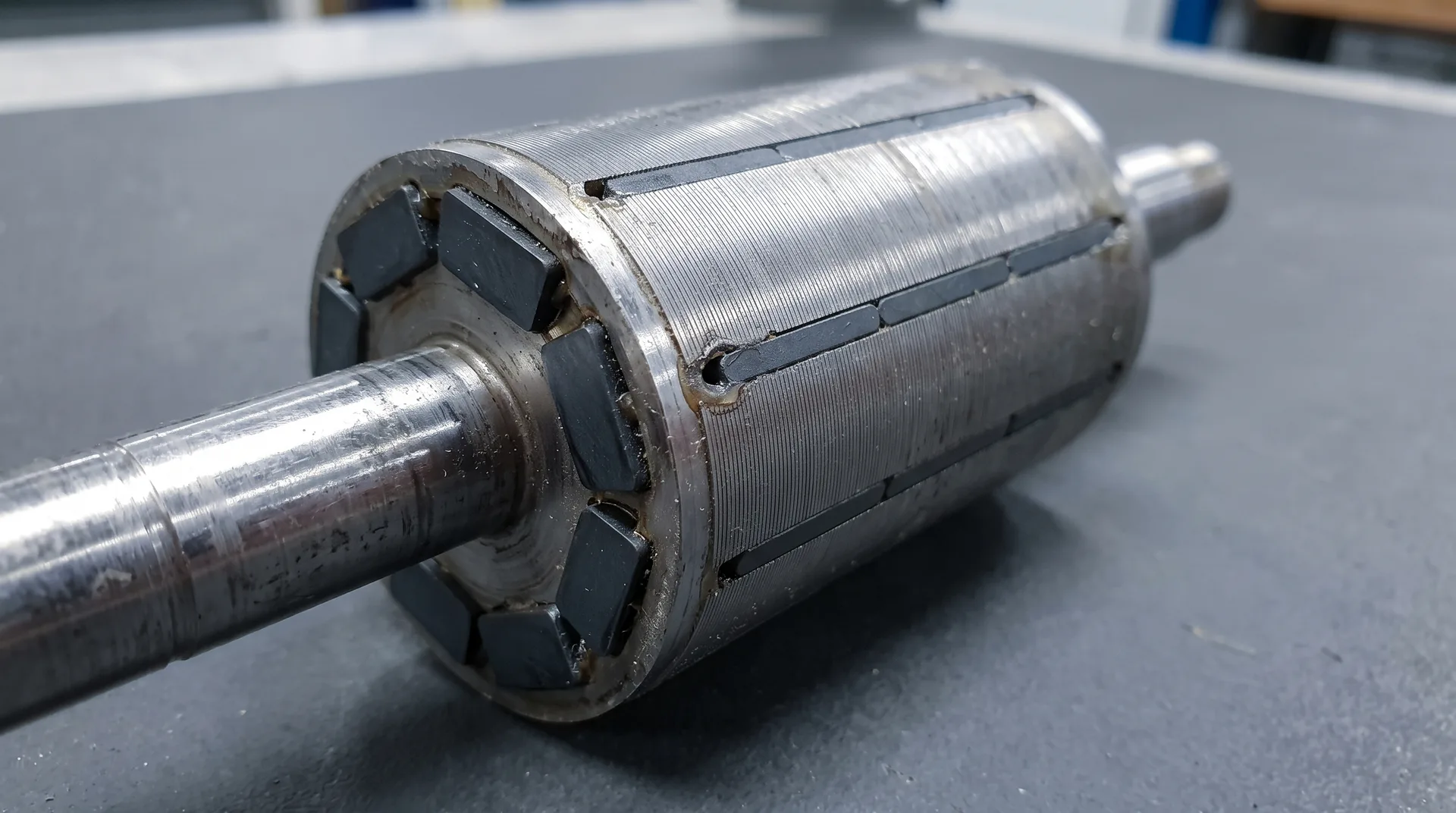
Adding dysprosium or terbium to an NdFeB magnet raises its resistance to being demagnetised, which is what lets it survive the temperatures inside a traction motor. The blunt way to do that is to alloy the heavy element through the whole magnet. The problem with the blunt way is that most of the added element ends up somewhere it does nothing.
The published research is explicit about both halves of that. Grain boundary diffusion technology with heavy rare earth (Dy/Tb) infiltration "is considered to be the most effective at improving the coercivity of NdFeB magnets without excessive consumption of HRE"; and, although "increasing the Tb/Dy content in the diffusion source can form a high diffusion gradient", it "also directly leads to the low utilization of HRE elements".
A manufacturer's own account of the same physics describes where the element ends up: Dy "does not diffuse into the interior of the crystalline particles", with the substituted phase gathering "so as to cover the surface of the crystalline particles".
What it did to the quantity required
The US Department of Energy's assessment of the magnet supply chain records the change as an industry-wide one: manufacturers "have made widespread efforts to economize on HREs in NdFeB through better manufacturing processes such as grain boundary diffusion (GBD) and the dual alloy process", and through these processes "Dy contents for a given grade can be reduced below the levels shown in Table 2". DOE gives no percentage.
The one quantified figure available here belongs to a single company and describes a single proprietary process, and should be read that way. TDK's technical note on its HAL process claims it uses "20-50% less Dy, a rare earth element", with remanent magnetic flux density "improved by 3-5%". That is a manufacturer's claim about its own product, stated as a range, and it is not evidence about grain boundary diffusion in general.
Nobody in this story wanted less dysprosium. They wanted the same coercivity, and stopped paying for the part of the element that was doing nothing.
The other direction: removing the magnet entirely
Alongside using less of a material sits designing it out, and there the trade-off is stated plainly by the people who made it. Renault, describing its own electrically excited synchronous motors, says these "slightly bigger motors deliver high levels of efficiency without a magnet" and that by opting for a wound rotor rather than permanent magnets it is "seeking to avoid reliance on the countries that produce rare earths and magnets".
The academic overview is similarly balanced. Induction motors "are being reconsidered for the majority of electric vehicle models due to their robust design, established manufacturing infrastructure, and absence of rare-earth magnets", and switched reluctance motors "are a promising alternative for powering electric vehicles instead of rare-earth magnet motors" — but induction motors "are generally less efficient than permanent magnet motors in electric cars, especially when performance is not the most important factor". Substitution here is a real option with a real penalty, which is the honest version of the story and the one worth carrying.
DOE's Critical Materials Assessment — a preliminary draft report issued to solicit public comment — reflects exactly that ambiguity in its own scoring: dysprosium "falls in energy importance due to potential substitutions in the medium term but increases in supply risk, remaining a critical material" — note potential, and medium term.
Why this belongs on the demand side
The IEA groups these responses together, describing demand-side innovation as taking three distinct forms: "reducing the amount of heavy rare earth elements (HREEs) required within existing magnet chemistries; substituting one HREE for another that is less supply-constrained; and developing entirely new technologies that minimise drastically or eliminate rare earth use altogether". It also records a national-scale instance: following the 2010 export controls, Japan implemented demand-side policies in close co-ordination with industry, "resulting in 30% lower total rare earth demand compared with 2010 levels". That figure is for total rare earth demand, not for heavy-rare-earth content per magnet, and the two should not be run together.
What all of this has in common is that the decision was taken by a magnet maker, a motor designer or a policy department, on grounds of engineering or resilience, and reached the mineral only afterwards. A mineral producer watching order books would have seen the consequence long before the cause. That is the ordinary shape of derived demand, and it is the reason a market read purely from the supply side tends to be surprised by things that were decided years earlier in a laboratory.
Related
- Supply & Demand — the joint-production structure this acts against
- Commodity Prices — the mechanisms these forces are transmitted through
- Recycling — secondary supply as the other source of the same elements
- Electric Vehicles — the end use where most of these decisions are being taken
- Rare Earths — the mineral group most exposed to design choices made elsewhere
Sources
- PRIMARYU.S. Department of Energy, 'Rare Earth Permanent Magnets: Supply Chain Deep Dive Assessment', February 2022. Statement that manufacturers have made widespread efforts to economize on heavy rare earths through better manufacturing processes such as grain boundary diffusion and the dual alloy process; that through these processes Dy contents for a given grade can be reduced below the levels shown in its Table 2; and the Toyota heavy-rare-earth-free magnet example.
- PRIMARYTDK, 'Higher performance for neodymium magnets: HAL production process', 21 April 2011. Manufacturer's technical document on its own HAL process: 'Uses 20-50% less Dy, a rare earth element.'; 'Remanent magnetic flux density has been improved by 3-5%.'; and the description of Dy remaining at the surface of the crystalline particles rather than diffusing into their interiors. A single company's claim about a single proprietary process.
- PRIMARYHuang, et al., Materials (MDPI) 16(8):3131, 2023, on multicomponent grain boundary diffusion in NdFeB magnets. Statements that GBD with Dy/Tb infiltration is considered the most effective route to improving coercivity without excessive consumption of heavy rare earths, and that raising heavy-rare-earth content in the diffusion source leads to low utilisation of those elements.
- PRIMARYRangarajan, Shiva, Collins and Senjyu, 'Electric Vehicle Motors Free of Rare-Earth Elements—An Overview', Machines (MDPI) 13(8):702, 2025. Induction motors being reconsidered for electric vehicle models; switched reluctance motors as a promising alternative; and the statement that induction motors are generally less efficient than permanent magnet motors in electric cars, especially when performance is not the most important factor.
- PRIMARYIEA, 'Rare Earth Elements' (2026), executive summary. The three forms demand-side innovation can take; and the statement that Japan's post-2010 demand-side policies resulted in 30% lower total rare earth demand compared with 2010 levels. NOTE: this is a statement about total rare earth demand, not about heavy-rare-earth intensity per magnet.
- PRIMARYU.S. Department of Energy, 'Critical Materials Assessment', May 2023 — a preliminary draft report which states on its face that it is being issued to solicit public comment, the final report being the one that presents findings and conclusions. Statement that dysprosium falls in energy importance due to potential substitutions in the medium term but increases in supply risk, remaining a critical material; and the definition of the substitutability-limitations criterion.
- SECONDARYRenault Group, 'All about electric motors with no rare earths', published 16 October 2025, modified 24 June 2026. Manufacturer's own account of electrically excited synchronous motors, including the statement that these 'slightly bigger' motors deliver high levels of efficiency without a magnet, and the stated reason for choosing a wound rotor.
- ANALYSISANALYSIS — the framing of thrifting as a driver that becomes visible only after it has happened is this publication's. Note what is NOT claimed: no source consulted states that thrifting is invisible until after the fact; the TDK saving is a single manufacturer's claim about its own process and is not asserted as a general property of grain boundary diffusion; and no figure here is projected forward.Non-public document · no public URL