Minerals Hub / Applications & Industries / The temperature a robot joint magnet must survive
Applications & Industries · Monazite · 5 min read
The temperature a robot joint magnet must survive
Two magnets of the same strength can behave completely differently when a motor gets hot, and the difference is bought with the scarcest rare earths in the set.
Reviewed by Peter Uppal
The short version
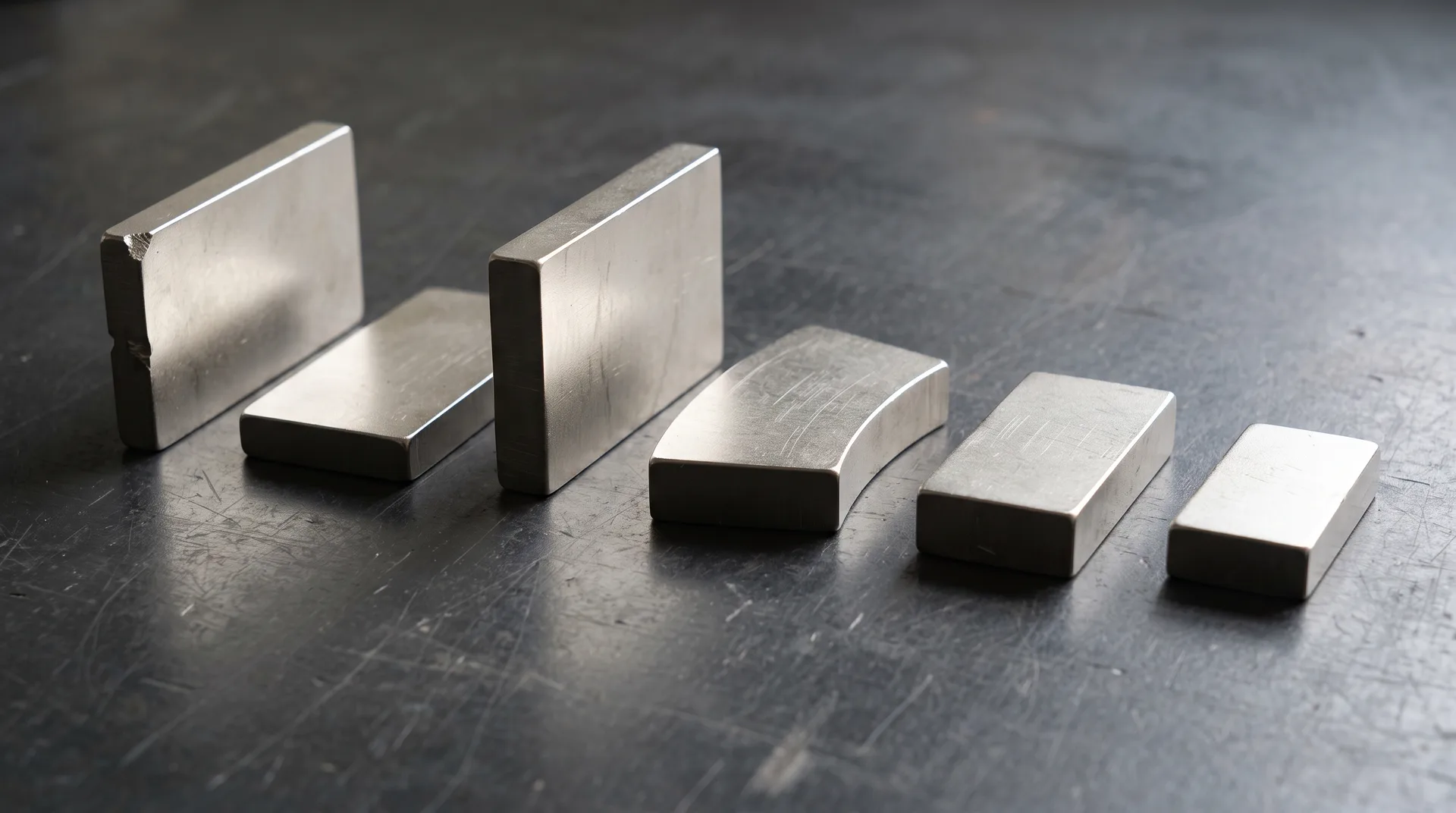
Neodymium-iron-boron magnets weaken as they warm, and the property that fails first is coercivity — the magnet's resistance to being demagnetised by the field around it. Manufacturers sell grades that differ almost entirely in how fast that happens: one datasheet gives a reversible temperature coefficient of intrinsic coercivity of −0.465 %/°C, another of the same nominal grade gives −0.420 %/°C, and the base grade's own sheet prints a steeper figure whose row assignment is unresolved and is set out below rather than quoted here. The heat tolerance is bought with dysprosium and terbium, which IRENA notes are the constrained end of the rare-earth set.
Coercivity is the property that runs out
A permanent magnet in a motor is not simply a source of field. It is also being pushed against — by the stator's own field, hardest at exactly the moments a robot arm asks for peak torque. Coercivity is what lets it refuse. Lose enough of it and the magnet does not weaken gracefully; part of it flips, and the loss does not come back when the motor cools.
Temperature is what erodes it, and the datasheets are unusually explicit about the rate. Three sintered NdFeB grades sharing the same N42 designation, each with a Curie temperature of 310 °C, diverge sharply in their coefficients: −0.465 %/°C for the UH grade and −0.420 %/°C for the EH grade. The base grade's figure is unresolved: its sheet prints both −0.62 %/°C and −0.12 %/°C, and which of the two belongs to the coefficient of intrinsic coercivity rather than of remanence is a row assignment the retrieval for this article returned the opposite way round from the source label, and declined to certify. Same iron, same boron, same nominal strength at room temperature; different rates of decay.
One caution about reading those three side by side. The sheets state different measurement windows — coefficients measured between 20 and 80 ºC on one, between 20 and 180 ºC on another, between 20 and 200 ºC on the third — so the numbers are not strictly like for like, and none of them is a single material constant. The one sheet that prints a temperature limit prints it as a recommendation, and conditionally: a 'Recommended Max use temperature' of 180 °C, 'based on a minimum PC of 2.2', a permeance coefficient, which is a fact about the magnet's shape and its magnetic circuit rather than about the alloy.
A magnet grade is not a strength. It is a promise about how fast the strength goes away when the machine gets hot.
What the letters cost
The improvement is chemical. A peer-reviewed account states that heavy rare earth elements dysprosium and terbium 'can be substituted for Pr/Nd to increase the magneto-crystalline anisotropy field, causing a substantial enhancement of Hcj' — harder to demagnetise, at the price of using two of the scarcer elements in the set.
Because that price is high, the industry's main effort has been to spend the heavy rare earth only where it does work. Grain boundary diffusion is that technique: instead of alloying dysprosium or terbium through the whole magnet, it is selectively diffused into the magnet interior along the grain boundary, forming a hard core-shell structure surrounding the main grains. A consultant's technical paper describes the process plainly as the movement of elements from the surface of the magnet toward the center, and names its geometric limit: a maximum for the thinnest dimension of the magnet of about 6.5 mm. Diffusion has to reach the middle, so the method suits thin parts and not thick ones — which is a design constraint on the motor, not only on the magnet.
How much heavy rare earth this saves is a number this article does not have. It was searched for specifically, in peer-reviewed literature, national-laboratory publications and manufacturers' technical pages, and no citable figure was obtained. The mechanism is well documented; the saving is not, at least not in anything read here.
Why it lands on dysprosium and terbium
The scarcity claim is worth stating in its sources' own terms rather than in the usual shorthand. IRENA states that dysprosium 'is less than 1% of all REEs' and that the world's dysprosium supply 'is even more constrained than the neodymium supply'. A continuation is attributed to that second sentence — 'and this may pose a problem for the energy transition' — and it is where a may, not will reading would come from; it is in no retrieved extract, so it is given here without a link and the hedge is not claimed as the source's. The USGS groups the relevant elements formally, listing terbium and dysprosium among the heavy rare-earth elements, whose applications include high-strength magnets.
That is the connection to a monazite-bearing deposit, and it is a narrow one. Osmond's preliminary monazite concentrate is reported as 19.4% TREO excluding yttrium, including 25% MREO, defined in that release as neodymium, praseodymium, dysprosium and terbium — the same four elements a hot-running motor's magnet specification turns on. That is a statement about a concentrate, not about a magnet.
What the robot literature does and does not say
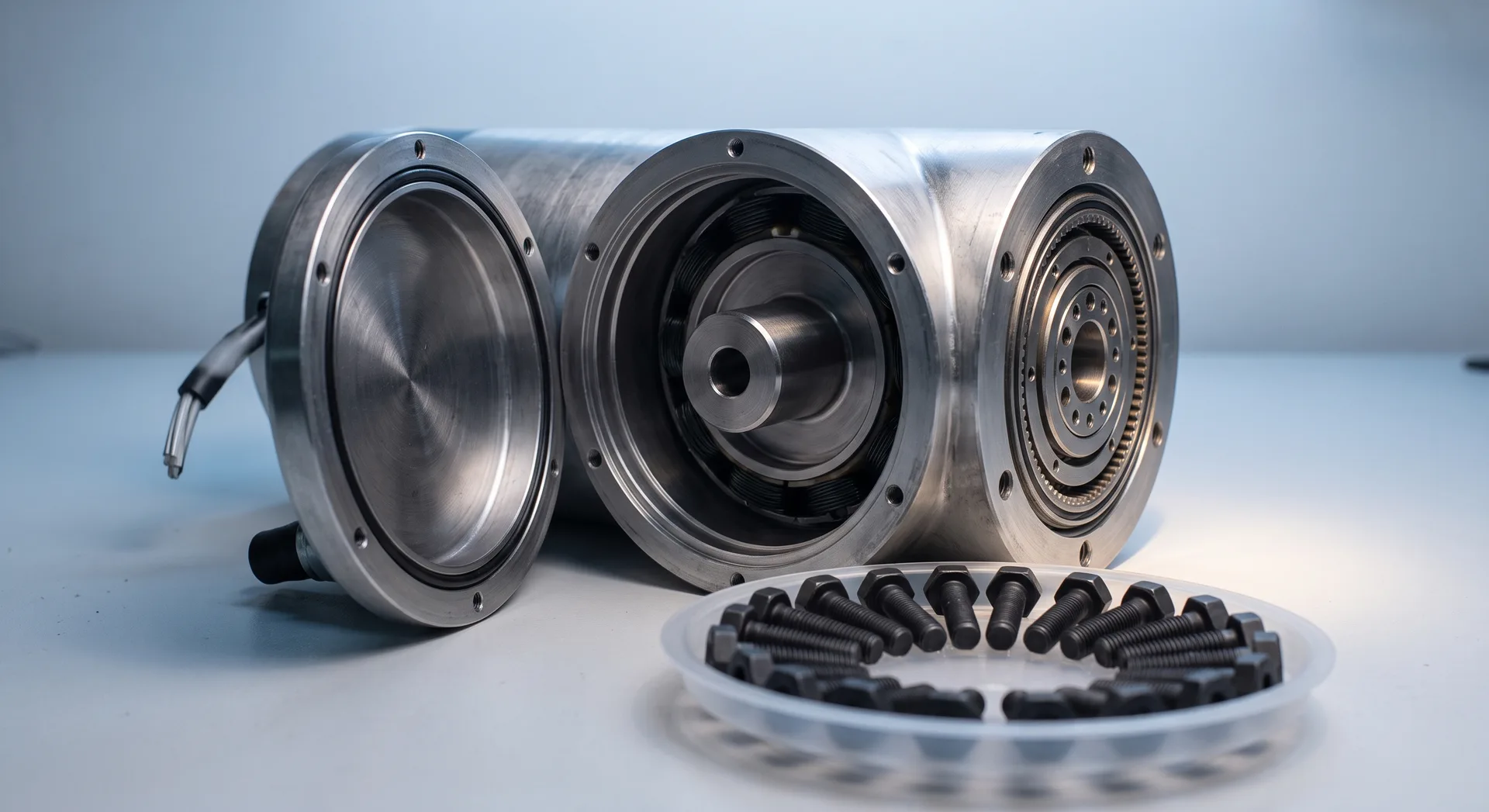
A review of robotic arm joint motors describes servo motors as 'the most commonly used type in current robot arms'. It does not state how many motors a typical arm has, does not say permanent-magnet machines dominate, and does not mention rare earths at all. Sources making stronger robot-specific claims were looked for and not found, so the arithmetic that would connect a magnet grade to a robot population is left open here rather than estimated.
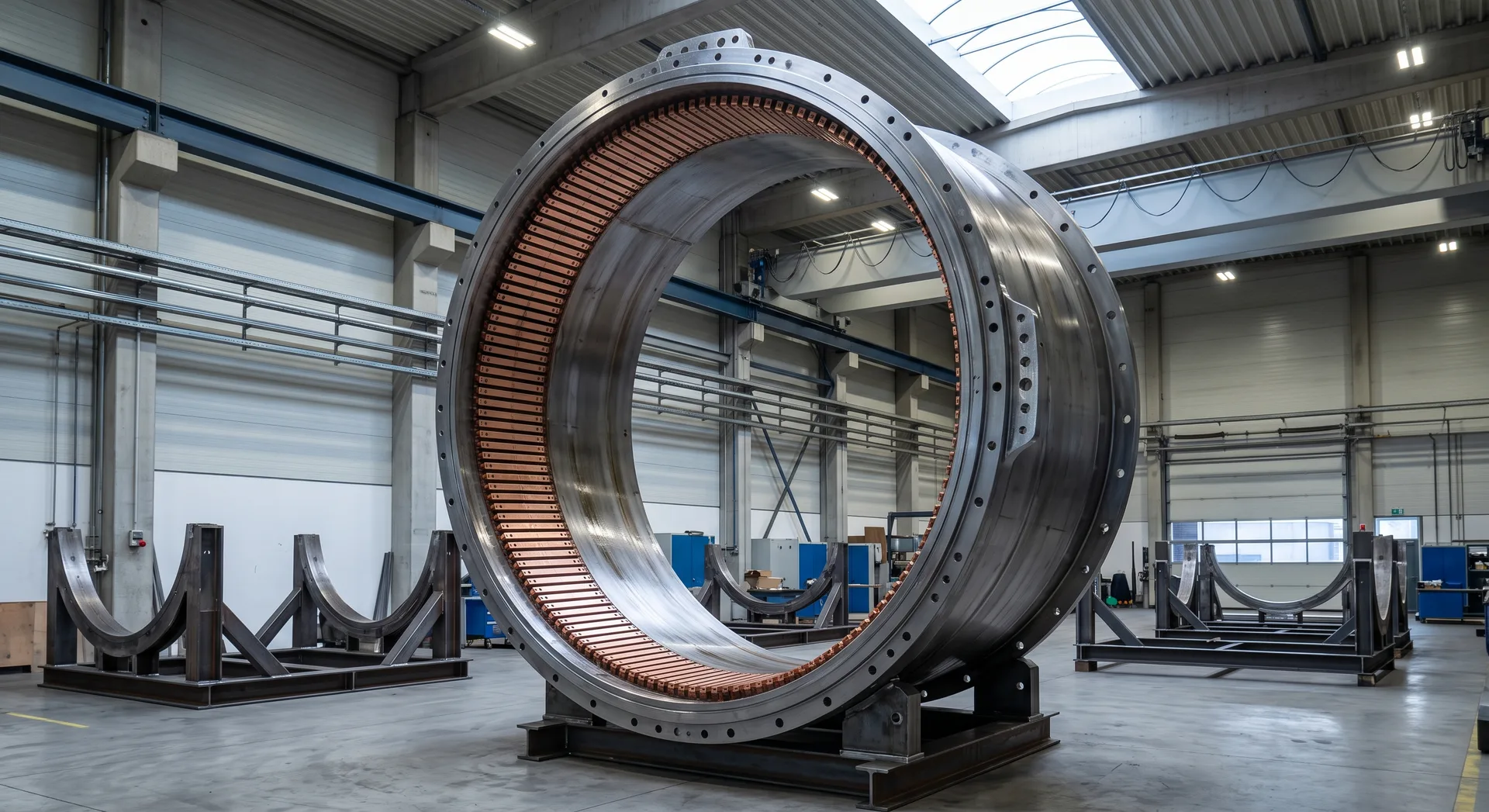
What can be said is the design question itself, which is real regardless of the count. A joint that runs hot, in a duty cycle that keeps it hot, is a joint whose magnet has to be specified further up the temperature ladder — and every rung up that ladder is paid for in the two elements the supply literature is most anxious about.
Exploration results and mineralogical estimates only. Orión has no JORC-compliant Mineral Resource or Reserve; maiden MRE and Scoping Study pending, targeted Q3 CY26.
Related
- Rare Earths — the magnet elements and where they separate
- Renewable Energy — the same magnets at generator scale
- Robotics (Innovation & Technology) — robots as a mining method rather than a market
Sources
- PRIMARYArnold Magnetic Technologies, 'N42 — Sintered Neodymium-Iron-Boron Magnets' datasheet — Curie temperature 310 °C; reversible temperature coefficient of Br −0.12 %/°C; reversible temperature coefficient of intrinsic coercivity Hcj −0.62 %/°C; 'Coefficients measured between 20 and 80 ºC'. No maximum operating temperature is printed on the sheet. Values re-verified on a second, independent retrieval.
- PRIMARYArnold Magnetic Technologies, 'N42EH' datasheet — Curie temperature 310 ºC; α(Br) −0.120 %/ºC; α(Hcj) −0.420 %/ºC; 'Coefficients measured between 20 and 200 ºC'. No maximum operating temperature is printed on the sheet. Values re-verified on a second, independent retrieval. Note the coefficient measurement window differs from the N42 sheet.
- PRIMARYDuraMag, 'N42UH — Sintered Neodymium-Iron-Boron Magnets' datasheet — Curie temperature 310 °C; α(Hcj) −0.465 %/°C; 'Recommended Max use temperature' 180 °C printed with the qualifier 'based on a minimum PC of 2.2'; 'Coefficients measured between 20 and 180 ºC'.
- PRIMARYQu, P. et al., 'Optimized Microstructure and Improved Magnetic Properties of Pr-Dy-Al-Ga Diffused Sintered Nd-Fe-B Magnets', Materials 14(10):2583, 2021 — heavy rare earths substituted for Pr/Nd 'to increase the magneto-crystalline anisotropy field'; grain boundary diffusion as a technique in which heavy rare earths are 'selectively diffused into the magnet interior along the grain boundary, forming a hard core-shell structure surrounding the main grains'.
- SECONDARYConstantinides, S., 'Grain Boundary Diffusion: A technique to reduce heavy rare earth requirement in NdFeB permanent magnets', Magnetics & Materials LLC, v.2, 29 October 2023 — grain boundary diffusion as 'the movement of elements from the surface of the magnet toward the center of the magnet', and a stated limit on part thickness of 'about 6.5 mm'. An industry consultant's white paper, not peer-reviewed; attributed as such.
- PRIMARYGielen, D. and Lyons, M. (2022), 'Critical Materials for the Energy Transition: Rare Earth Elements', IRENA, p. 11 — dysprosium 'is less than 1% of all REEs'; 'The world's dysprosium supply is even more constrained than the neodymium supply, and this may pose a problem for the energy transition'; and dysprosium's role in upper-limit temperature performance of permanent-magnet machines.
- PRIMARYU.S. Geological Survey, Mineral Commodity Summaries 2026 — Rare Earths (Heavy), February 2026 — 'Terbium, dysprosium, holmium, erbium, thulium, ytterbium, and lutetium are heavy rare-earth elements, in order of atomic number', and the listed applications including high-strength magnets.
- PRIMARYMetwly, M.Y., Clark, C.L., He, J., Xie, B., 'A Review of Robotic Arm Joint Motors and Online Health Monitoring Techniques', IEEE Access, 21 August 2024 — servo motors as 'the most commonly used type in current robot arms'. This review does not state a typical joint count, does not say permanent-magnet types dominate, and does not mention rare earths.
- PRIMARYosm_zircon — ASX:OSM release, 3 Mar 2026 (monazite concentrate 19.4% TREO excl. Y, incl. 25% MREO, defined in that release as neodymium, praseodymium, dysprosium and terbium).
- UNVERIFIEDGAP — no citable source was obtained for the weight-percent of dysprosium or terbium in conventionally bulk-alloyed high-temperature magnet grades, nor for a quantified saving attributable to grain boundary diffusion. Both were searched for specifically. The article states the mechanism and declines to quantify it.Non-public document · no public URL
- UNVERIFIEDGAP — no source was obtained stating the number of motors in a typical industrial robot arm, or that those motors are typically permanent-magnet machines, as an industry fact rather than a modelling assumption in a single paper. Robot-specific quantities are therefore absent from this article.Non-public document · no public URL