Minerals Hub / Applications & Industries / What removing a gearbox costs in rare earths
Applications & Industries · Monazite · 5 min read
What removing a gearbox costs in rare earths
Offshore wind moved toward direct-drive generators to lose a failure-prone gearbox, and the published intensity figures show what the swap puts back in its place.
Reviewed by Peter Uppal
The short version
A geared wind turbine turns a slow rotor into a fast generator; a direct-drive turbine deletes the gearbox and turns the generator slowly instead, which takes a very large permanent magnet. IRENA states that a megawatt of direct drive wind turbine capacity 'may require around 500 kilogrammes (kg) of permanent magnets, a third of which is REEs (notably, for direct drive offshore turbines)' — a doubly hedged figure, and the clearest published statement of what the trade actually is.
Two ways to make electricity out of slow rotation
The problem is a mismatch. The US Department of Energy describes drivetrains where generators are connected to gearboxes that speed up rotation from 'the relatively slow speed of the turbine's blades (typically 5–15 rotations per minute for a modern machine), to the high speeds (1,000–1,800 rotations per minute) needed to generate electricity'. A separate DOE page gives the low-speed shaft as spinning between 8–20 rotations per minute; both figures are ranges, both are DOE's, and they are quoted here as published rather than reconciled.
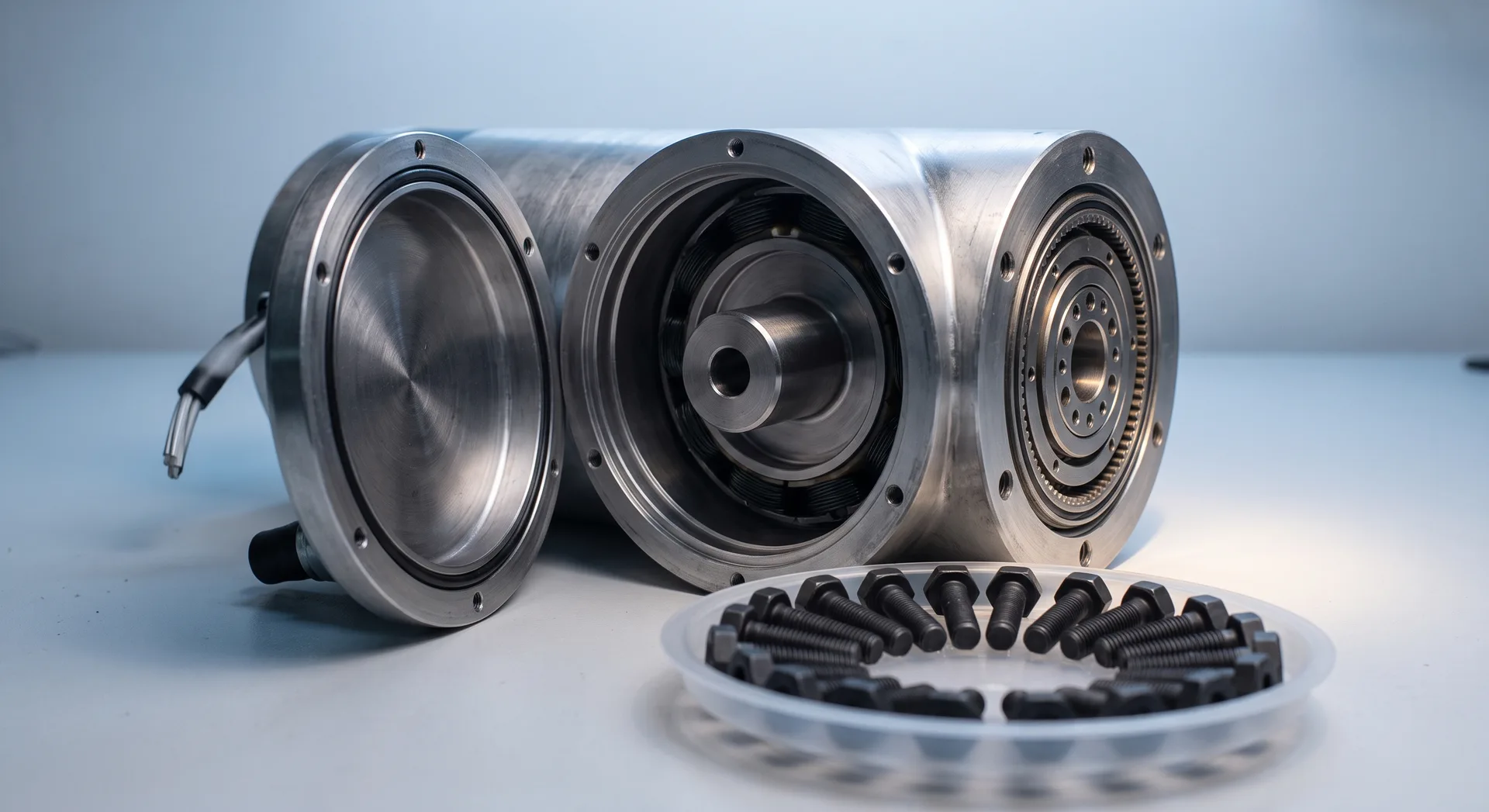
Gearboxes are the part that breaks. The DOE drivetrain page states plainly that having all of those moving parts makes the gearbox 'one of the highest-maintenance parts of a wind turbine', and that direct drive systems 'do not require a gearbox and therefore have fewer moving parts'. Removing it removes the maintenance.
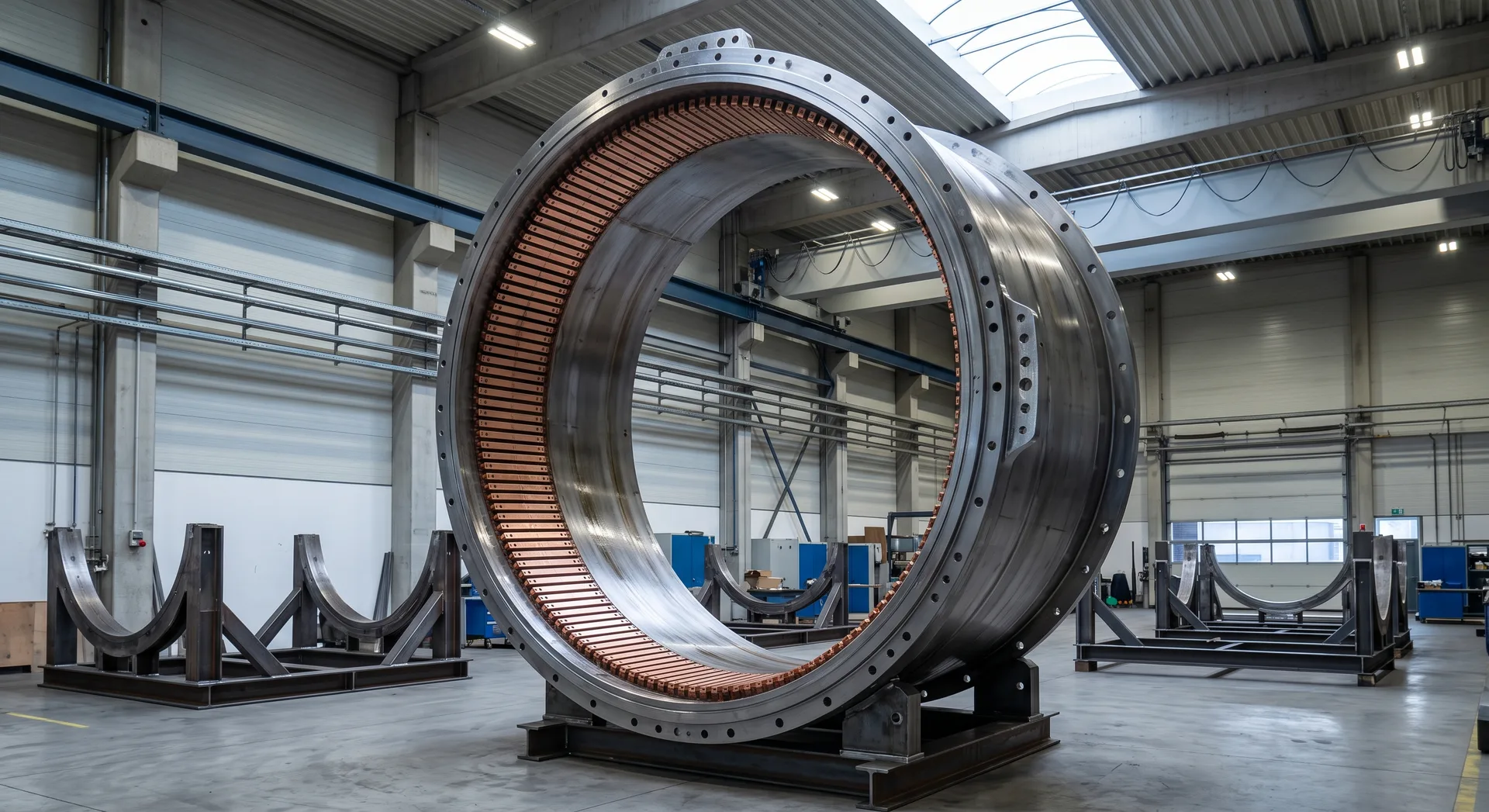
What replaces it is mass and magnet. DOE describes direct-drive generators as producing power using 'a giant ring of permanent magnets that spin with the rotor', and states part of the cost of that directly: direct drives usually use permanent magnets and typically 'require heavier generators than geared machines for a given turbine capacity'. A further clause is attributed to the same page — that those magnets 'require expensive, heavy, rare earth materials such as neodymium and dysprosium' — and it is in neither retrieved DOE extract, so it is given here unquoted and unlinked, even though it is the clause that carries the cost point. The hedges — usually, typically — are the source's own.
Why offshore, specifically
The published explanations do not all say the same thing, and the difference is instructive. IRENA attributes the offshore preference to size and weight: eliminating the gearbox 'makes possible smaller and lighter turbines… making it more competitive in offshore applications'. The IEA's framing folds in operating cost, describing permanent-magnet synchronous generators as machines that dominate the offshore market 'due to their lighter and more efficient attributes as well as lower maintenance costs'. The 2025 JRC study puts reliability first, describing direct drive as allowing enhanced reliability, reduced maintenance needs, and simplified design.
The intuitive argument — that maintenance is hard when the machine is far out at sea — is not what any of these sources actually says, and it is not asserted here.
A gearbox is a maintenance liability you can reach. A magnet is a supply liability you cannot substitute.
What the intensity figures show
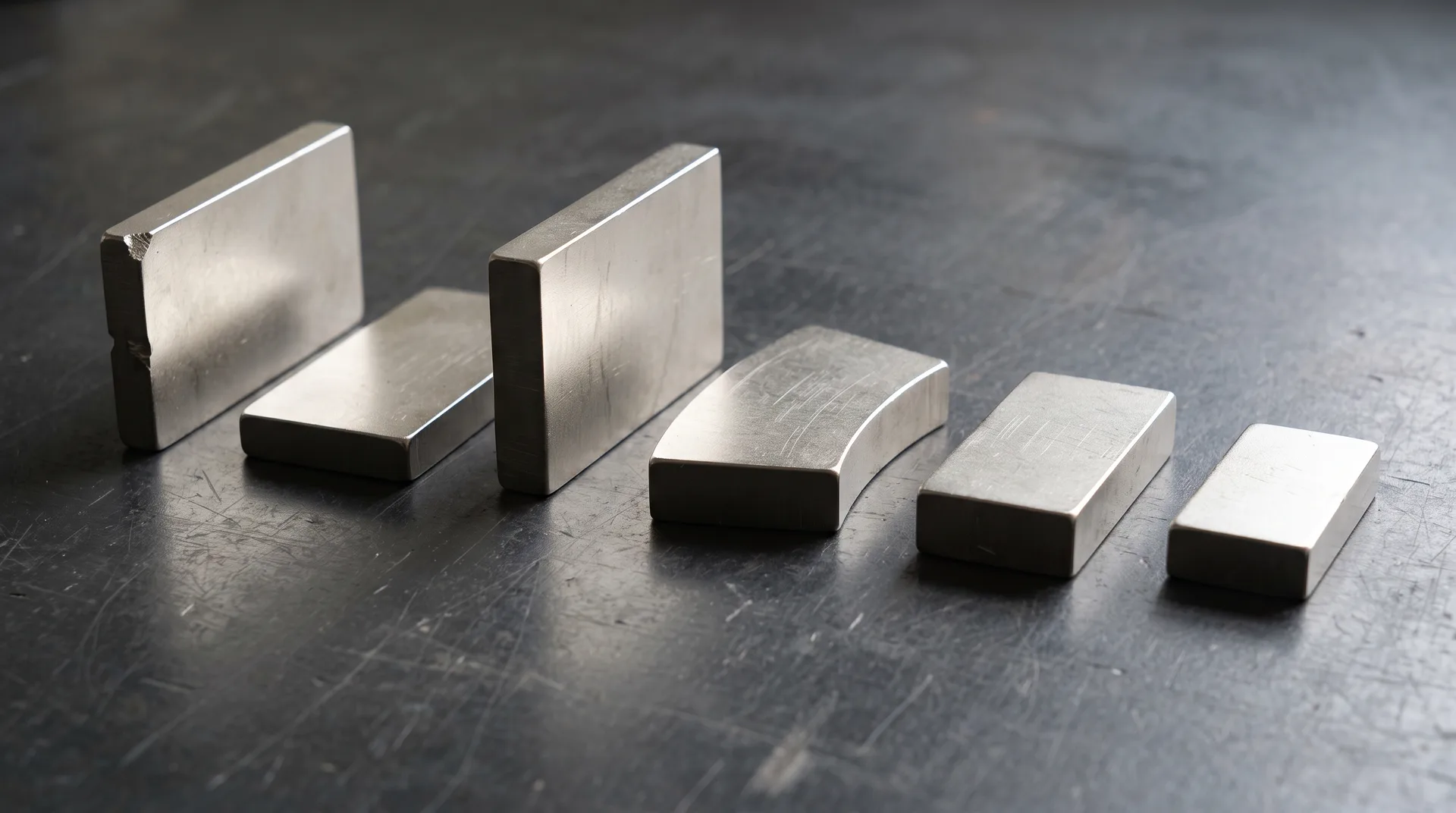
Beyond IRENA's 500 kg per megawatt, the JRC's 2020 report on raw materials for wind and solar gives magnet composition on a basis it attributes to a third party: on average a permanent magnet contains '28.5% neodymium, 4.4% dysprosium, 1% boron and 66% iron' and 'weighs up to 4 t'. The dysprosium fraction is small and matters out of proportion — IRENA notes that dysprosium is 'less than 1% of all REEs' and that its supply 'is even more constrained than the neodymium supply, and this may pose a problem for the energy transition'. May pose; the source does not say it will.
The architecture is a lever on all of this. The same 2020 report, again citing a third party, states that a hybrid drive can reduce neodymium use 'from 186 kg/MW installed capacity to just 62 kg/MW, compared with turbines that employ direct-drive permanent magnet systems' — a gearbox and a smaller magnet, rather than one or the other. Magnet-free machines exist as a category: the JRC describes electrically excited synchronous generators, which 'use an external electrical source to magnetise the rotor', noting that such configurations 'involve complex control systems and higher maintenance needs compared to permanent magnet systems', and superconducting machines as a cutting-edge development 'still in the experimental phase' and 'not yet widely deployed'.
Even the IEA's demand outlook is written as a conditional rather than a forecast of technology: it describes a case in which manufacturers 'are assumed to gradually switch to non-magnet technologies' and developers adopt hybrid configurations — the assumption is the scenario, not a prediction.
How much of the market this is
Less than it sounds, and the published shares measure different things. IRENA reports that permanent magnet turbines drove three-quarters of the world's offshore installations in 2018 — one year's installations, not the fleet. The JRC reports that in 2022 turbines with permanent magnets represented 42% of the onshore wind market in China, 25% in the world, 21% in the EU, and only 2% in the USA — the onshore market, on a different basis again. No source read here gives a share of total installed capacity, and none is constructed.
On the mineral end, Osmond's own reporting defines the relevant fraction: its preliminary monazite concentrate is described as ~19.4% TREO excluding yttrium, including 25% MREO, the release's own approximation mark included — MREO being the magnetic rare-earth oxides, defined in that release as neodymium, praseodymium, dysprosium and terbium. Those four elements are the ones a magnet chain buys.
Exploration results and mineralogical estimates only. Orión has no JORC-compliant Mineral Resource or Reserve; maiden MRE and Scoping Study pending, targeted Q3 CY26.
Related
- Rare Earths — the magnet chain behind the generator
- Robotics — the same magnets, judged by temperature instead of mass
- Electric Vehicles — the other large claim on the same supply
Sources
- PRIMARYU.S. Department of Energy (Wind Energy Technologies Office), 'Advanced Wind Turbine Drivetrain Trends and Opportunities', page dated 3 July 2019 — rotor speeds 'typically 5–15 rotations per minute' against generator speeds of '1,000–1,800 rotations per minute'; direct-drive systems 'do not require a gearbox and therefore have fewer moving parts'; the gearbox as 'one of the highest-maintenance parts of a wind turbine'; direct drives 'usually use permanent magnets… and they typically require heavier generators than geared machines for a given turbine capacity'.
- PRIMARYU.S. Department of Energy, 'Explore a Wind Turbine — Text Version', published 10 December 2013, last modified 16 July 2026 — 'the low-speed shaft is connected to the rotor and spins between 8–20 rotations per minute', and direct-drive generators as 'a giant ring of permanent magnets that spin with the rotor'. Note this rotor-speed range differs from the 5–15 rpm on the other DOE page; both are quoted as published.
- PRIMARYGielen, D. and Lyons, M. (2022), 'Critical Materials for the Energy Transition: Rare Earth Elements', International Renewable Energy Agency, Abu Dhabi, p. 11 and p. 14 — 'A megawatt of direct drive wind turbine capacity may require around 500 kilogrammes (kg) of permanent magnets, a third of which is REEs (notably, for direct drive offshore turbines)'; permanent-magnet turbines and the 2018 offshore installation share; dysprosium supply 'even more constrained' and 'less than 1% of all REEs'.
- PRIMARYCarrara, S. et al., 'Raw materials demand for wind and solar PV technologies in the transition towards a decarbonised energy system', JRC119941, European Commission Joint Research Centre, 2020, pp. 13 and 17 — magnet composition 'On average… 28.5% neodymium, 4.4% dysprosium, 1% boron and 66% iron (Rabe, Kostka and Smith Stegen, 2017)'; and the hybrid-drive comparison '186 kg/MW installed capacity to just 62 kg/MW', which JRC attributes to the Centre for Sustainable Energy (2017).
- PRIMARYCarrara, S. et al., 'Deep Dive on Critical Raw Materials for Wind Turbines in the EU', JRC141759, Publications Office of the European Union, 2025 — permanent-magnet share of the onshore wind market by region in 2022; electrically excited synchronous generators and high-temperature superconductors as alternatives, the latter 'still in the experimental phase' and 'not yet widely deployed'.
- PRIMARYInternational Energy Agency, 'The Role of Critical Minerals in Clean Energy Transitions' (2021, revised 2022), section 'Mineral requirements for clean energy transitions' — permanent-magnet synchronous generators 'dominate the offshore market'; and the scenario-bound statements on REE demand and on assumed substitution under constrained supply. Scenario qualifiers are part of the claims.
- PRIMARYosm_zircon — ASX:OSM release, 3 Mar 2026 (monazite concentrate ~19.4% TREO excl. Y at ~76% recovery, both with the release's approximation mark; and '25% MREO (Magnetic Rare Earth Oxides [Nd, Pr, Dy, Tb])' as printed).
- UNVERIFIEDGAP — no official source read for this article gives a pole count or stator diameter for a direct-drive generator, and none gives a generator rotor speed distinct from the turbine rotor speed. The article therefore does not describe the machine's geometry.Non-public document · no public URL
- UNVERIFIEDGAP — no source read gives a permanent-magnet share of total installed wind capacity. IRENA's figure is a share of one year's offshore installations; JRC's is a share of an onshore market in one year. Neither is an installed-fleet figure and neither is presented as one.Non-public document · no public URL