Minerals Hub / Applications & Industries / Why a white tile needs a milled zirconium mineral
Applications & Industries · Zircon · 4 min read
Why a white tile needs a milled zirconium mineral
The building industry's biggest call on zircon is not structural — it is a whiteness problem, and the answer depends less on chemistry than on how finely the mineral is ground.
Reviewed by Peter Uppal
The short version
Ceramics is the leading end use of zircon: the USGS names it the leading end use, with foundry sand, refractories and zirconium chemicals listed as other primary uses. The agency publishes no percentage split. In a tile glaze, zircon works as an opacifier — the thing that makes the surface white and hides what is underneath — and the Zircon Industry Association attributes that to zircon's high refractive index. What is less obvious is that the performance is bought by grinding: opacifier is sold by particle size, not only by chemistry, and the finer grades are the ones that earn their keep.
An optical job, not a structural one
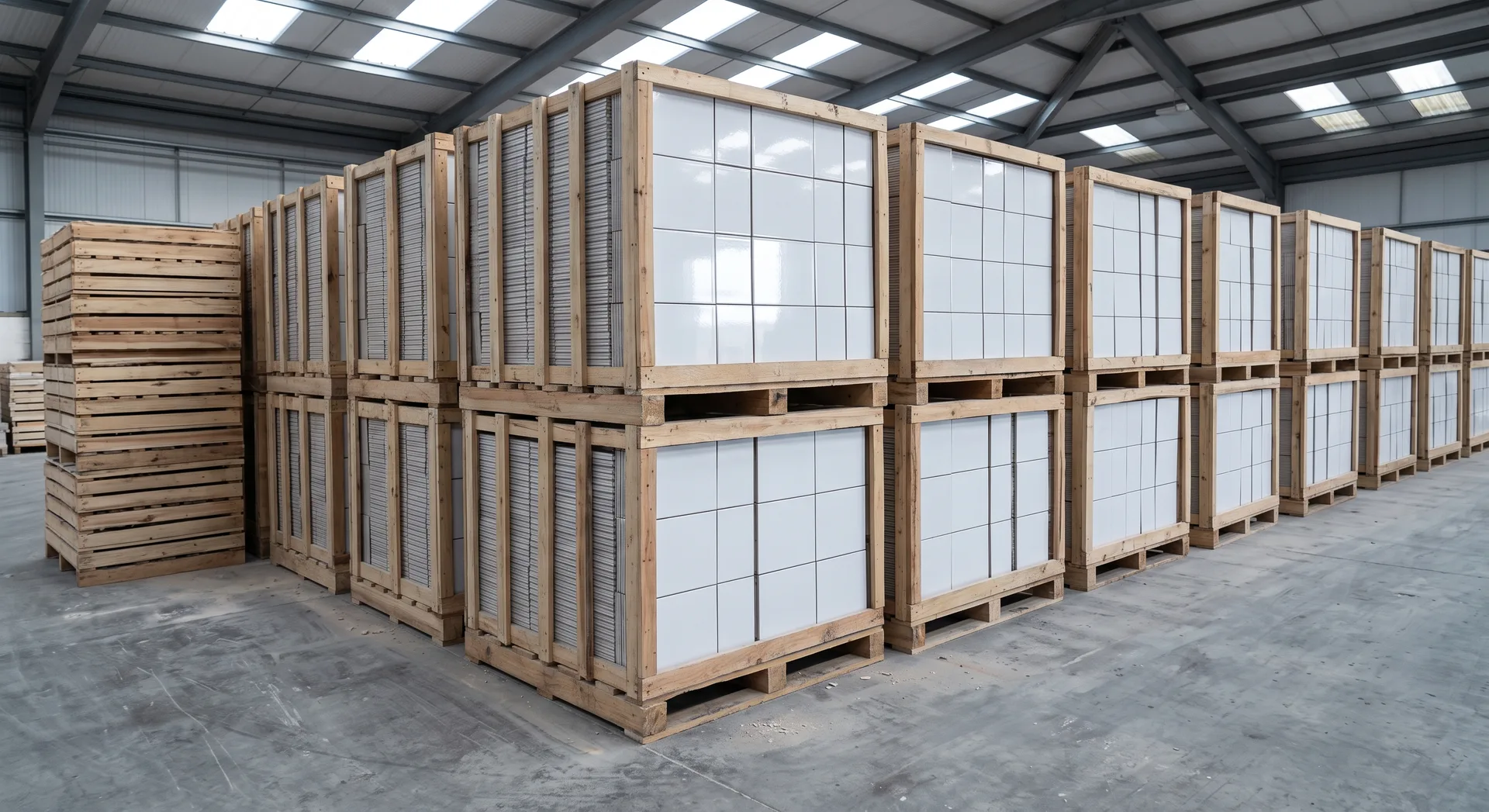
Construction absorbs more zircon than any advanced technology does, and it does so through products nobody thinks of as mineral products. A glazed tile is one of them. The glaze is a thin layer of glass fired onto a ceramic body, and left alone it would be transparent — showing the body's own colour, which is rarely the white a buyer wants.
An opacifier is what stops that. Zircon is dispersed through the glaze rather than dissolved in it. The trade association for the material states that the properties that make zircon a suitable opacifier are its high refractive index, and describes the effect directly: finely milled zircon grains scatter visible light, making ceramics appear white, glossy and opaque. That scattering is the whiteness. It is a purely optical function, which is worth stating plainly, because it explains why the mineral's other properties — hardness, density, the ones that matter to a mineral processor — are almost beside the point here.
Note what this article does not claim. No source read for it gives a refractive index for a glaze or frit matrix, and none from a standards body gives one for zircon either. The contrast is real and it is documented; the numbers are not, and nothing here supplies them.
The product is the grind
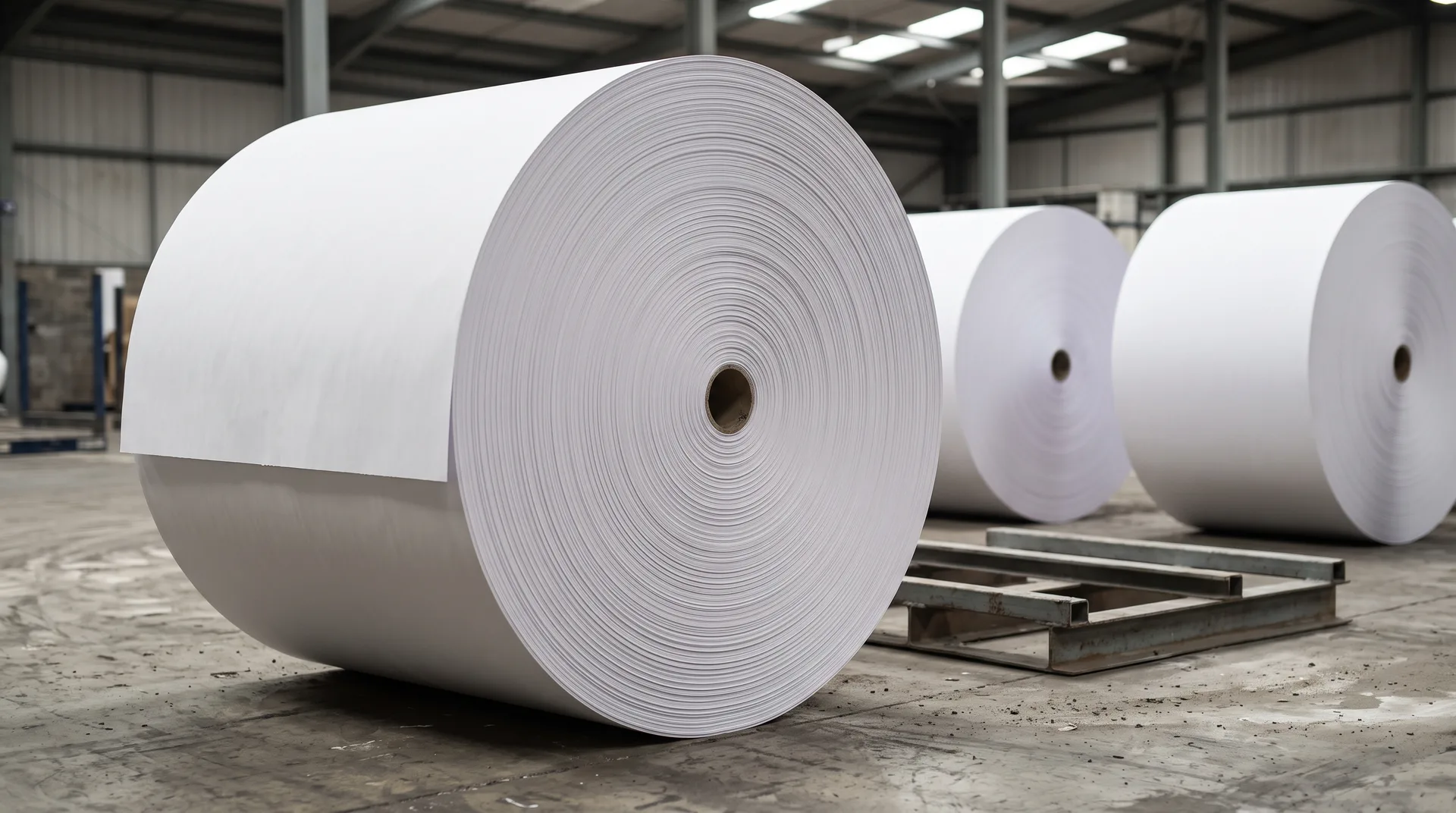
Zircon leaves a mineral-sands plant as sand. It reaches a tile factory as flour. The IAEA's report on the zircon and zirconia industries notes that for many applications the particle size of zircon sand has to be reduced by milling, producing the intermediate products known as zircon flour and micronized zircon — and it is the milled material, not the sand, that goes into a glaze.
That milling step is where the commercial distinctions live. The association describes opacifier grades sold as -10 µm, -5 µm and -1 µm products, with D50 ranging from 2 µm down to 1 µm — a spread of a single micrometre at the fine end, sold as different products. A technical paper written for the same industry puts the reason in performance terms: comparing opacifiers, it reports that the slope for zircon is significantly steeper, so that there is a significant benefit in performance if the opacifier is milled to a smaller size. Finer zircon does more per kilogram, and a tile maker buying opacity rather than mineral will pay for the finer grade.
A mineral-sands plant sells sand. A tile factory buys a particle size. The mill in between is where one becomes the other.
What substitution actually costs
Because zircon is a bought input with a visible function, formulators try to use less of it, and the record of what happens when they do is unusually specific. The same industry paper reports that an earlier zircon price spike in 2006 led to a considerable reduction in zircon content in body compositions — in certain cases up to 40 % — with accompanying reduction of whiteness, and that where alumina is used instead, to achieve the same L* value the alumina added to the porcelain tile body formulation must be between 50–70 % higher than when finer micronised zircon is used. Both figures are ranges, both come from a source with an interest in the answer, and both are quoted here as stated.
The USGS, for its part, names substitutes only for foundry and certain high-temperature applications — chromite and olivine, dolomite and spinel refractories. It lists none for the ceramic use. That absence is not proof that none exists; it is what the official record says.
Where Orión sits, narrowly
Osmond's published figures speak to the mineral, not to this application. In the Zone 1 bulk channel samples the company reports zircon at 8.77–9.79% and ZrO₂ at 5.07–5.57%, mass-balance estimates rather than direct measurement. Preliminary metallurgy produced a zircon concentrate grading ~50.2% ZrO₂ at ~70% recovery — both figures carry the release's own approximation mark — against a stated premium target of ≥66%.
Nothing in that record addresses whiteness index, milling behaviour or opacifier grade, and this article does not infer them. What a deposit's zircon would do in a glaze is a question about a milled product that does not yet exist, tested against specifications a tile maker sets. The mineralogy is the beginning of that question, not the answer to it.
Exploration results and mineralogical estimates only. Orión has no JORC-compliant Mineral Resource or Reserve; maiden MRE and Scoping Study pending, targeted Q3 CY26.
Related
- Zirconium/Zircon — the resource page behind this subject
- Ceramics & Refractories (proposed section) — the industry treated in its own right
- Ore Processing — where sand is made, before flour is milled from it
- Industry Associations — on reading technical material published by an interested party
Sources
- PRIMARYU.S. Geological Survey, Mineral Commodity Summaries 2026 — Zirconium and Hafnium (February 2026). Ranks end uses in order: 'The leading end use for zircon was ceramics. Other primary uses of zircon included foundry sand, refractories, and zirconium chemicals.' Lists substitutes for foundry and high-temperature applications only. USGS states no percentage share for ceramics.
- SECONDARYZircon Industry Association, 'Ceramics' and 'Zircon as an opacifier' (trade-association web pages, undated). Source of the 'over half' and 'around 85%' figures, of the refractive-index explanation, and of the -10 µm / -5 µm / -1 µm grade descriptions with D50 2 µm to 1 µm. An industry body writing about its own product; attributed as such in the text.
- SECONDARYCook, S., Masbate, J., Barrington, Ch., 'Performance and Cost Optimisation in Ceramic Tile Production: Achieving Whiteness and Opacity through Zircon Opacifier', cfi/Ber. DKG 92 (2015) No. 10-11. Source of the milling-slope observation, the 'in certain cases up to 40 %' body-content reduction, and the '50–70 %' alumina comparison. Published in a ceramics trade journal and hosted by the Zircon Industry Association.
- PRIMARYInternational Atomic Energy Agency, Safety Reports Series No. 51, 'Radiation Protection and NORM Residue Management in the Zircon and Zirconia Industries' (IAEA, Vienna, 2007), §2.2.1 and §2.2.2.3 — heavy-mineral-sand processing route, and milling of zircon sand to zircon flour and micronized zircon.
- PRIMARYosm_grade — ASX:OSM release, 19 Feb 2026 (Zone 1 bulk channel samples; zircon 8.77–9.79%, ZrO₂ 5.07–5.57%; mineral percentages are mass-balance estimates).
- UNVERIFIEDGAP — no numeric refractive index for a ceramic glaze or frit matrix was obtained from any source read for this article. Every source consulted states the contrast qualitatively ('much higher than the glassy matrix'). No refractive-index figure for zircon from a standards body or peer-reviewed primary source was obtained either; the only numeric values found were in a curated mineral database. The article therefore states the contrast without numbers.Non-public document · no public URL
- UNVERIFIEDGAP — no official (government or intergovernmental) percentage share of world zircon consumption going to ceramics was obtained. USGS ranks end uses but publishes no split. All percentages in this article are the Zircon Industry Association's own and are attributed to it in the text.Non-public document · no public URL