 ASX: OSM · Orión Project
Minerals Hub / Geography & Supply Chains / Processing Centres
Geography & Supply Chains · Section 04 of 07
Processing Centres
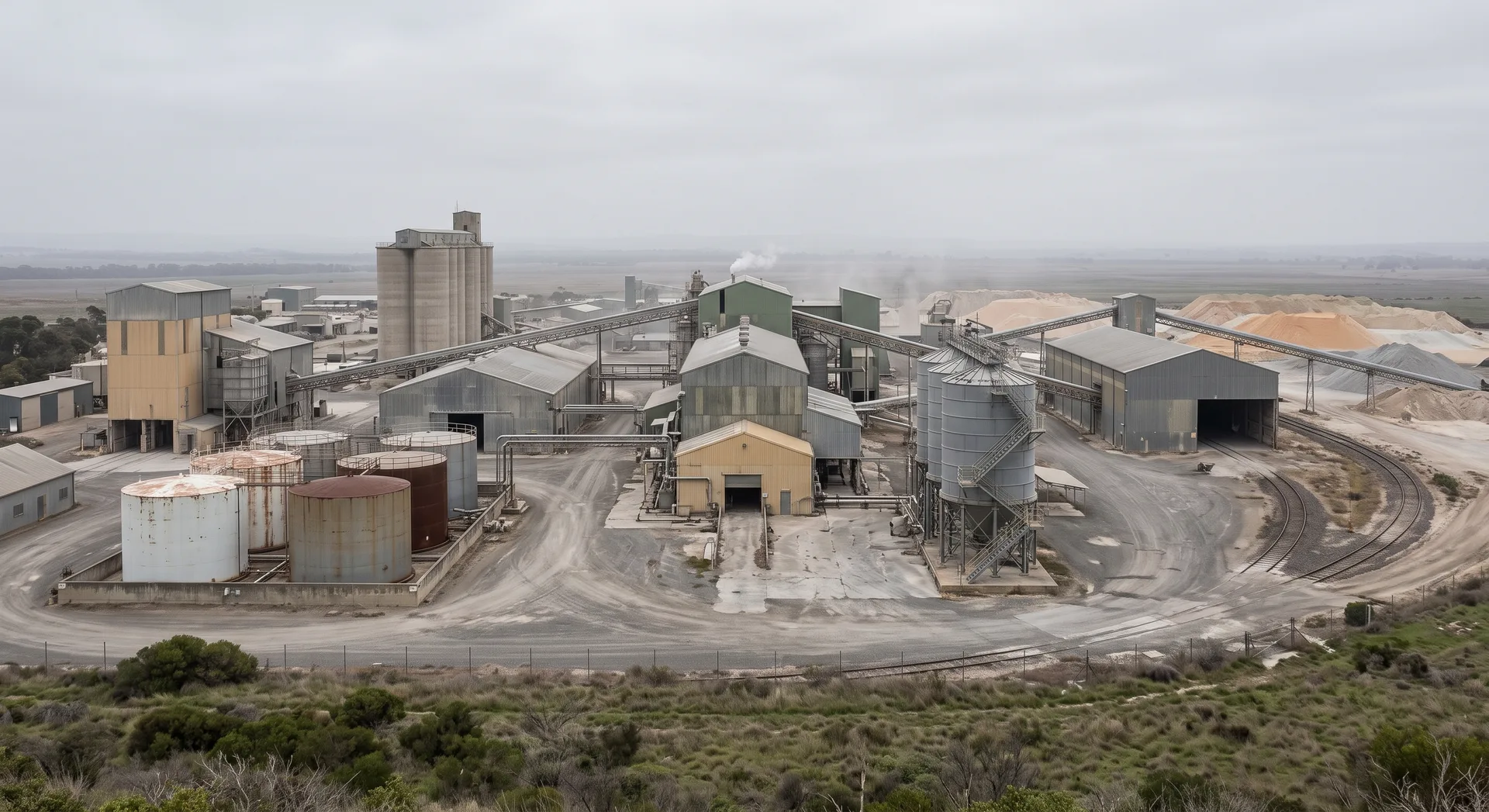
A processing centre is often where it is for reasons that stopped applying long ago. A refinery built near a mine that has since closed, a plant sited beside a chemical complex that supplied its reagents, a facility established under an industrial policy two generations old — the geography of the midstream is layered with history, and it explains why material now travels distances that no one designing the system today would choose.
The reasons capacity clusters are nonetheless consistent. Separation and refining are energy-hungry, so cheap and reliable power pulls plants toward it. They are chemically intensive, so proximity to reagent supply and to other chemical industry matters. They generate residues, which makes the permitting environment and the availability of disposal capacity decisive. They need people who have done the work before, and that skill base takes a long time to build and disperses quickly when a plant closes. Once several of these conditions coincide in one place, the advantage compounds: suppliers, laboratories and specialists concentrate there too. For the minerals followed here the result is a midstream far more concentrated than mining — rare-earth separation and zirconium-hafnium refining in particular are performed at a small number of sites, most of them clustered in a few countries.
That geography has a history, a composition and a cost: what a centre actually contains, why replicating one is slow, and what the distance between a mine and its processing means for the material in between are all part of the same account. Where capacity sits and why is a matter of fact; whether a country's position is legitimate is a different question, and not one this hub answers.
Processing Capacity treats the same concentration as an economic constraint, and Refining the processes performed. The exposure this geography creates is taken up under Supply Chain Risk, while Hafnium and Rare Earths are the minerals where it is most pronounced.