 ASX: OSM · Orión Project
Minerals Hub / Mining & Production / Refining
Mining & Production · Section 04 of 08
Refining
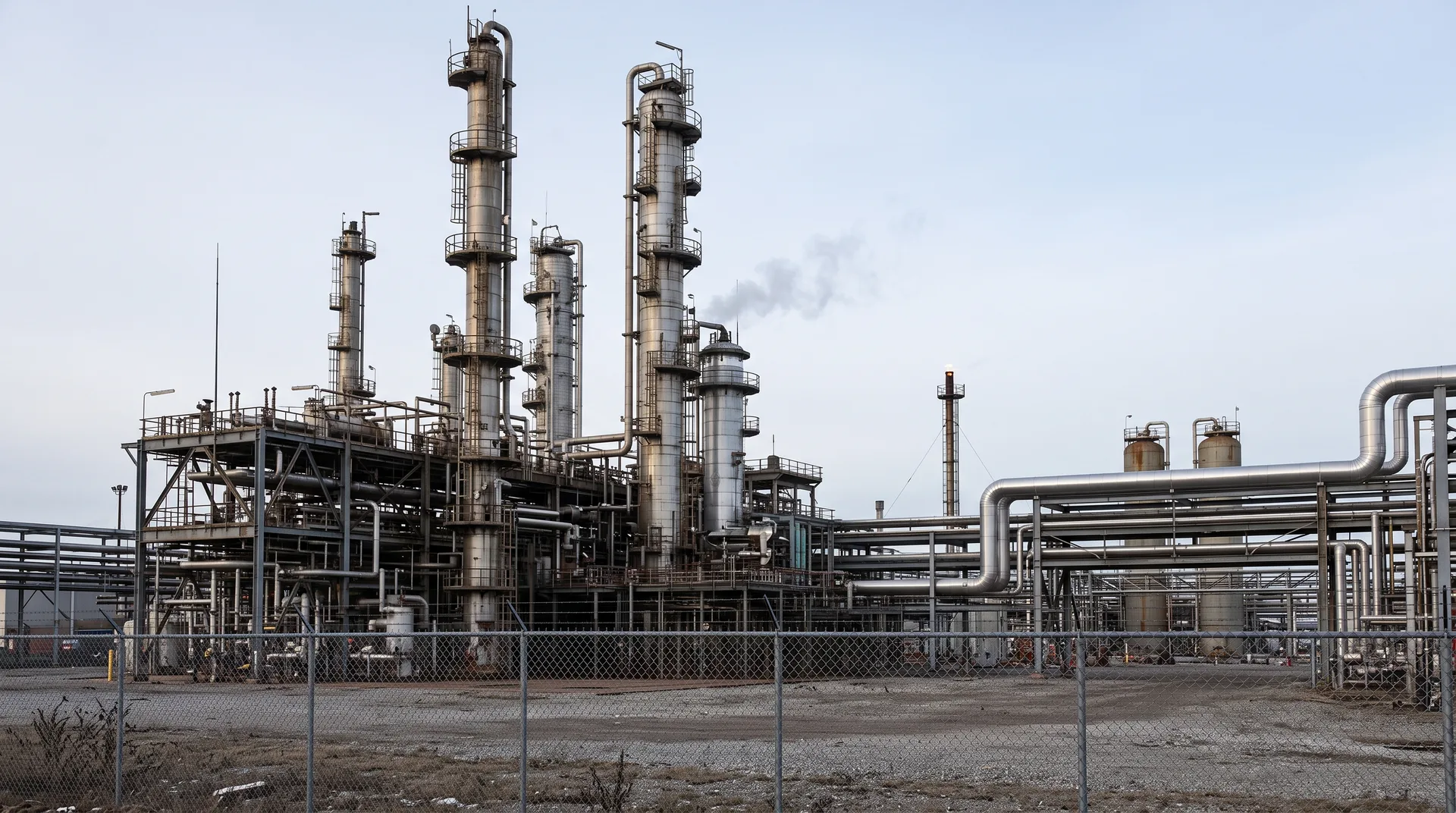
This is the stage at which the minerals cease to be minerals. A zircon grain that survived weathering, transport and separation without changing is finally broken down, and what leaves is a chemical product bearing no resemblance to what arrived. Refining is where most of the energy, most of the cost and most of the industrial complexity in these chains sits, and it is usually performed by companies other than the one that mined the material.
Each mineral takes its own route. Titanium feedstocks are converted to pigment by either a chloride or a sulfate process, the choice determining what feedstock qualities are acceptable and what residues are produced; a separate and far smaller path leads through reduction to titanium sponge and then to metal. Zircon can be sold as milled sand or broken down toward zirconium chemicals and metal, and it is at that point that hafnium is separated from it — the two elements being chemically so alike that separating them is among the more demanding operations in the industry. Monazite and xenotime must first be cracked, by acid or caustic treatment, before the individual rare earths can be separated from one another through repeated solvent extraction stages and, for some, reduced to metal.
What determines those routes is a short list: feedstock specification, impurity tolerances, energy and reagent demands, residue handling, and the geographic concentration that follows from how slow refining capacity is to replicate. A mineral producer and a chemical company are different kinds of business, a distinction often lost in discussion of these supply chains.
Metallurgy underpins the chemistry described here and Processing Technology the equipment. Hafnium and Rare Earths follow the hardest separations, Processing Centres maps where this work is done, and Carbon covers the emissions concentrated at this step.