 ASX: OSM · Orión Project
Minerals Hub / Mining & Production / Metallurgy
Mining & Production · Section 05 of 08
Metallurgy
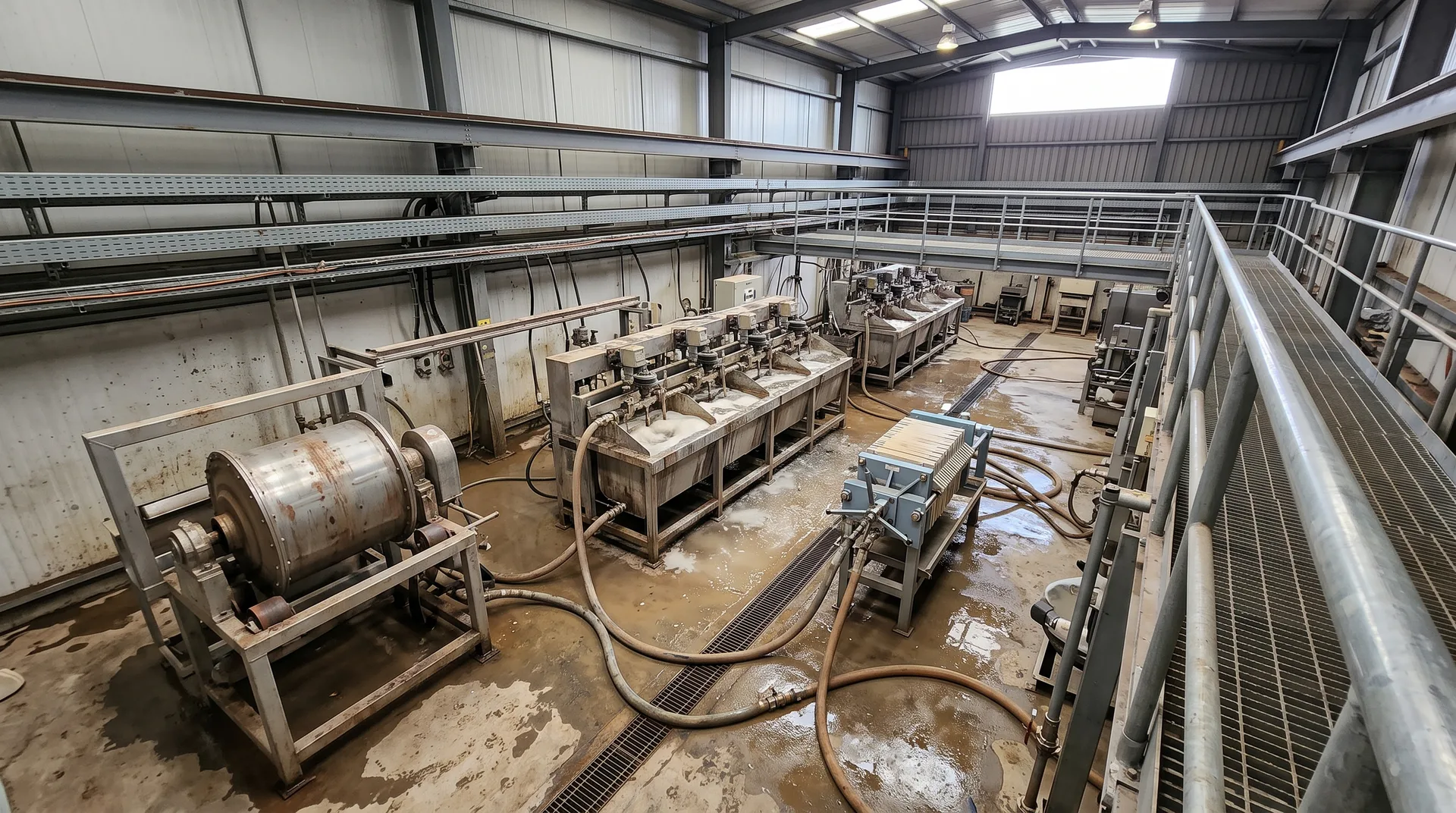
A deposit does not announce what should be built on it. Testwork establishes that, and until it has been done, a resource is a statement about what is in the ground rather than about what could be sold from it. Metallurgy is the discipline that closes that gap, and it belongs early in a project's life rather than at the end.
For this mineral group the questions are unusually mineral-specific. Ilmenite alters over geological time, and the degree of that alteration changes the titanium content of individual grains and therefore which refining route will accept them — two deposits reporting similar titanium can suit entirely different customers. Zircon carries trace uranium and thorium that determine whether a product meets ceramic specification without further treatment. Chromium, phosphorus and iron oxides ride along in ways that matter to a buyer even in small quantities. Grain size, shape and surface coating decide how cleanly a separation will work. None of this is visible in a headline assay, which is why characterisation of the assemblage rather than the element is the metallurgist's first task.
The work runs from mineral characterisation through bench-scale separation and pilot campaigns to the design criteria a study is built on, taking in variability testing across a deposit, the reasons pilot results and production results diverge, and the way a marketable product specification works backwards into a flowsheet. Deleterious elements sit at the centre of it, since they decide market access more often than recovery does.
Ore Processing applies what this discipline establishes, and Refining continues into chemical conversion. Exploration provides the samples this work depends on, while Titanium/Rutile and Rare Earths explain why grain chemistry matters so much to the products made from them.