 ASX: OSM · Orión Project
Minerals Hub / Oxides / Dysprosium oxide
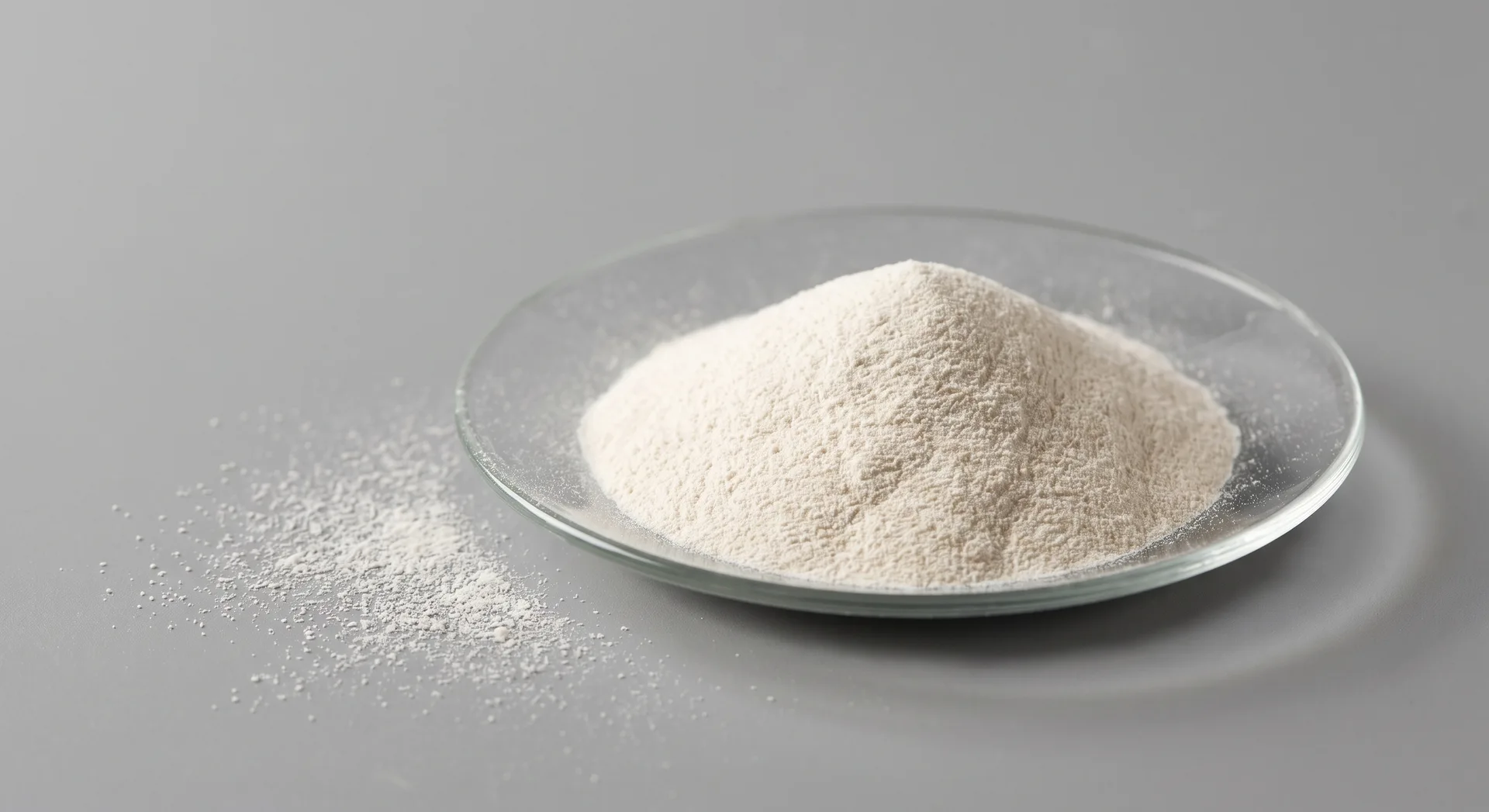
Dysprosium oxide
Dy₂O₃ · heavy rare earth
Dysprosium is the only one of the five whose per-unit consumption was cut by changing where the element is placed in the magnet rather than by replacing it — and it remains the volume heavy that heavy separation capacity is sized around.
Dysprosium oxide is a heavy rare earth oxide and, unlike terbium's and praseodymium's, a straightforward sesquioxide: a stable, pale, high-melting powder traded as Dy₂O₃. Its heavy classification places it deep in the solvent-extraction sequence, where the number of stages between a mixed feed and a single saleable oxide is at its highest. That depth, not the chemistry of the oxide itself, is what defines its commercial position.
Where terbium is the intensive heavy — most effect per unit added — dysprosium is the volume one. Of the heavy additives used in NdFeB magnets, dysprosium is consumed in the largest quantity, so heavy separation trains and the alloying capacity behind them are effectively sized around it, and a magnet's heavy content is conventionally described in dysprosium terms. Its second distinguishing feature is how its consumption per magnet came down. It was not displaced by another element; the industry changed where it is put. Grain-boundary diffusion places dysprosium at the grain surfaces, where coercivity is actually lost, rather than alloying it through the bulk — so less is needed without the requirement disappearing. All of that is general magnet chemistry. Dysprosium is the case where process engineering, not substitution, reset demand: raising the temperature ceiling of an NdFeB magnet still takes a heavy rare earth, and dysprosium is the default that substitution pressure elsewhere flows toward.
Osmond has published no dysprosium grade. Dysprosium is one of four elements inside a single MREO group figure — 25% MREO within a monazite concentrate grading 19.4% TREO excluding yttrium, at approximately 76% recovery via a -38 µm flotation / WHIMS stream, from preliminary metallurgical testwork at SGS Lakefield reported 3 March 2026. Osmond characterises the result as roughly a twenty-fold upgrade, its own characterisation on a basis it does not itemise. All mineral percentages in the project's releases are mass-balance estimates calculated from oxide assays, not direct measurements, and Orión has no JORC-compliant Mineral Resource or Reserve.
Heavy rare earth supply is concentrated in few hands, and EU import reliance on rare earths is approximately 100%.