 ASX: OSM · Orión Project
Minerals Hub / Oxides / Praseodymium oxide
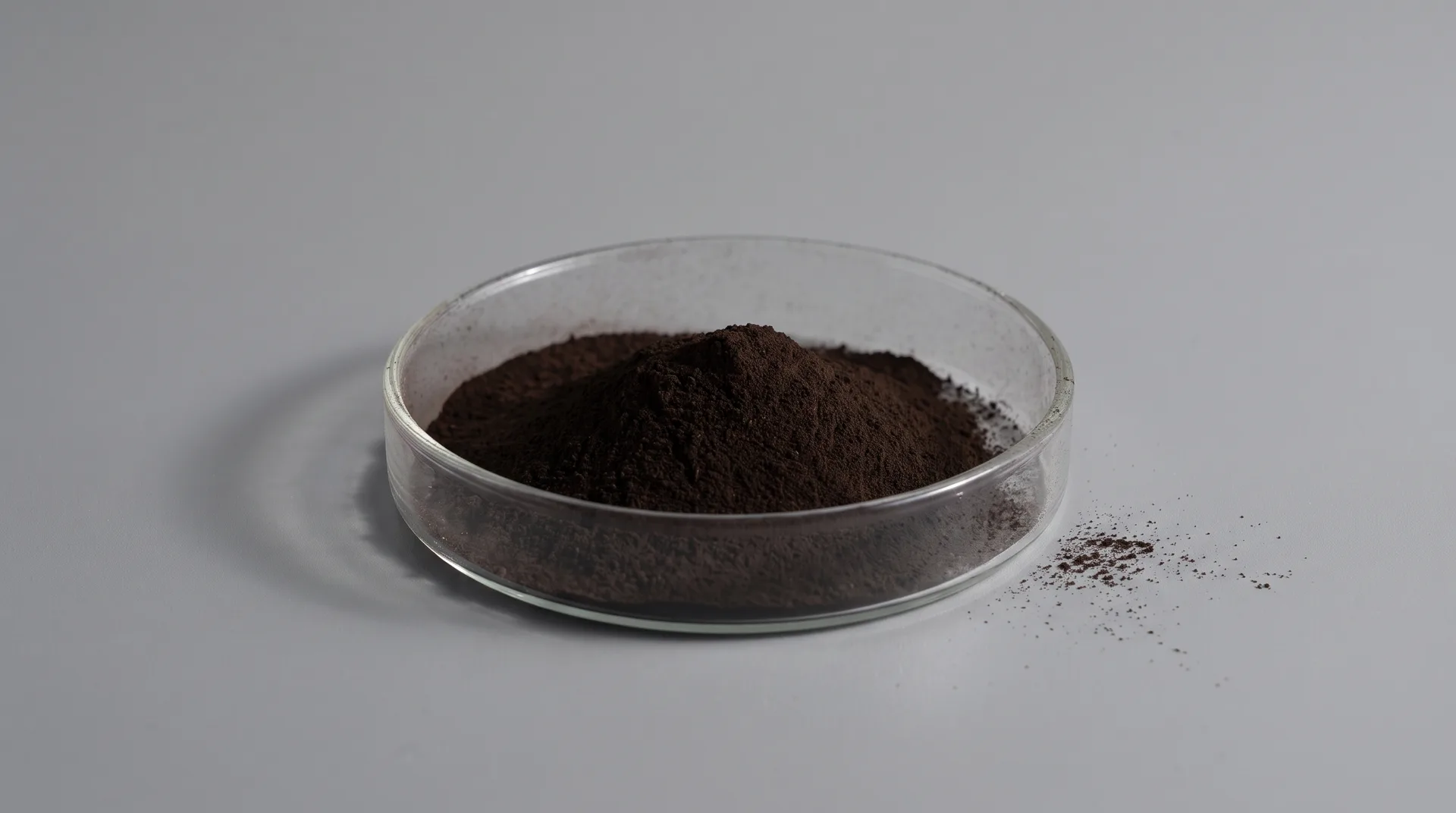
Praseodymium oxide (Pr₆O₁₁)
Pr₆O₁₁ · light rare earth
Praseodymium is the only one of the five whose separation into a discrete oxide is commercially optional — it is routinely traded co-mingled with neodymium as didymium, so Pr₆O₁₁ exists as a discrete product only when a downstream user requires separation stages the magnet itself does not need.
Praseodymium oxide is a light rare earth oxide, and its formula is the first thing worth reading. It is not the sesquioxide the pattern would predict. Pr₆O₁₁ is a mixed-valence, oxygen-excess phase holding praseodymium in two oxidation states at once — which is why the traded material is a dark oxide rather than a pale one, and why the commercial product is not written Pr₂O₃. This is general chemistry, not a statement about any particular source material.
What makes this page different from the neodymium one is that praseodymium's separation is frequently declined. Praseodymium sits immediately beside neodymium; the two are chemically adjacent and the split between them is among the most stage-intensive in the light train. In general industry practice the pair is therefore produced and traded together as didymium, with praseodymium substituting into the neodymium site in the magnet. Discrete Pr₆O₁₁ exists when a downstream user specifically requires it, not because the magnet does. No other oxide on this hub has that property: dysprosium and terbium must be separated to be dosed correctly, and yttrium is separated because its applications are unrelated. Praseodymium's commercial identity is, uniquely, optional — which also means its available volume is not independently controllable. It arrives as a fixed fraction of whatever the light train processes.
Osmond has published no praseodymium grade. Praseodymium is one of the four elements inside the MREO definition, and MREO is reported as a group: 25% MREO within a monazite concentrate grading 19.4% TREO excluding yttrium, at approximately 76% recovery, from preliminary metallurgical testwork at SGS Lakefield dated 3 March 2026. Separately, bulk channel samples reported on 19 February 2026 estimated monazite at 1.56–1.62% with total rare earth oxides of 1.07–1.18%, calculated by mass balance from oxide assays rather than measured directly.
Supply follows the light stream: concentrated separation capacity, and EU import reliance on rare earths of approximately 100%.