 ASX: OSM · Orión Project
Minerals Hub / Oxides / Terbium oxide
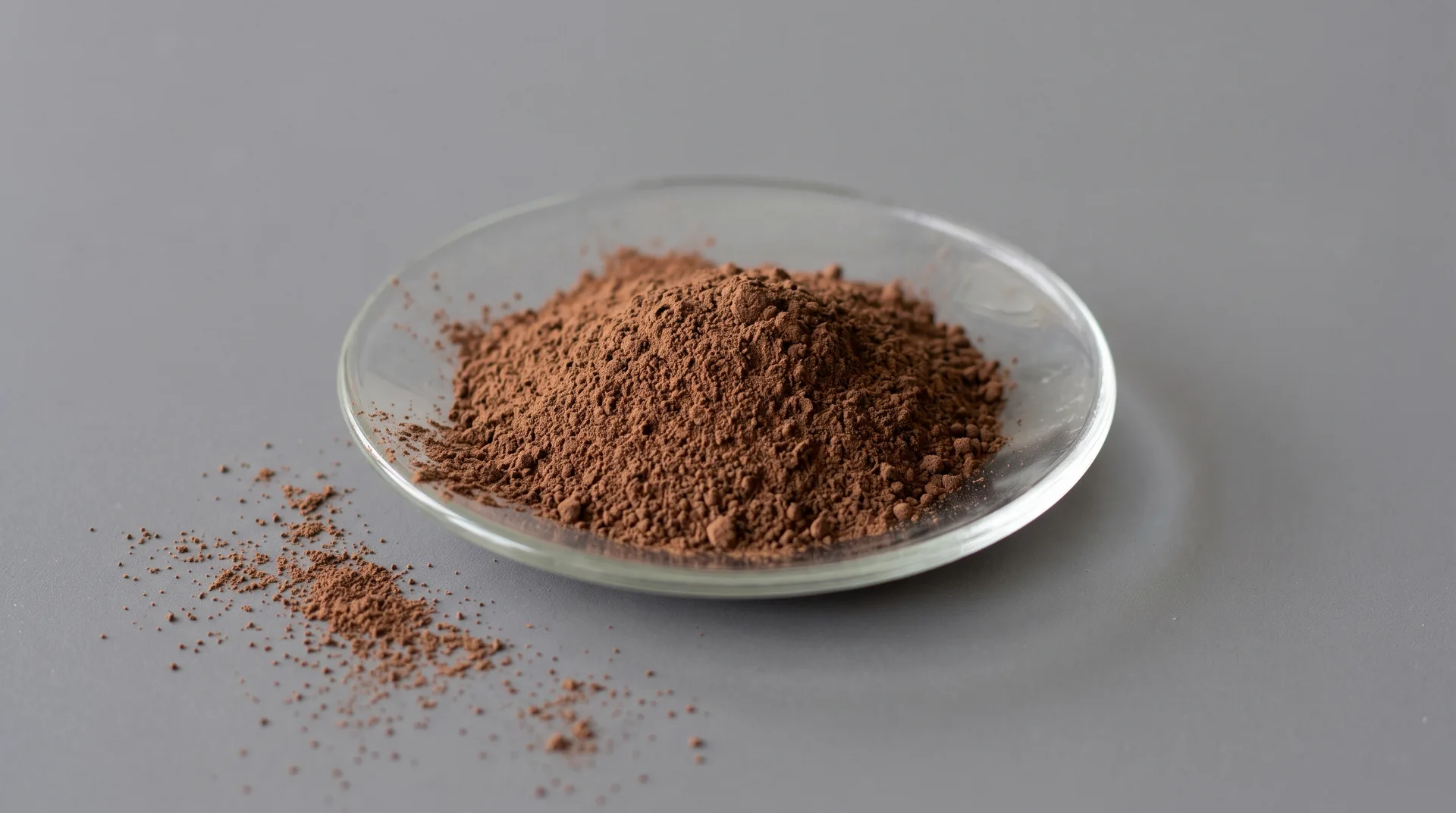
Terbium oxide (Tb₄O₇)
Tb₄O₇ · heavy rare earth
Terbium is the only one of the five that the magnet industry is actively engineering itself away from — it does the most per unit added, which makes it the first target of substitution, and it is the only one of the four MREO elements with a substantial non-magnet demand stream in phosphors.
Terbium oxide is a heavy rare earth oxide, and like praseodymium it is not a sesquioxide: Tb₄O₇ holds terbium in mixed oxidation states, which is why the traded powder is dark. Heavy classification means a smaller ionic radius and a position far later in the solvent-extraction sequence — many more stages, on far smaller volumes, than anything in the light train. Heavy separation is the most demanding end of the process in stages and effort, before any commercial consideration enters.
Terbium's difference from the other heavy on this hub is one of intensity rather than function. In general terms, terbium delivers more coercivity per unit added to an NdFeB magnet than dysprosium does, so it is specified where the least possible added mass is acceptable — thin sections and the hottest, most power-dense motor designs. Doing more per unit makes it, in the same breath, the element magnet designers work hardest to avoid: substitution and design effort target terbium first, which is why terbium demand can fall even while magnet demand rises. Terbium also carries a second demand stream that has nothing to do with magnets at all — trivalent terbium is the green emitter in tri-band phosphors, again as general chemistry. It is the smallest tonnage of the five with the largest per-unit consequence.
Osmond has published no terbium grade. Terbium is named inside the MREO group — 25% MREO in a monazite concentrate grading 19.4% TREO excluding yttrium, at approximately 76% recovery, preliminary metallurgical testwork at SGS Lakefield, 3 March 2026 — and that figure is a group figure covering four elements, never divisible among them. The accessory minerals that commonly host heavy rare earths are minor here: the 19 February 2026 release estimated xenotime at 0.03–0.04% and allanite at 0.02–0.24%, both reported as negligible in the drill holes.
Heavy separation capacity is more concentrated than light, and EU import reliance on rare earths is approximately 100%.