 ASX: OSM · Orión Project
Minerals Hub / Oxides / Hafnium dioxide
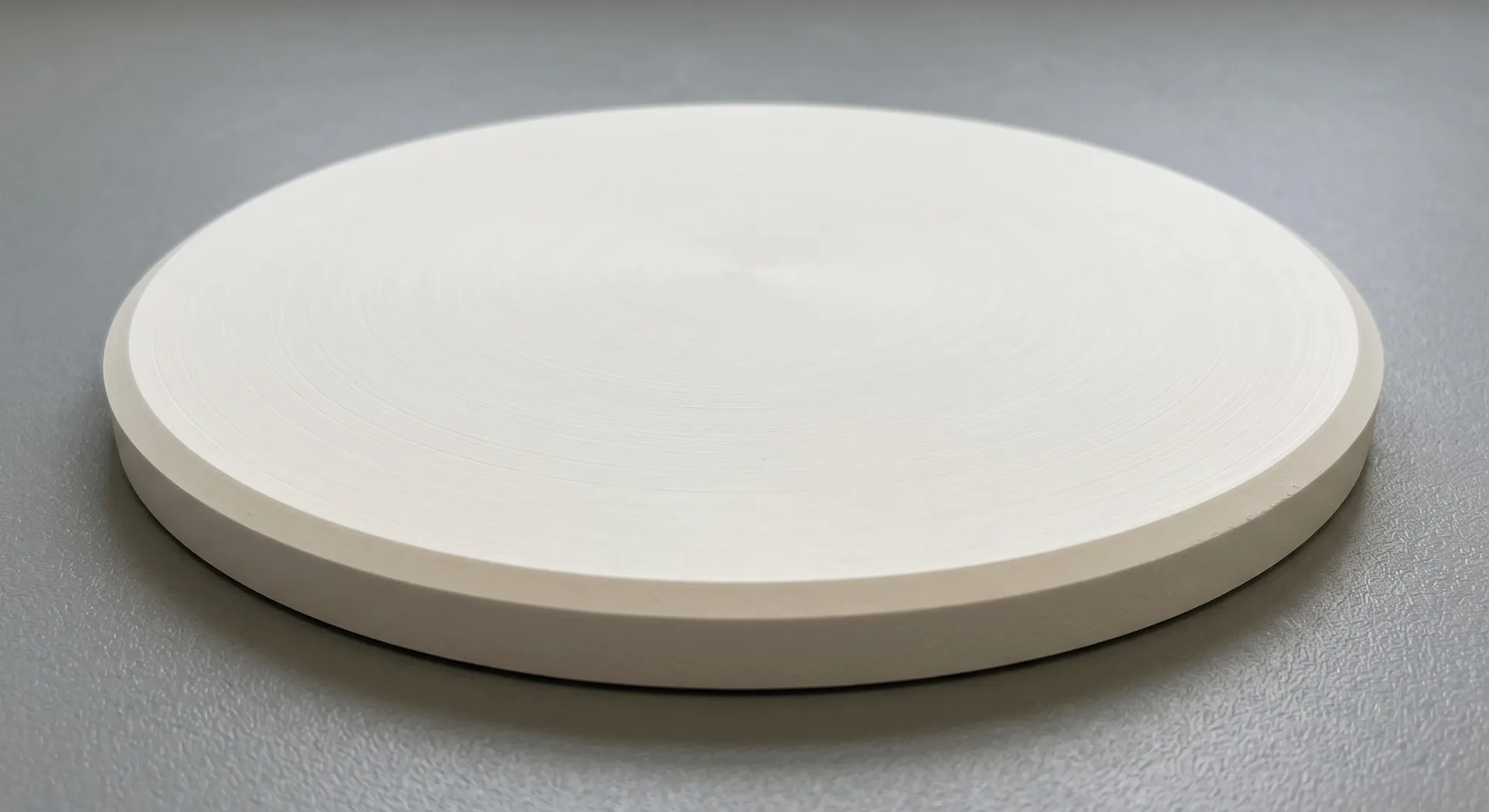
Hafnium dioxide
HfO₂
HfO₂ is the only oxide here that has no ore of its own, and the only one whose headline ratio must be quoted in two editions at once rather than as a single number.
OXIDE BASIS · HfO₂
1,178–1,204 ppm
Zone 1 bulk channel samples (150 kg composites) · 19 Feb 2026
Hafnium dioxide is a traded oxide with no mine behind it. Hafnium has no ore of its own and is never mined directly; it occurs with zirconium and is recovered as a byproduct of zirconium processing. Everything about its availability is therefore downstream of a decision taken for another metal, and the separation step that produces the oxide is the whole of its supply story.
No other oxide on this axis has hafnium's end use. As a general matter of semiconductor manufacturing, hafnium dioxide is a high-k gate dielectric, adopted in transistor gates below about 45 nm in place of silicon dioxide — a substitution that sets a purity specification rather than a tonnage one. Generally, it also serves in optical coatings and refractories.
Orión has a published hafnium figure. The Zone 1 bulk channel samples of 19 February 2026 — 150 kg outcrop composites — returned HfO₂ at 1,178–1,204 ppm on an oxide basis. The zirconium-to-hafnium ratio must be read edition by edition: USGS Mineral Commodity Summaries 2022 gives approximately 36:1 and USGS Mineral Commodity Summaries 2025 gives approximately 50:1. These are the same source in two editions, neither correcting the other, and where an edition states whether its ratio is on an element or an oxide basis that basis travels with the figure. As general mineralogy rather than an Osmond measurement, zircon carries roughly 2–3% hafnium, and that range brackets both ratio editions. Orión has no JORC-compliant Mineral Resource or Reserve — exploration results and mineralogical estimates only, with a maiden MRE and Scoping Study pending, targeted Q3 CY26.
In general terms, Europe holds a notably strong position in hafnium; and because the oxide reaches the market only through zirconium separation capacity, it is that capacity, rather than hafnium in the ground, that governs how much of it exists.