 ASX: OSM · Orión Project
Minerals Hub / OSM Core Resources / Zirconium/Zircon
01 Overview02 Properties03 Occurrence04 Exploration05 Mining06 Processing07 Applications08 Global Supply09 Major Projects11 Supply Chain12 Market Context13 Sustainability14 Related Companies15 Related Technologies16 Latest Articles
Zirconium/Zircon is a single-carrier family: zircon is the mineral, and zirconium is what it yields. At Orion, zircon is assayed and reported on two bases - the mineral at 8.77-9.79% by mass balance, and ZrO2 at 5.07-5.57% on an oxide basis by assay, both from bulk channel samples as at 19 Feb 2026. Mineral percentages are calculated from oxide assays rather than directly measured, and these are grades for the bulk samples, not for the deposit. Orion has no JORC-compliant Mineral Resource or Reserve; exploration results and mineralogical estimates only, with a maiden MRE and Scoping Study pending, targeted Q3 CY26. The mineral record sits in the Zircon dossier, the science on the element page.
Zircon dossier (bulk channel samples, both bases, 19 Feb 2026); shared mass-balance caveat, JORC status and MRE/Scoping Study timing.
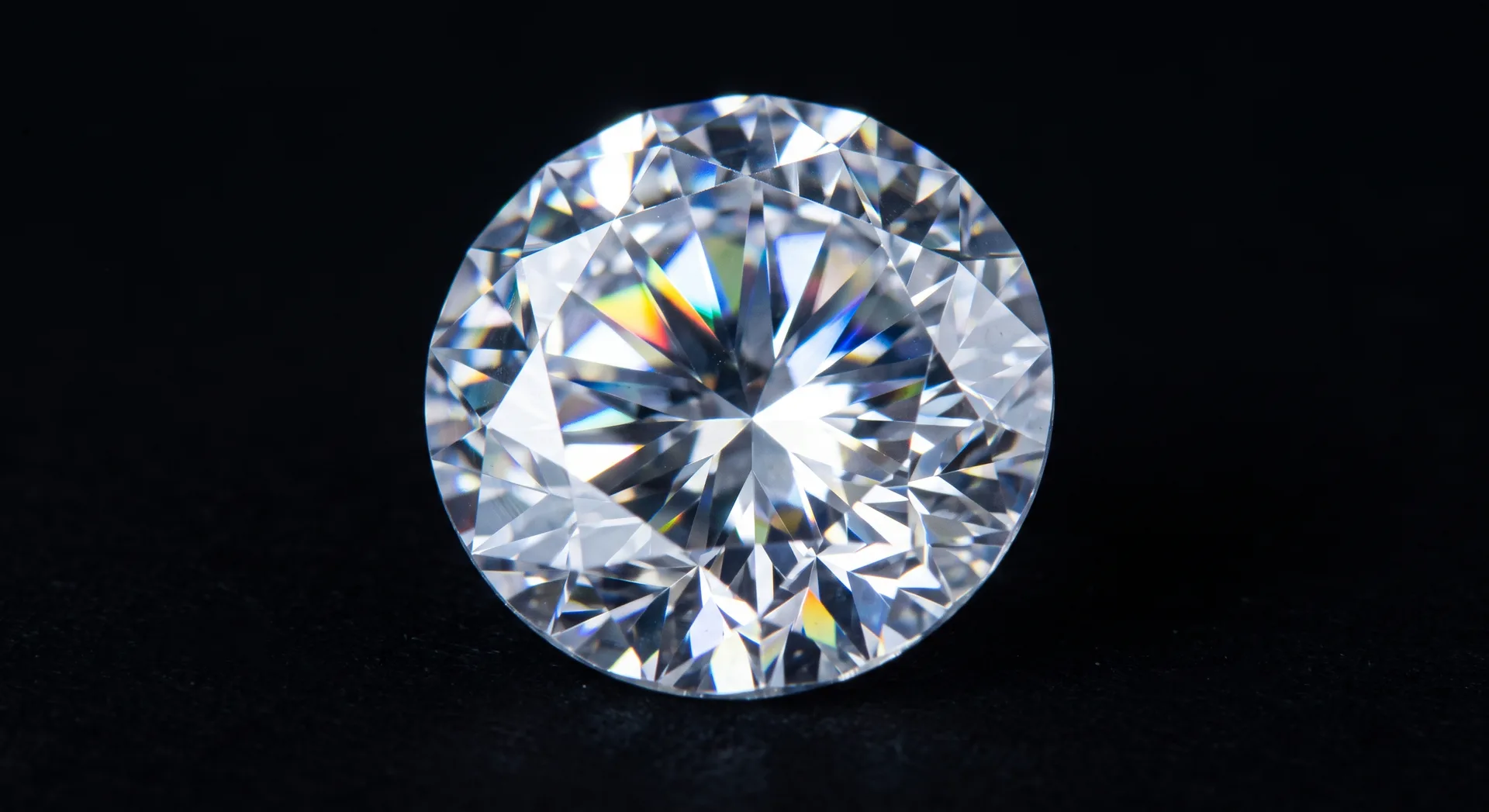
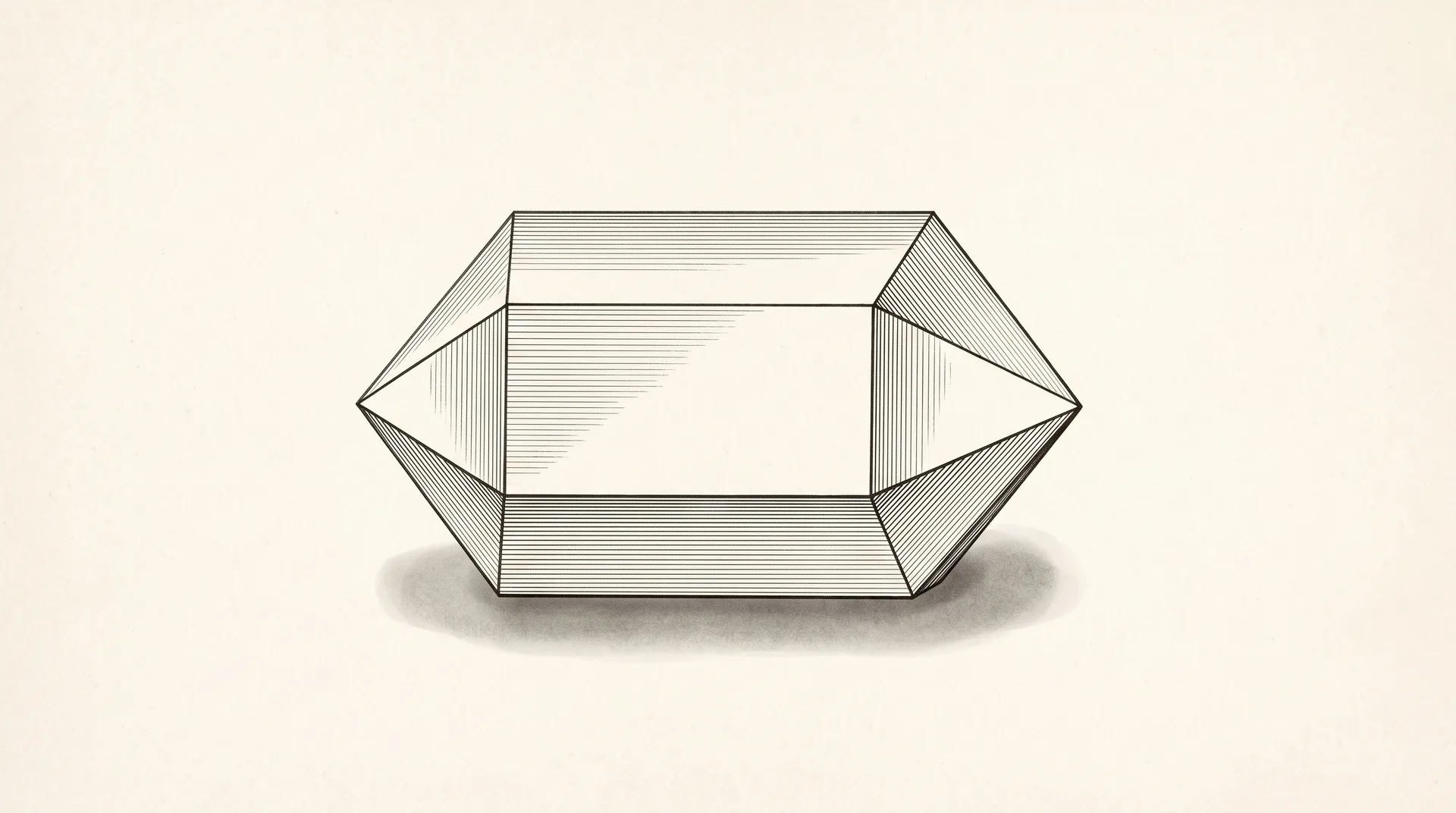
Zircon is zirconium silicate, ZrSiO4. As general mineralogy, stoichiometric zircon is 67.2% ZrO2, and that number is the ceiling on any zircon concentrate's grade. It is what makes a 66% ZrO2 specification a demanding one rather than a routine one: the target sits close against the mineral's theoretical maximum, leaving little room between a premium product and an ordinary one. A point of reading follows from the same fact - zircon can be reported as the mineral or as ZrO2 on an oxide basis, and the two figures are not interchangeable. Orion's bulk channel samples carry both, and the dossier keeps them apart. Zirconium the metal is a different material, covered on the element page.
General mineralogy (zircon is ZrSiO4; stoichiometric 67.2% ZrO2), flagged as general; Zircon dossier for the two reporting bases.
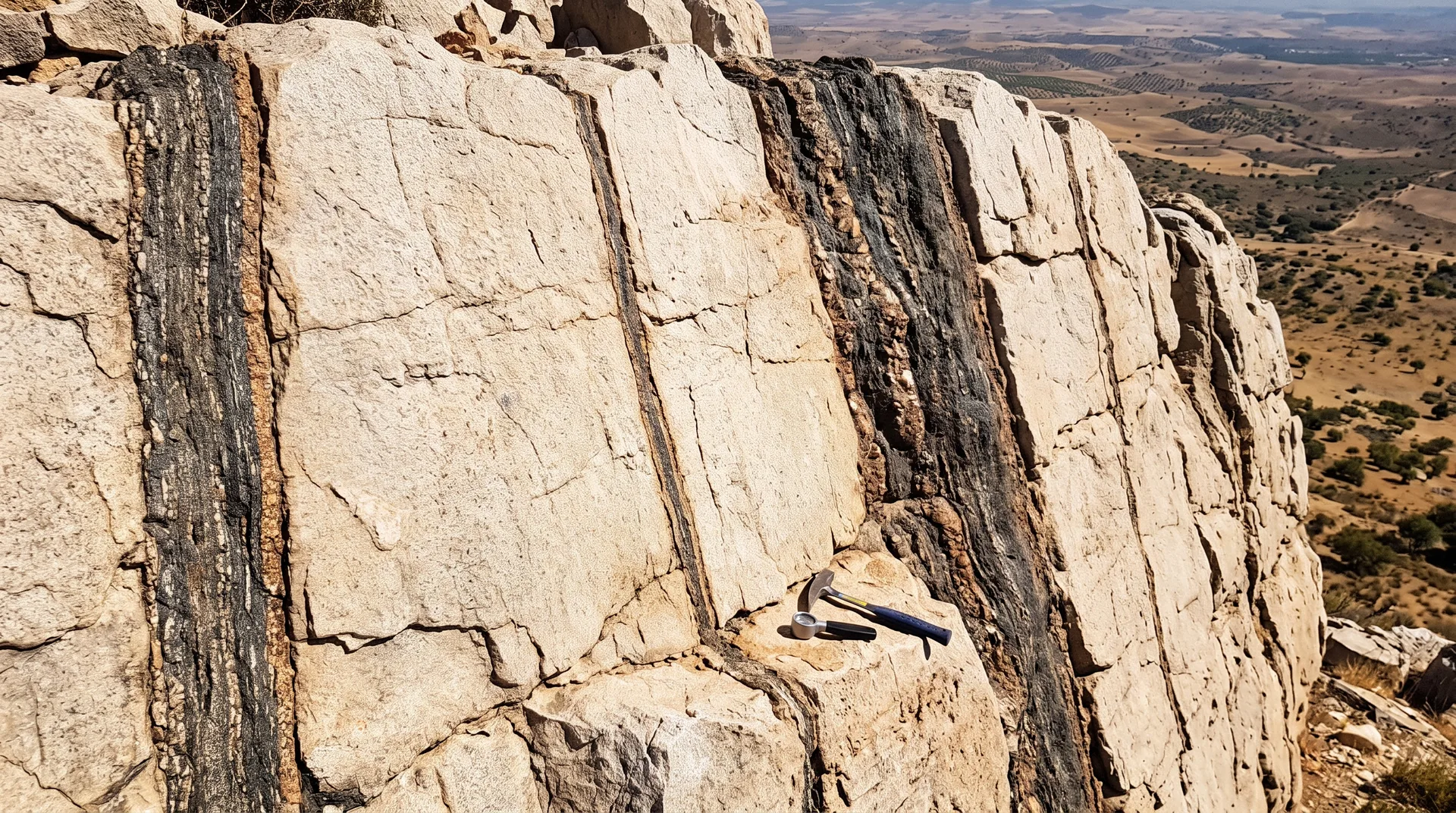
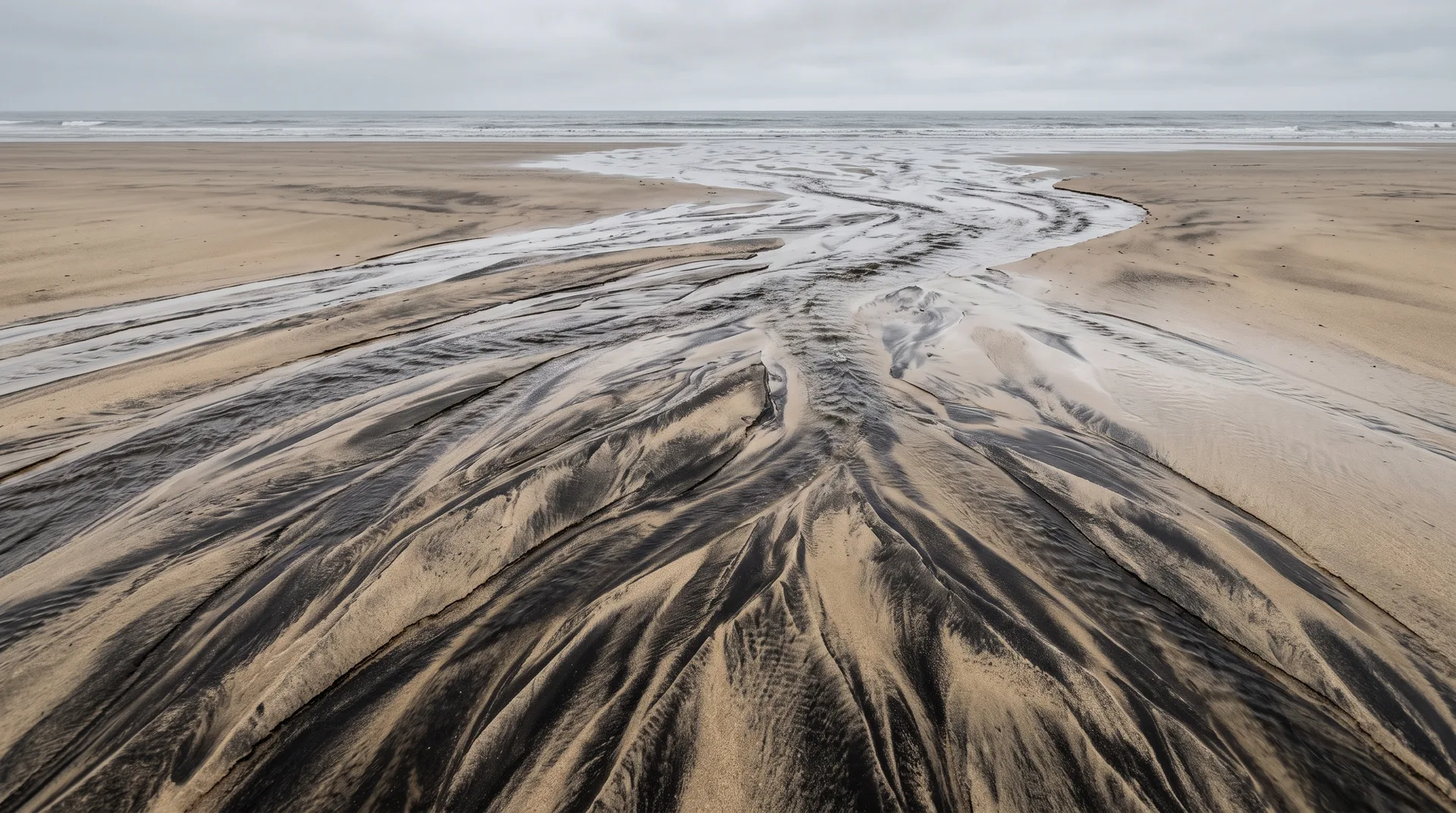
Orion's zircon occurs in a lithified tidal-sand placer - a heavy-mineral placer since cemented into a weakly laminated quartzite of the Pochico Formation, in Jaen Province, Andalucia, Spain. Heavy-mineral layers run 0.3-4.0 m thick, and bulk channel samples returned total heavy minerals of 29.4-32.8%, with up to roughly 40% estimated in the AV-01bis interval. Zircon does not occur alone here: it sits in one assemblage alongside the titanium minerals, which is why the same samples support more than one Resource Hub, and why zircon is conventionally handled as a coproduct rather than a target in its own right. All mineral percentages are mass-balance estimates from oxide assays and are grades for the bulk samples, not for the deposit.
Shared deposit-type, heavy-mineral-layer and bulk-sample THM items; shared coproduct relationship between zircon and titanium minerals.
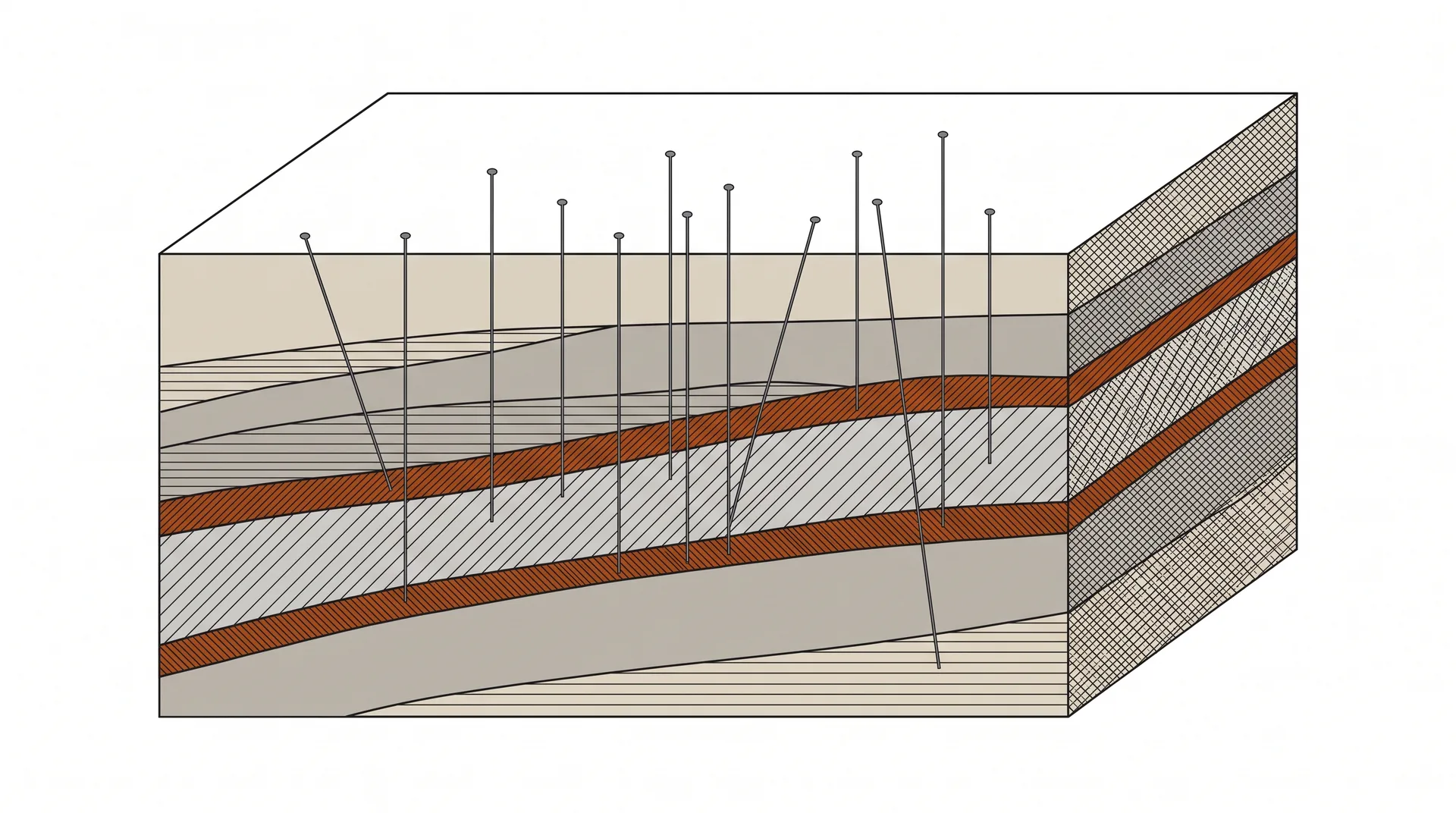
Orion is at the exploration-results stage. The permit covers 232 km2 across 772 mining units in Jaen Province, and the drilling programme stood at 9 holes for 2,806 metres as at 19 Feb 2026, with assays pending on several. There is no JORC-compliant Mineral Resource or Reserve - exploration results and mineralogical estimates only, with a maiden MRE and Scoping Study pending, targeted Q3 CY26. Zircon is assayed directly as ZrO2 and estimated as a mineral percentage by mass balance from that assay, so the two published ranges describe the same material on different bases and should not be read as two independent measurements. Hole-by-hole results belong to the Zircon dossier.
Shared programme statement (9 holes / 2,806 m, 19 Feb 2026), permit dimensions, JORC status and MRE/Scoping Study timing; Zircon dossier for the assay and mass-balance bases.
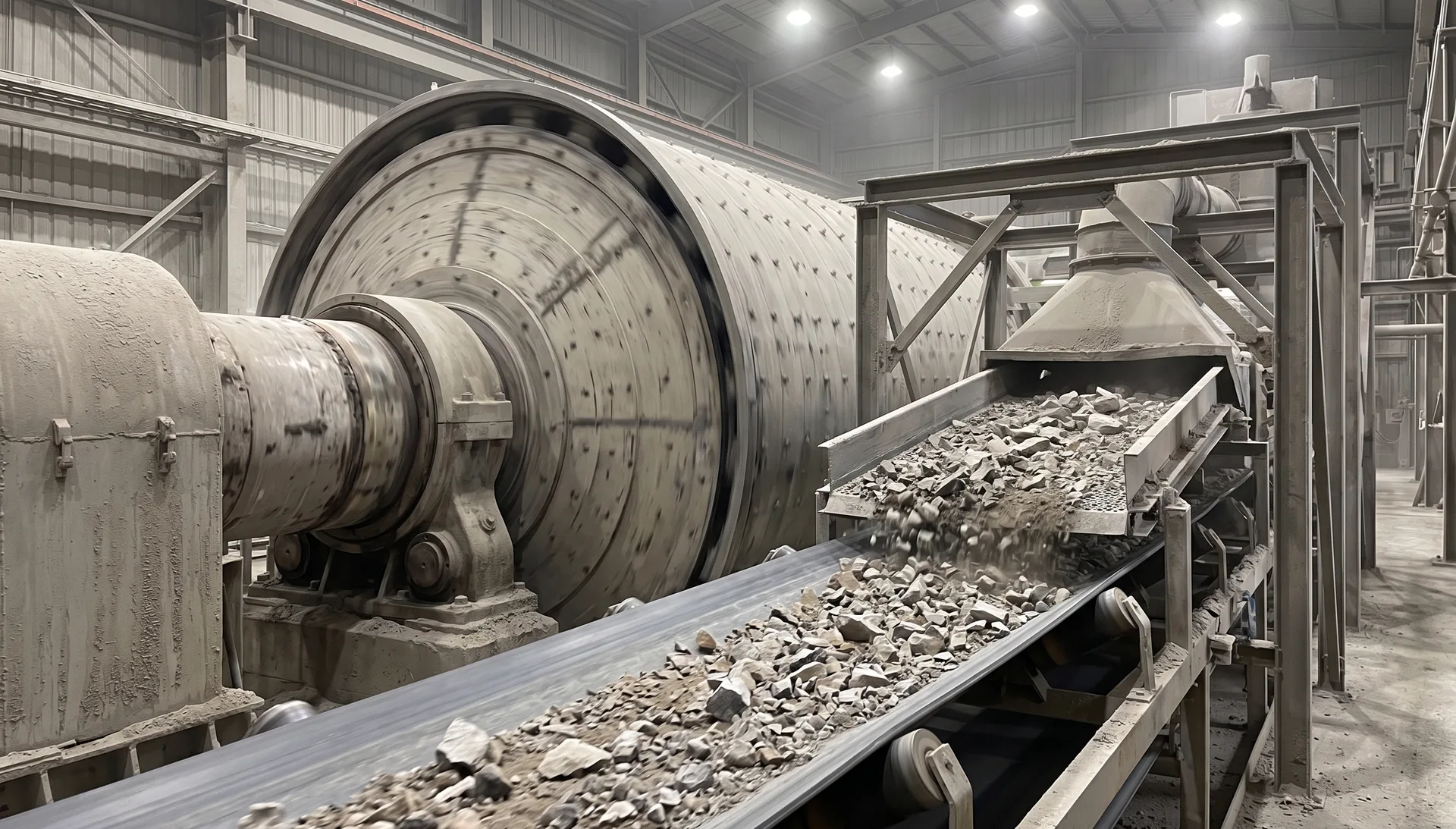
As a general matter of the industry, heavy-mineral sands are mined as sand. Unconsolidated placers are worked either by dredging, with a floating plant cutting its own pond ahead of it, or by dry mining with excavators and trucks, and in neither case does the ore need drilling, blasting or grinding before separation begins. That is the economics of the business - a mineral-sands mine is an earthmoving operation feeding a concentrator, and the absence of hard-rock cost is what allows production from ore carrying a few per cent of heavy minerals. Orion is not that deposit. It is a lithified tidal-sand placer - a heavy-mineral placer since cemented into a weakly laminated quartzite of the Pochico Formation - and a cemented ore has to be broken and comminuted before any part of the conventional sequence applies. The distinction is geological, published, and load-bearing for anyone reading across from an operating mineral-sands mine to this one. Beyond it, nothing is published. Osmond has stated no mining method, no mining rate, no schedule, no strip ratio and no capital estimate for Orion. The heavy-mineral layers are 0.3-4.0 m thick and the reported drill intercepts sit between 105.75 and 380.5 metres downhole, while channel and bulk samples were taken from mineralised outcrop at surface - but a thickness and a depth range are not a mine plan. The one published figure that ever bore on plant scale - the nominal 2.0 Mtpa processing design of 14 August 2026 - was retracted three days later, and Processing carries that. Orion remains pre-resource: no JORC Mineral Resource or Reserve, with a maiden MRE and Scoping Study targeted Q3 CY26.
General industry characterisation of heavy-mineral-sand mining method and its economics, flagged as general in-sentence; shared deposit-type item (lithified tidal-sand placer, Pochico Formation quartzite) and heavy-mineral-layer thickness 0.3-4.0 m; ASX:OSM releases 24 Nov 2025 (AV-01bis, from 105.75 m) and 15 Dec 2025 (SOR-02, to 380.5 m), both reproduced in the 3 Mar and 3 Jul 2026 releases, for the downhole depth range, and the 19 Feb 2026 release for the outcrop channel and bulk sampling; ASX:OSM Retraction Statement 17 Aug 2026 (retracting the 14 Aug 2026 2.0 Mtpa processing design under LR 5.16); shared JORC status and MRE/Scoping Study timing. No Orion mining-method, rate, schedule or cost material exists in the record - recorded as absent, not inferred.
Preliminary testwork reported 3 March 2026 produced a combined zircon concentrate grading 50.2% ZrO2 at about 70% recovery, against a stated target of 66% ZrO2 or better - the grade Osmond calls premium. Both belong to that testwork and to no established flowsheet or plant. Read them against the mineral's own ceiling: stoichiometrically pure zircon is 67.2% ZrO2, so the target sits near the theoretical maximum while the concentrate produced so far sits well below it. Commercial concentrate is typically specified around 65%, stated as ZrO2 plus HfO2 combined rather than ZrO2 alone. Separately, Osmond retracted a processing-design statement on 17 August 2026 - a nominal 2.0 Mtpa design published on 14 August, which ASX ruled a production target under Listing Rule 5.16 and which the company was not in a position to support. That retraction reached the design statement and not the testwork result. What would close the gap between 50.2% and the target is not published: no flowsheet, no variability data, and no established processing route for Orion material.
ASX:OSM release 3 Mar 2026 (preliminary testwork: 50.2% ZrO2, ~70% recovery, target of 66% ZrO2 or better); ASX:OSM Retraction Statement 17 Aug 2026 (retracting the 14 Aug 2.0 Mtpa processing design under LR 5.16); Zircon Industry Association for the commercial specification; general mineralogy for the 67.2% stoichiometric figure.
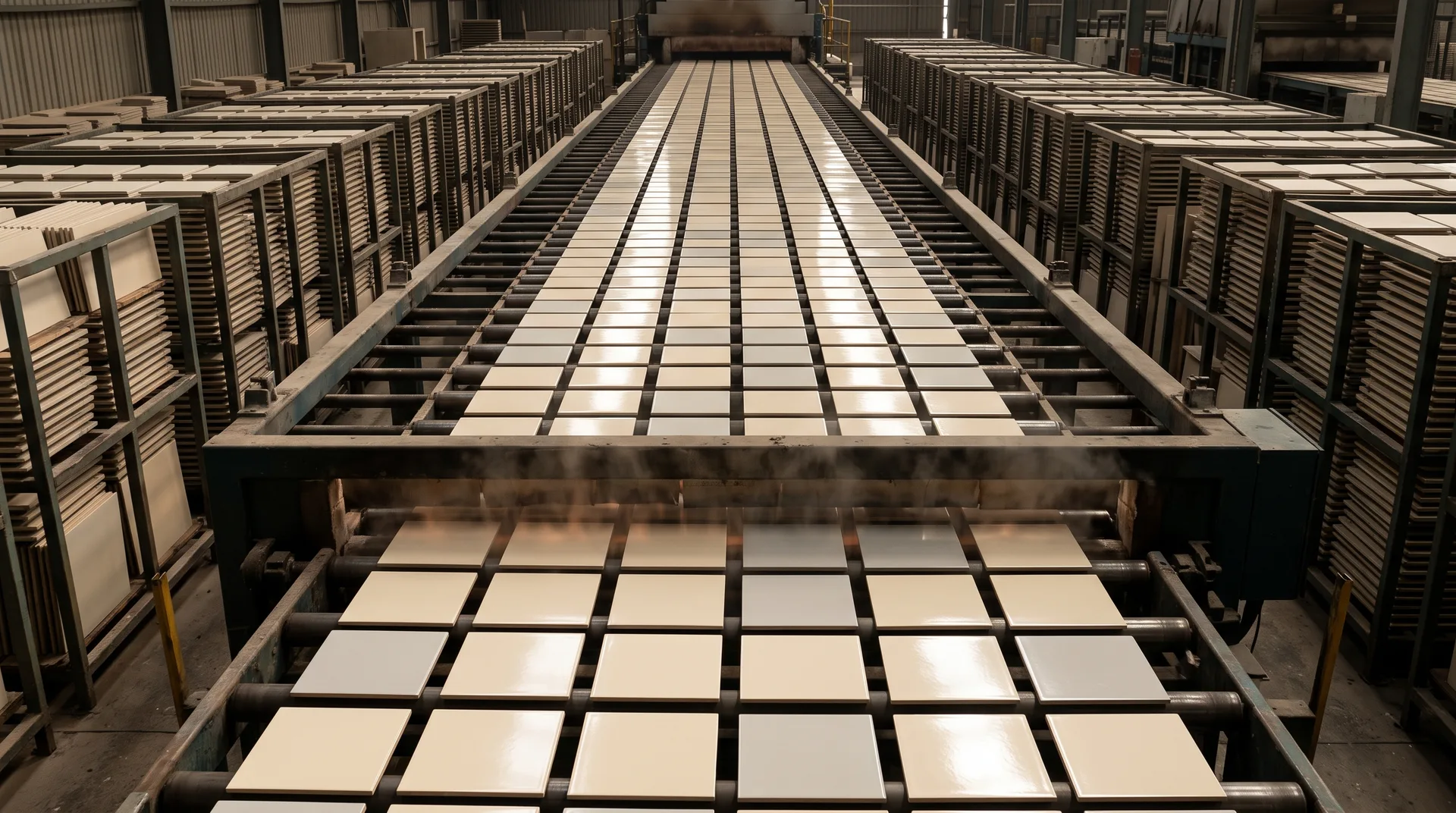
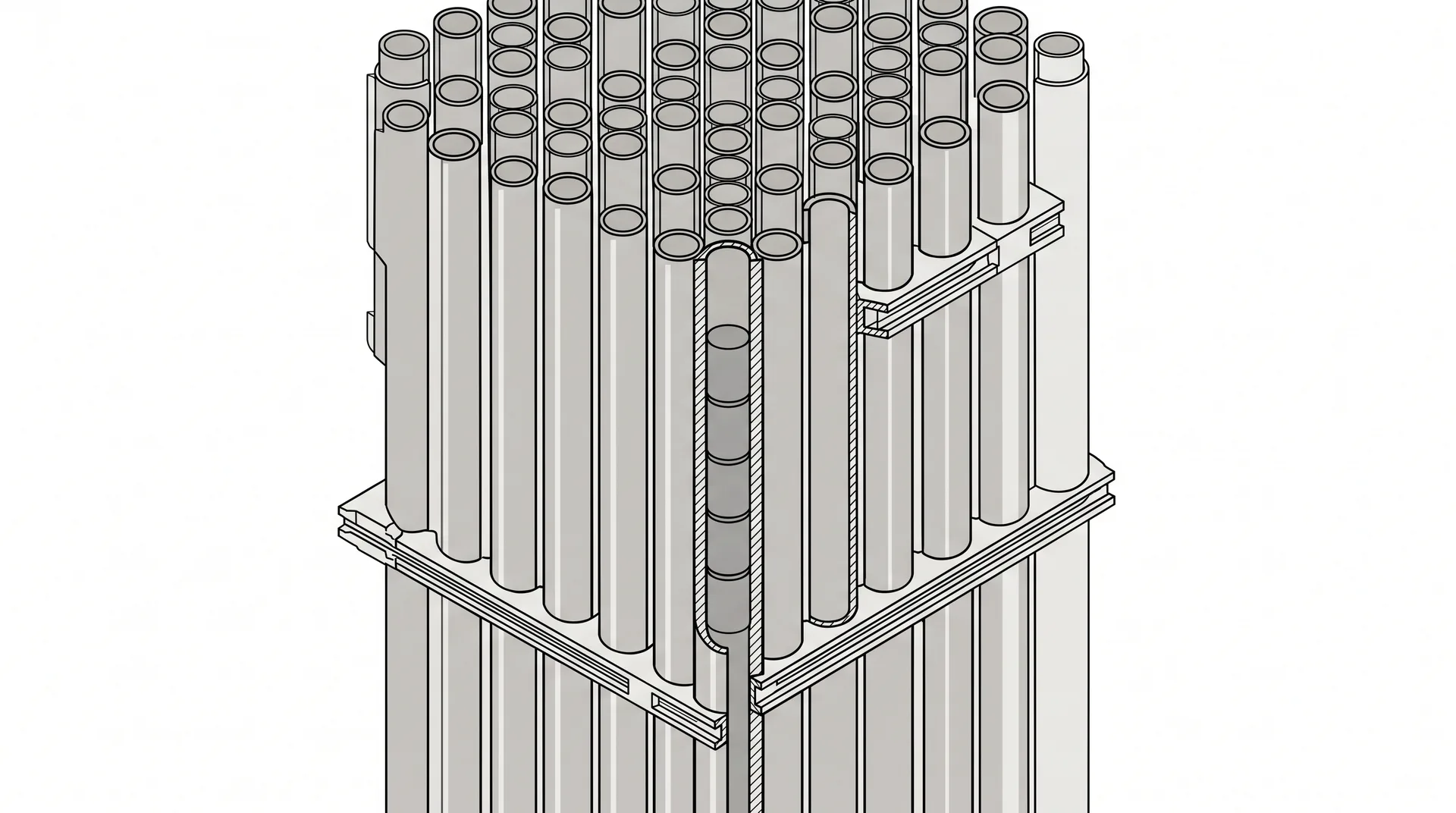
Zircon serves two destinations with almost nothing in common. The mineral itself goes chiefly into ceramics and opacifiers, foundry sand and refractories - its largest markets, as general mineralogy. The metal drawn from it goes somewhere else entirely: zirconium alloys, zircaloy above all, clad reactor fuel, because zirconium has an unusually low thermal-neutron absorption cross-section of about 0.18 barns and resists corrosion in hot high-pressure water. One mineral therefore feeds a bulk industrial-materials market and a nuclear one that has nothing to do with it. This describes what the family is used for in the world; nothing from Orion has been sold, qualified or contracted for any end use. Article 11 carries the nuclear detail.
General mineralogy for zircon's largest markets, flagged as general; article 11 for zircaloy, the ~0.18 barns cross-section and corrosion resistance in hot high-pressure water.
World production of zircon at the ore and concentrate stage is about 928,830 t/yr measured as Zr content, on the USGS Mineral Commodity Summaries 2025 basis, data year 2024. Read the basis before the number. That is contained zirconium, not a tonnage of zircon sand; zircon is a zirconium silicate, so a sand tonnage would be the larger figure, and the two are not interchangeable. This hub does not convert between them. The same caution applies to the year. The European figures carried in Supply Chain are 2016-2020 averages and this world figure is 2024, so the two are not contemporaneous and must never be set against each other as though they were. Stage matters as much as basis and vintage: zirconium metal is a separate and far smaller market, at world production of roughly 6,000 t/yr Zr content, and a single zirconium supply number spanning the ore stage and the metal stage would mean nothing. Past those two figures the record is thin, and the gaps are named rather than filled. No producing-country breakdown, no reserve figure and no trade data are carried here. The oxide stage - zirconia and the zirconium chemicals - is unquantified in this source at both world and European level, which the source itself flags as a gap rather than a small number. Orion contributes nothing to any of it: Osmond is an exploration-stage company with no JORC Mineral Resource, no production and no published tonnage of any kind, with a maiden MRE and Scoping Study targeted Q3 CY26.
EU/world reference table, world column - USGS Mineral Commodity Summaries 2025 (data year 2024) for zircon ore/concentrate 928,830 t/yr Zr content and zirconium metal ~6,000 t/yr Zr content; the same table's SCRREEN 2016-2020 vintage note for the non-comparability warning, and its own named gap at the ZrO2/chemicals stage; shared JORC status and MRE/Scoping Study timing. Producing-country, reserve and trade figures are absent from the record and are recorded as absent.
As a general matter of the industry, zircon is rarely the reason a project exists. It is recovered from mineral-sands operations built around titanium feedstock, from the same feed and largely the same separation train, and it usually accounts for a small share of the heavy-mineral assemblage. The consequence is structural: world zircon supply is set by investment decisions taken about titanium, and a list of zircon projects is mostly a list of titanium projects counted a second time. Orion is the only project this publication carries, and no other zircon project is named or described in the material behind it. What is published about Orion as a project, rather than as a deposit, is this. It is held under Spanish Investigation Permit 16271, granted, covering 232 km2 across 772 mining units in Jaen Province, Andalucia - a figure current since 12 June 2026. The permit has grown twice, so any earlier area or unit count should be read with its date rather than treated as wrong. Three further investigation permits stand at application stage. Osmond's interest is indirect and staged: 80% of Iberian Critical Minerals, through Omnis Mineria to 75.5% of GMR, which holds the permit - an effective interest of about 60.4%, rising to about 76% on completion of the Scoping Study. The maiden Mineral Resource Estimate will cover a target area inside the permit rather than the permit as a whole; neither it nor the Scoping Study has been delivered, and both are targeted before the end of Q3 CY26. There is no JORC Mineral Resource or Reserve, and no tonnage of any kind has been published.
General industry characterisation of zircon as a coproduct of titanium-feedstock projects, flagged as general in-sentence; ASX:OSM release 3 Jul 2026 and the 12 Jun 2026 restatement for 232 km2 / 772 mining units, with the permit-growth history dated rather than corrected; ASX:OSM 14 Aug 2026 JORC tenement table for Investigation Permit 16271 granted and three further permits at application (that table is unaffected by the 17 Aug 2026 retraction, which reached the processing-design statement only); ASX:OSM release 19 Feb 2026 for the ownership chain and the right to 95% of GMR on Scoping Study completion; the reviewed half-year financial report for the 60.4% effective interest, with ~76% being that chain's own arithmetic and labelled as such; shared JORC status and MRE/Scoping Study timing. No project other than Orion is named because none appears in the record. The Zone 1 target-area figure is deliberately omitted - the record carries four values for it and has not settled.
"Australian Projects" vs the Spain-only hub decision — open question for OSM.
At the raw end of the chain, EU import reliance for zircon runs about 83%, measured on Zr content, on SCRREEN's 2016-2020 basis, against EU apparent consumption of roughly 147,666 t/yr Zr content. Read the basis carefully: this is a Zr-content figure at the ore and concentrate stage, not a tonnage of zircon sand, and not a statement about any downstream stage. Europe's dependence here is substantial without being total. No material is published on this hub for where EU zircon is processed, or for the stages between concentrate and finished product, so the chain is documented at one point rather than end to end.
EU position on SCRREEN's 2016-2020 basis - zircon import reliance ~83% at ore/concentrate stage, Zr content; EU apparent consumption ~147,666 t/yr Zr content.
Zircon and zirconium sit outside the EU's strategic raw materials list. Under the Critical Raw Materials Act (Regulation 2024/1252, adopted 11 April 2024, in force 23 May 2024), the 2030 benchmarks - at least 10% extraction, 40% processing and 25% recycling of annual EU consumption, no more than 65% of any strategic raw material from a single third country, and 27-month permitting for Strategic Projects - attach to the Annex I strategic list. They therefore do not attach to zircon or zirconium. Hafnium, which is recovered from zircon, is a listed critical raw material. The policy weight on this family falls on a byproduct rather than on the carrier, and the Hafnium hub is where that sits.
Article 08 (CRMA Regulation 2024/1252, Annex I, the 2030 benchmarks, single-country ceiling and permitting timeline; zircon and zirconium not on the strategic list; hafnium a listed critical raw material).
As a general matter of the industry, zircon carries a radiological question that most industrial minerals do not. Zirconium silicate takes uranium and thorium into its lattice in place of zirconium at trace levels, and the mineral is durable enough to keep them there - the same property that makes zircon the mineral geologists use to date rocks. Zircon is therefore handled as naturally occurring radioactive material: transport, storage and above all milling are regulated on that basis in most jurisdictions, and radionuclide content is a specification line in the traded product rather than an afterthought. Where zircon occurs alongside monazite, as it does in many heavy-mineral assemblages, the heavier radiometric load sits in the monazite stream rather than the zircon. Water use in wet concentration and the disposal of the residue left after separation are the other two questions such an operation is normally asked. None of it has been quantified for Orion. No environmental impact assessment, no permitting timeline beyond the exploration stage and no water, energy, tailings or rehabilitation material has been published. Nor has any uranium or thorium assay: the reported assay suite covers titanium, zirconium, hafnium and the rare-earth oxides, and does not extend to them. Two published items touch the subject without measuring it. Osmond describes the ore as carrying "very low levels of deleterious elements" (19 February 2026) without defining which elements it means - a product-quality statement, not an environmental one. And the tenement disclosure notes compatibility with the ZEC ES6160008 conservation area. For context and not as a measurement, the same February release records that the project area was explored for thorium and uranium in the 1950s and 1960s.
General industry characterisation of zircon as a NORM material - lattice substitution of U and Th, regulated handling and milling, radionuclide specification, and the monazite stream carrying the heavier load - flagged as general in-sentence; ASX:OSM release 19 Feb 2026, verbatim, for "very low levels of deleterious elements" and for the 1950s-1960s thorium and uranium exploration history; ASX:OSM 14 Aug 2026 JORC tenement table for the ZEC ES6160008 conservation-area compatibility note (unaffected by the 17 Aug 2026 retraction, which reached the processing-design statement only). No Orion environmental, permitting, water, energy, tailings or radionuclide data exists in the record, and no U or Th assay has been published - all recorded as absent.
As a general matter of the industry there is almost no such thing as a zircon company. Zircon reaches the market from diversified mineral-sands producers whose primary product is titanium feedstock and whose zircon is a coproduct of it; from the millers who buy sand and sell milled zircon and opacifier to the ceramics trade; and, between the two, from a chemical-processing layer that converts zircon into zirconia and the zirconium chemicals, and which is also where hafnium is separated out. The corporate shape of the mineral is therefore a titanium map at the mining end and a ceramics map at the consuming end, and a company that presents itself as a zircon producer is usually describing one revenue line of a titanium business. None of those companies are named here. No zircon producer, processor, miller or peer explorer is identified in the material behind this hub, and this section is not filled by inference from the industry structure above it. The only company in the record is Osmond Resources itself - ASX: OSM, also quoted in Frankfurt as 4OG - an exploration-stage company with no Mineral Resource, no production, no product and no announced customer, offtake agreement or joint-venture partner for Orion zircon. The third parties that do appear are service providers rather than commercial counterparties: SGS, which carried out the preliminary metallurgical testwork reported on 3 March 2026, and Tecnicas Reunidas, engaged on a pre-feasibility study for a mixed rare-earth carbonate due in Q3 CY26. Neither relationship is a zircon relationship and neither should be read as one.
General industry characterisation of zircon's corporate structure - coproduct of titanium-feedstock producers, ceramic-trade millers, an intermediate chemical layer that also yields hafnium - flagged as general in-sentence; ASX:OSM release 3 Mar 2026 for the SGS preliminary metallurgical testwork; ASX:OSM release 3 Jul 2026 for the Tecnicas Reunidas MREC pre-feasibility study due Q3 CY26; ASX:OSM 14 Aug 2026 for the Frankfurt quotation (4OG), a listing detail unaffected by the 17 Aug 2026 retraction. No producer, processor or peer is named because none appears in the record, and no offtake, customer or joint-venture arrangement for Orion zircon has been announced - recorded as absent. ONWARD: Applications - Zircon dossier
Applications sets out what zircon and zirconium are used for. This section covers what stands between the two - the conversion technologies that turn a mineral concentrate into the materials those markets buy - and they are not one subject. As a general matter of the industry there are three routes, and they diverge early. The largest by volume is the simplest: zircon sand is milled to micron sizes and sold as a ceramic opacifier, the mineral chemically unchanged. The second breaks the zirconium-silicon bond - zircon is thermally dissociated in a plasma, attacked with caustic alkali, or chlorinated, to yield zirconia and the zirconium chemicals, while fused zirconia is made by carbothermic reduction in an electric arc furnace. The third goes to metal, by chlorination to zirconium tetrachloride and reduction to sponge. The nuclear route then adds a step with no equivalent in the others, and it is the hardest thing done to this mineral. Zirconium destined for reactor cladding must first have its hafnium removed, because hafnium absorbs thermal neutrons some five to six hundred times more strongly than zirconium does - and the two elements are chemically so alike that separating them, by solvent extraction or extractive distillation, is among the more demanding separations in industrial chemistry. That step is also the reason hafnium exists as a commercial product at all. None of these routes has been established or tested for Orion material. The published testwork reaches a mineral concentrate and stops there: no zirconia, no zirconium chemical and no metal route has been demonstrated on Orion zircon, and no conversion technology has been selected for it.
General industry characterisation of the three zircon conversion routes and of the zirconium-hafnium separation required for nuclear-grade metal, flagged as general in-sentence; the neutron-absorption contrast is stated as the ratio between the two elements, consistent with the ~0.18 barns figure carried by Applications. ASX:OSM release 3 Mar 2026 establishes that Orion testwork reaches a mineral concentrate only; no downstream conversion route for Orion material appears in the record - recorded as absent, not inferred from company statements of forward direction.
 Mining & ProductionOrión Project OverviewCross-listed from Mining & Production
 Mining & ProductionReading the Orión seams: what the heavy-mineral layers tell usCross-listed from Mining & Production
 Mining & ProductionFrom outcrop to 187.8 metres: what the maiden drilling foundCross-listed from Mining & Production
 Geography & Supply ChainsEurope makes the world's hafnium. It just can't dig it.Cross-listed from Geography & Supply Chains
 Policy & GeopoliticsZircon and the Critical Raw Materials ActCross-listed from Policy & Geopolitics
 Applications & IndustriesZirconium in the nuclear revivalCross-listed from Applications & Industries
 Markets & EconomicsThe road to a maiden resource: what has to happen, and whenCross-listed from Markets & Economics
 Markets & EconomicsHow to read an early-stage mineral-sands explorerCross-listed from Markets & Economics
 Markets & EconomicsWhy co-products change mineral-sands economicsCross-listed from Markets & Economics
 Mining & ProductionWhat a lithified placer actually isCross-listed from Mining & Production
 Mining & ProductionFrom 50.2% to premium: the zircon targetCross-listed from Mining & Production
 Mining & ProductionZircon at Orión: the exploration results to date, and the EU supply picture they sit inCross-listed from Mining & Production
 Mining & ProductionBreaking rock without breaking the grainsCross-listed from Mining & Production
 Mining & ProductionHow two properties sort four mineralsCross-listed from Mining & Production
 Mining & ProductionThe separation nobody would do for hafnium aloneCross-listed from Mining & Production
 Innovation & TechnologyThe model that decides which mineral you foundCross-listed from Innovation & Technology
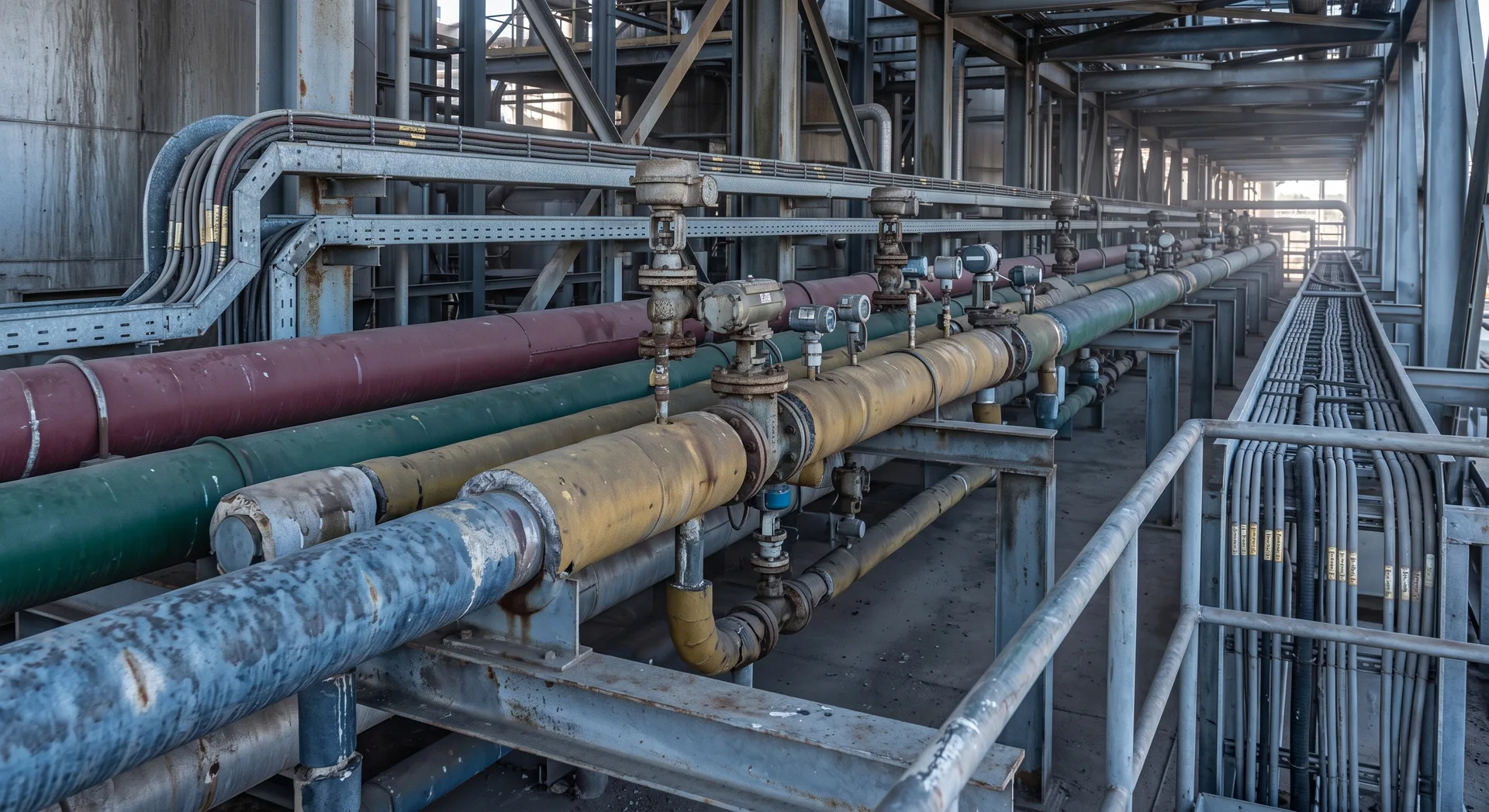 Innovation & TechnologyWhat a four-product plant asks of its controlsCross-listed from Innovation & Technology
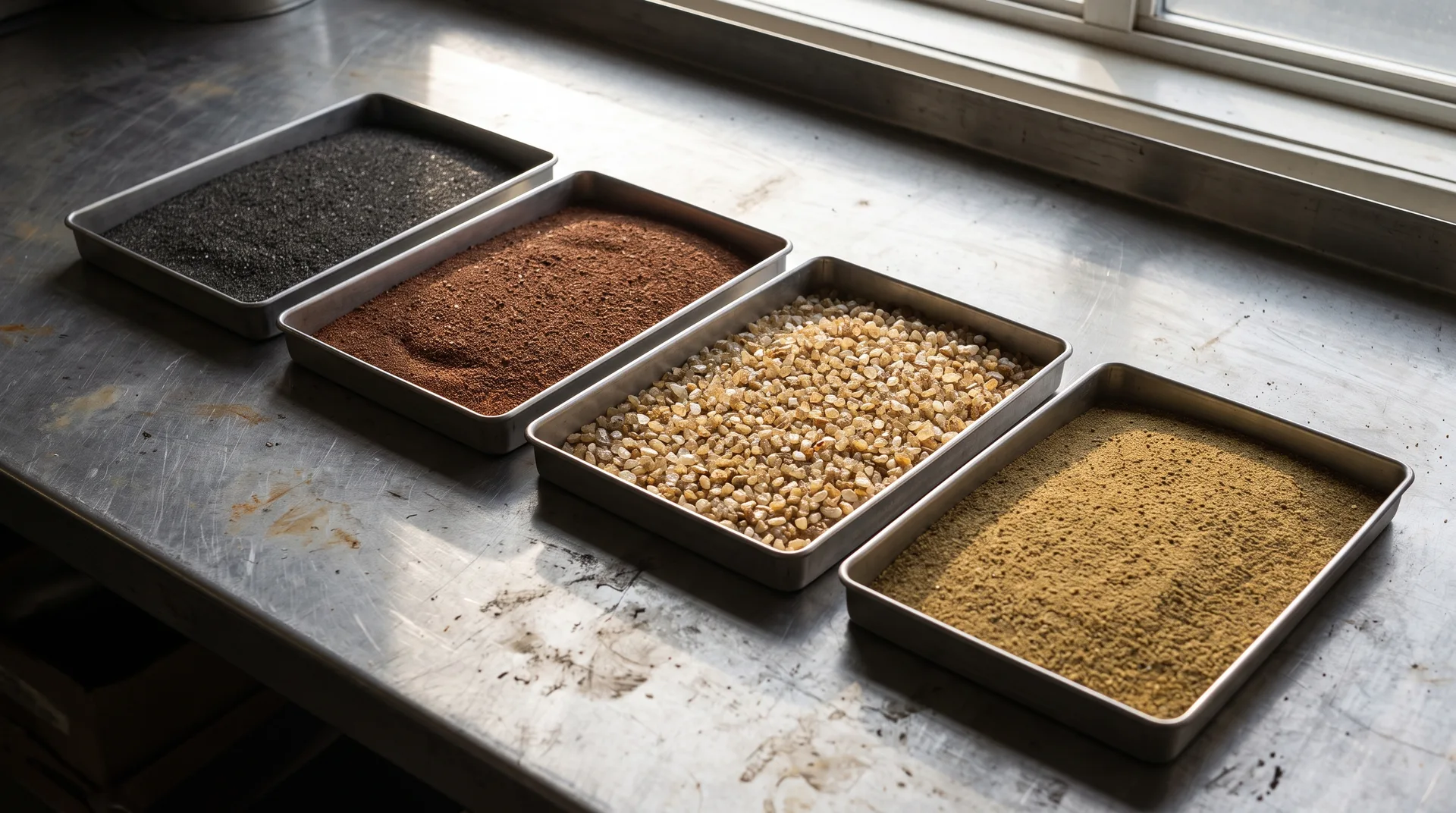 Innovation & TechnologyReconciling a mine that makes four productsCross-listed from Innovation & Technology
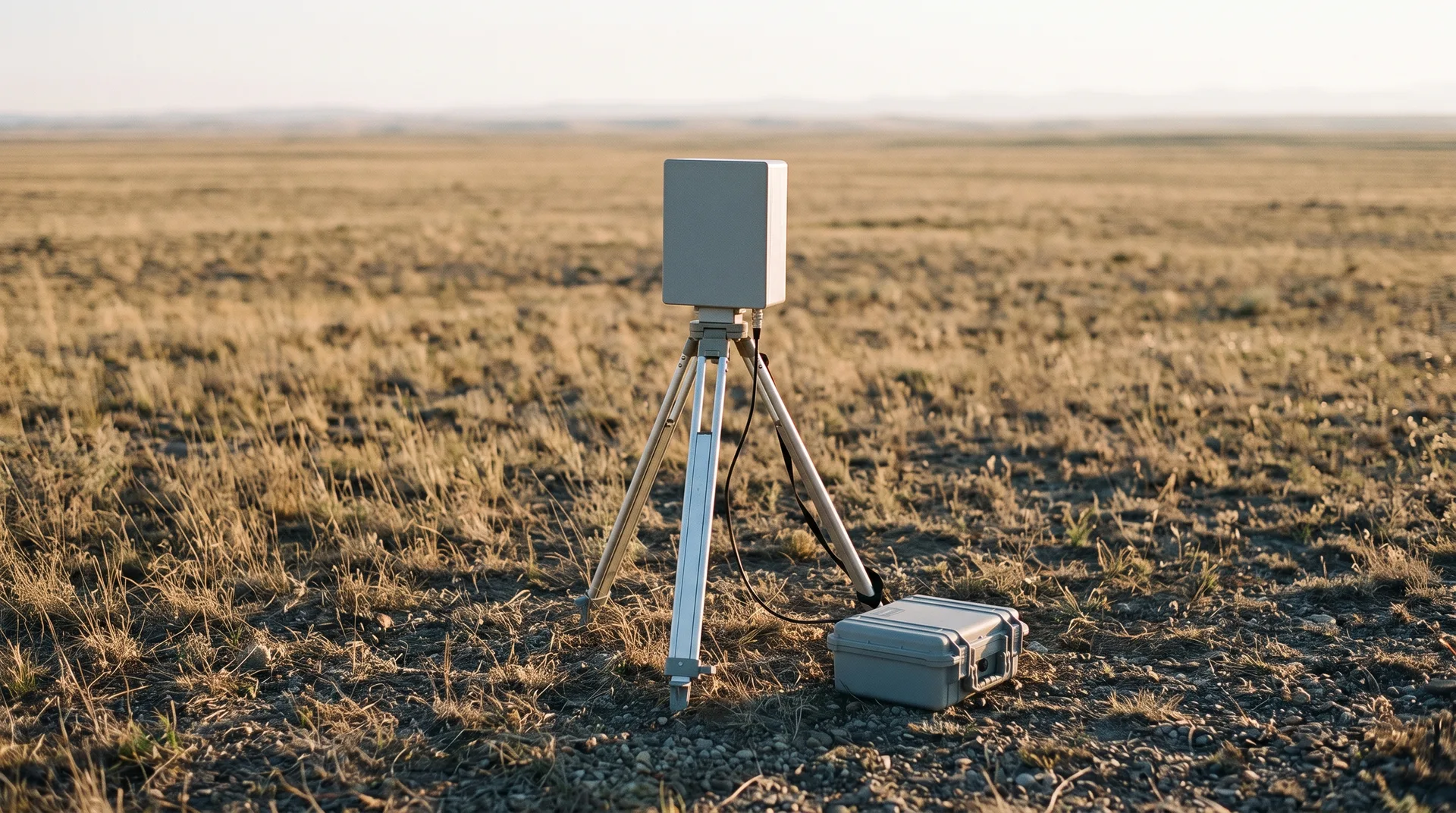 Innovation & TechnologyWhat a thorium channel can and cannot seeCross-listed from Innovation & Technology
 Innovation & TechnologyThe uses you can never recycleCross-listed from Innovation & Technology
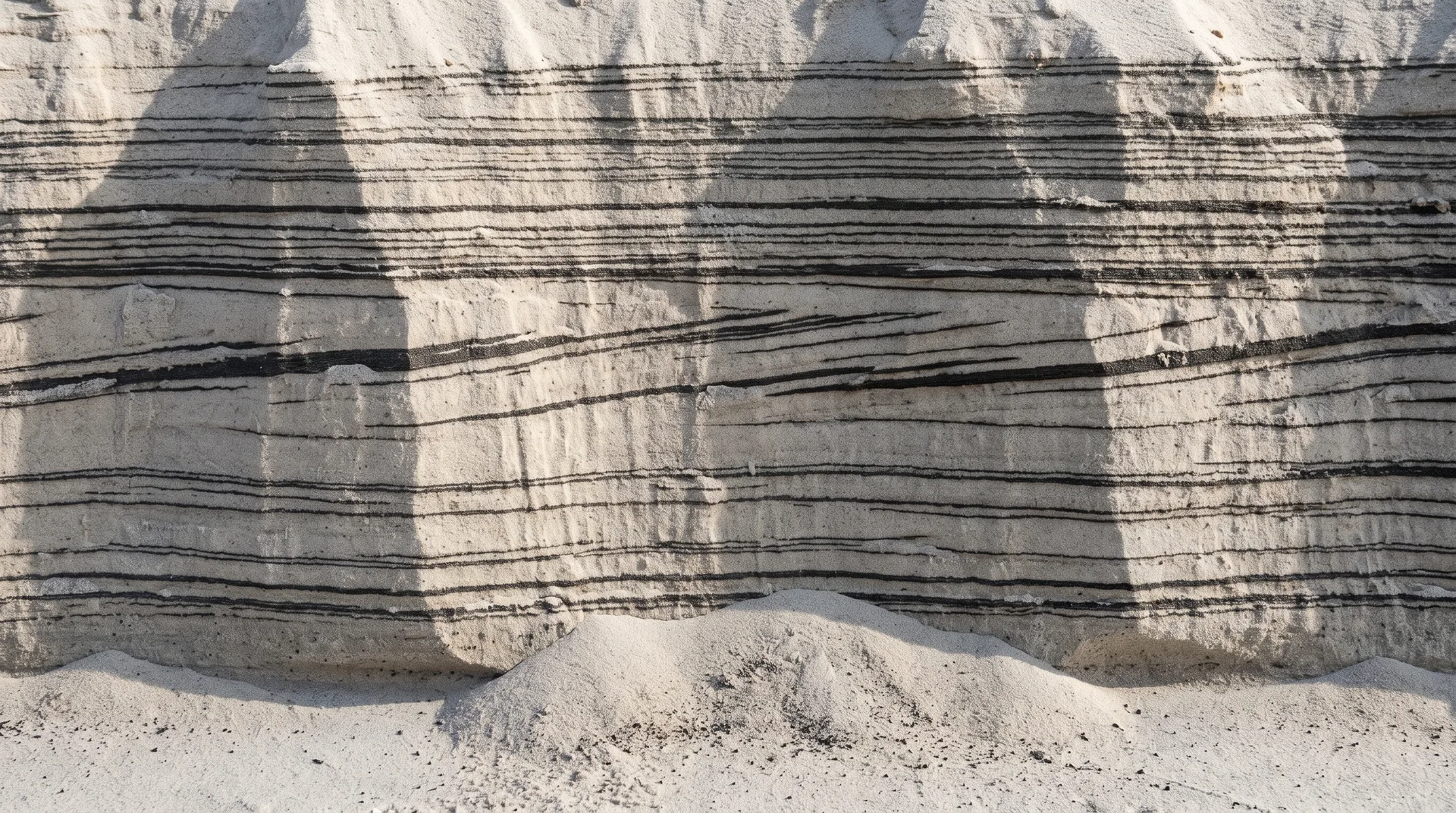 Geography & Supply ChainsA strandline records which way the sea was goingCross-listed from Geography & Supply Chains
 Markets & EconomicsWhat an assessed price is, and what it is notCross-listed from Markets & Economics
 Markets & EconomicsThe customs code decides what your mineral isCross-listed from Markets & Economics
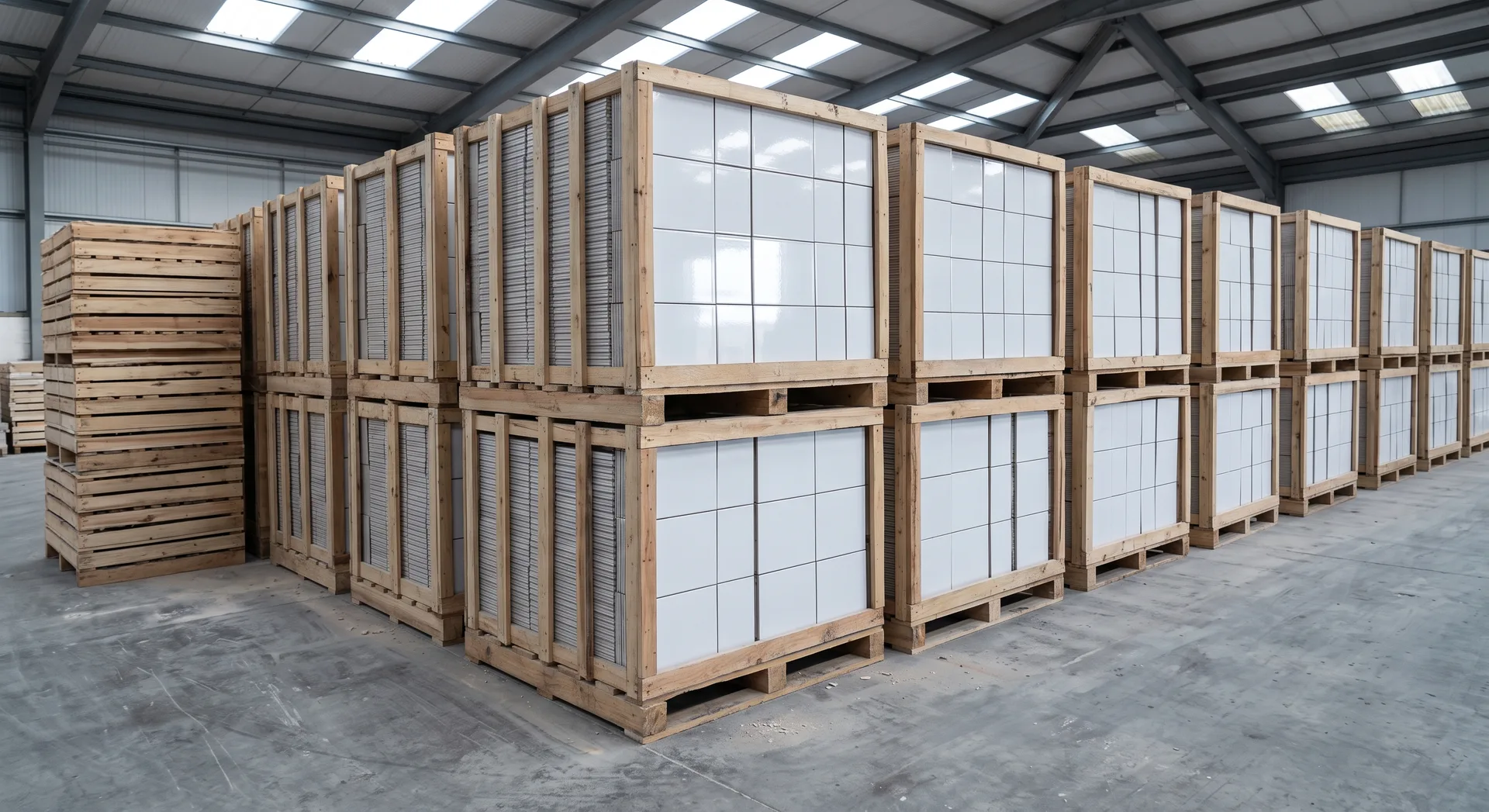 Applications & IndustriesWhy a white tile needs a milled zirconium mineralCross-listed from Applications & Industries
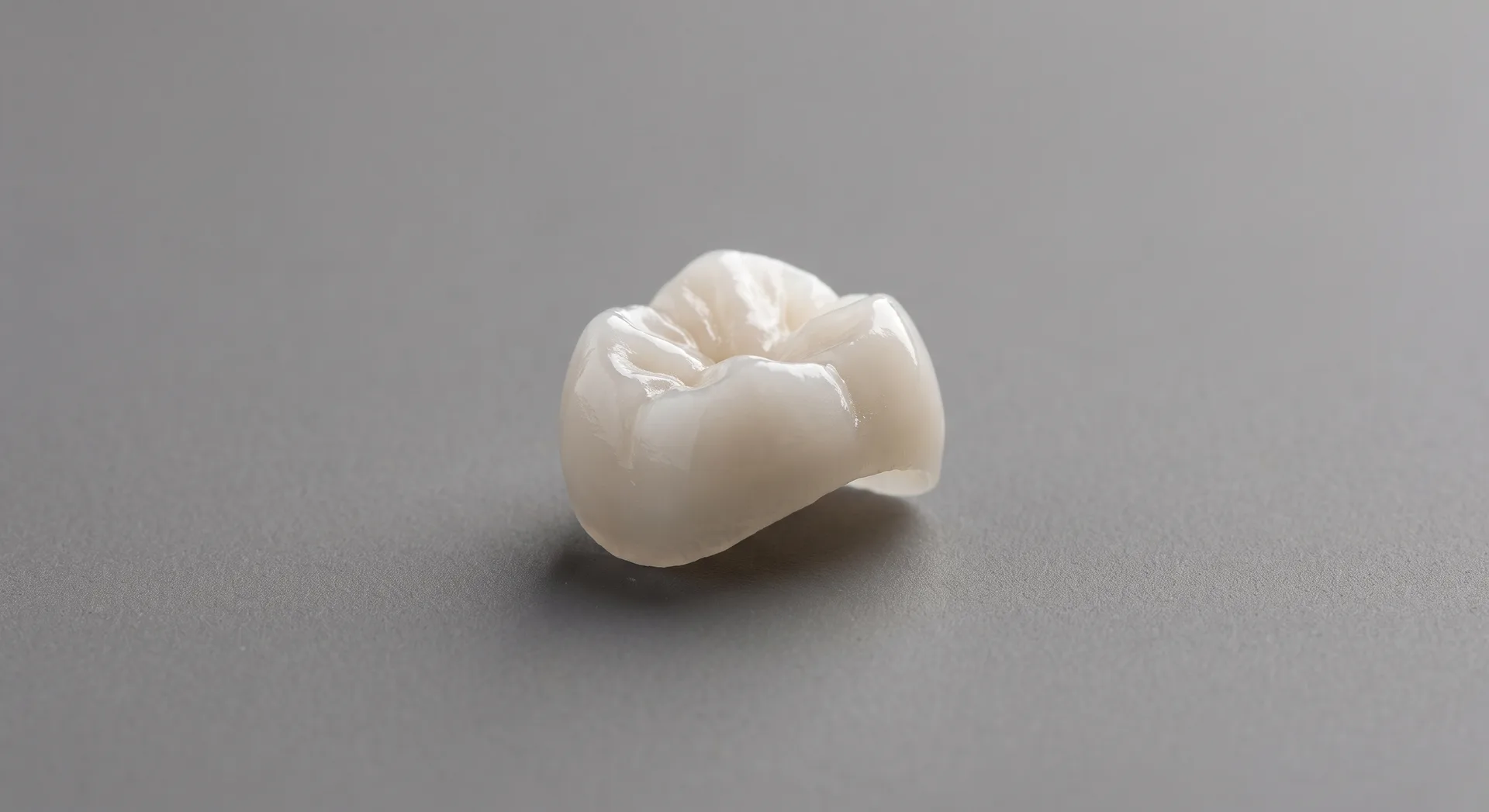 Applications & IndustriesThe crack that stops itself in a zirconia crownCross-listed from Applications & Industries
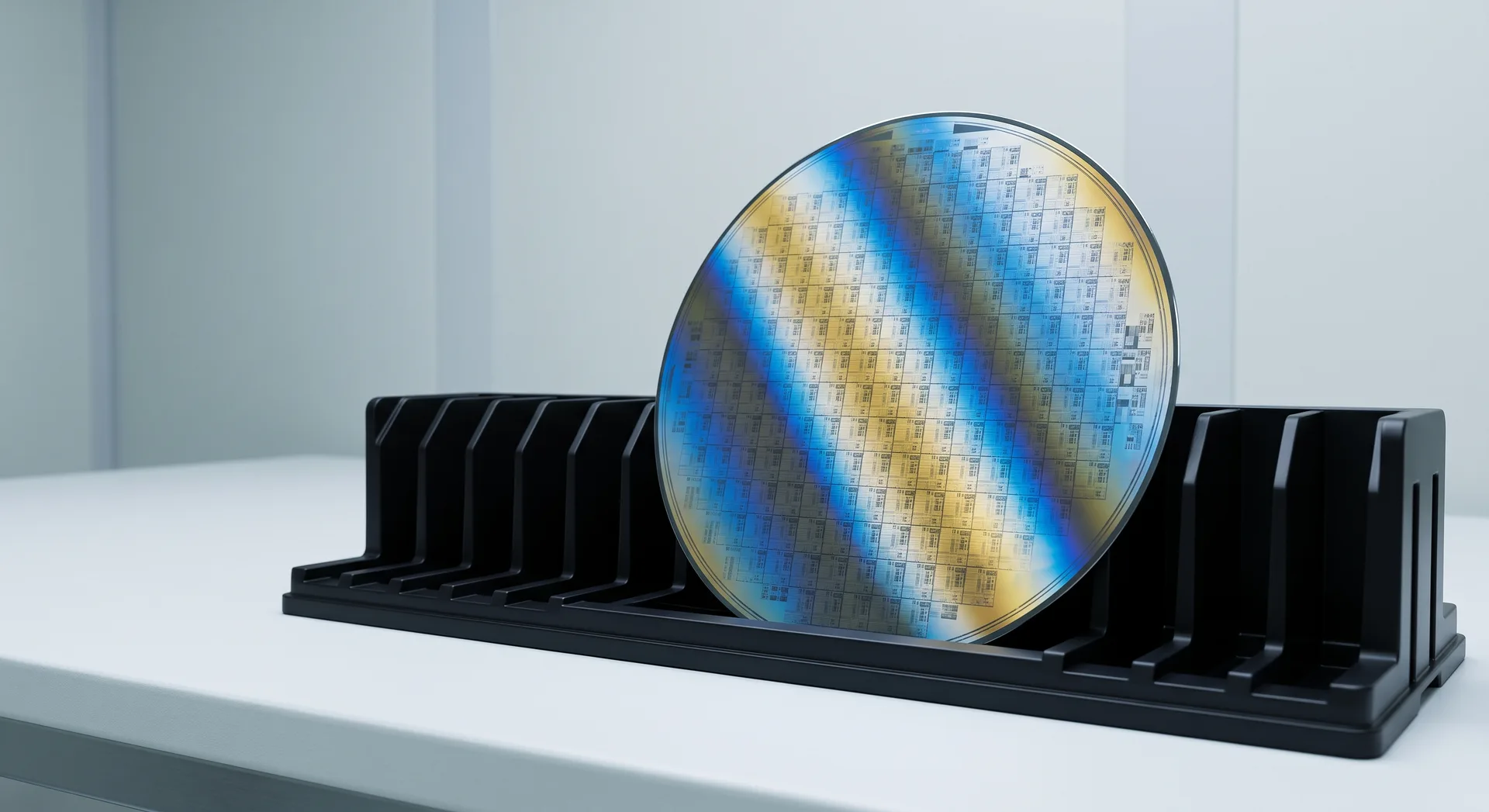 Applications & IndustriesHow a zircon by-product ended up in the transistorCross-listed from Applications & Industries
 Companies & OrganisationsReading a trade body's two kinds of documentCross-listed from Companies & Organisations